
• The Hidden Strength of Indian Vegetarianism: Dairy, Not Plants Alone

    For years, many Indian food technologists, nutritionists, and social-media influencers have enthusiastically promoted “plant-based” diets as the royal road to longevity, often citing traditional eating patterns as proof. Yet when one examines the countries and regions with the highest documented life expectancies—Japan, Hong Kong, Switzerland, Iceland, Singapore, Spain, Italy—none of them are remotely vegan or even close to vegetarian. All consume substantial quantities of fish, seafood, meat, dairy, etc. This presents an apparent paradox: why do influential voices in India claim exceptional longevity from plant-based eating when the global demographic evidence points in the opposite direction?

    The resolution to the paradox is simple but almost always overlooked: traditional vegetarians in India are not vegan and never have been. Their diet is not “plant-based” in the modern Western sense. It is a dairy-centred, lacto-vegetarian pattern in which milk and especially buffalo milk and its products (ghee, curd, paneer, buttermilk, khoya) supply a large share of calories, complete protein, bio-available minerals, and critical micronutrients such as vitamin B12 and vitamin K2.

    India is unique in the world in that roughly half of all milk produced is buffalo milk—a proportion that rises to 80 % in the vegetarian heartland of Punjab, Haryana, western Uttar Pradesh, Rajasthan, and Gujarat. Buffalo milk is richer than cow milk: 7–8 % fat (versus 4–5 % in indigenous cows), higher protein, higher conjugated linoleic acid CLA, and—contrary to outdated beliefs—lower cholesterol per 100 g. (Buffalo milk has 12 mg cholesterol per 100 gms against 29 mg per 100 gms in desi cow milk). Traditional buffalo ghee, the cornerstone of north and west Indian cooking, has been consumed in liberal amounts for centuries and is the primary reason that widespread B12 deficiency, zinc deficiency, and osteoporosis never became public-health crises among dairy-consuming vegetarian communities, even before supplementation or fortification existed.

    Thus, the successful pockets of Indian vegetarian longevity are not succeeding because they avoid animal flesh. They are succeeding because they consume animal-sourced nutrition in the form of large quantities of buffalo (and to a lesser extent cow) dairy. Remove that dairy and replace it only with plants, and the nutritional profile collapses into the same vulnerabilities seen in un-supplemented vegan populations elsewhere: B12 deficiency, poor bone mineralization, lower muscle mass in old age, and higher fracture risk.

    India’s richest 20 %—the segment with reliable access to diverse, nutrient-dense foods—enjoy a life expectancy approximately 7–8 years higher than the poorest 20 %. Within that affluent quintile, lacto-vegetarians who maintain high dairy intake often exhibit lower rates of cardiovascular disease showing none of the classical vegan nutrient gaps. Their traditional diet—roti, dal, seasonal vegetables, generous ghee, curd, and paneer—delivers complete nutrition because the dairy component quietly supplies what plants alone cannot.

    In short, the global longevity champions (Japan, Hong Kong, Switzerland, etc.) achieve extreme life expectancy with ample fish, meat, or cheese. India’s own longevity outliers within the vegetarian community achieve respectable outcomes not by rejecting animal foods altogether, but by embracing one of the richest and most bio-available animal foods available: buffalo dairy.

    The next time an Indian influencer praises a “plant-based” diet for long life, remember the fine print: the pattern that actually works in India is not plant-based at all. It is buffalo-milk-based, curd-accompanied lacto-vegetarianism—an entirely different creature from the vegan ideal being marketed today. Dairy, not ideology, is the real secret behind the relative success of traditional Indian vegetarianism.

  • Eat Right – Keep Moving

    Eat Right – Keep Moving is our tagline. It captures the essence of a healthy and fulfilling life in just four words. It is a simple yet profound reminder that our well-being depends on two interconnected habits: nourishing our bodies with wholesome food and keeping them active through movement. In a world where convenience often overshadows health, this message serves as a call to return to balance, mindfulness, and vitality. It is not a rigid rule but a philosophy that encourages sustainable living—one that values both physical and mental harmony.

    Eating right begins with understanding that food is not merely fuel but the foundation of life itself. Every bite we take influences how we feel, think, and perform. Choosing fresh fruits, vegetables, whole grains, and lean proteins provides the body with essential nutrients that sustain energy and repair tissues. Hydration, too, plays a crucial role; water supports digestion, circulation, and mental clarity. Eating right is not about deprivation or strict diets—it is about making conscious choices that respect the body’s needs. When we eat mindfully, we learn to listen to hunger cues, savor flavors, and appreciate the nourishment that food provides. This awareness transforms eating from a mechanical act into a meaningful ritual of self-care.

    Equally important is the second half of the mantra: Keep Moving. Movement is the natural state of the human body. From walking and stretching to jogging and dancing, physical activity keeps our muscles strong, our hearts healthy and our minds alert. In today’s sedentary lifestyle, where screens dominate our hours, movement becomes an act of liberation. It breaks the monotony of sitting, refreshes the spirit, and reconnects us with our physical selves. Exercise does not have to be intense or competitive; even small actions—taking the stairs, walking after meals, or playing with children—can make a significant difference. The key is consistency and enjoyment. When movement becomes a habit rather than a chore, it transforms into a source of joy and empowerment.

    The beauty of Eat Right – Keep Moving lies in its balance. Nutrition and activity complement each other, creating a cycle of energy and renewal. Eating well provides the fuel for movement, while movement enhances metabolism and appetite regulation. Together, they strengthen immunity, reduce the risk of chronic diseases, and improve emotional well-being. This balance also extends beyond the physical realm—it nurtures mental health. A well-fed body supports a calm mind, and regular exercise releases endorphins that elevate mood and reduce stress. In this way, the mantra becomes a holistic approach to life, addressing both body and soul.

    Adopting this lifestyle does not require drastic changes; it begins with small, consistent steps. Replacing processed snacks with fruits, drinking simple water instead of carbonated drinks, walking instead of driving short distances or dedicating a few minutes each day to stretching can gradually reshape habits. Over time, these choices accumulate into lasting transformation. The goal is not perfection but progress—a steady commitment to living better each day. It is about cultivating awareness and discipline while allowing room for flexibility and enjoyment.

    Beyond personal health, this philosophy carries a social and environmental dimension. Eating right encourages sustainable food practices—choosing local produce, reducing waste, and supporting ethical farming. Keeping moving promotes community engagement—joining group activities, outdoor events, or sports that foster connection and shared motivation. In this sense, Eat Right – Keep Moving is not just an individual pursuit but a collective movement toward a healthier society.

    Ultimately, the message reminds us that health is not a destination but a journey. It is built through daily choices, shaped by habits, and sustained by purpose. When we eat right, we honor our bodies; when we keep moving, we celebrate life. Together, these actions create a rhythm of vitality that resonates through every aspect of existence. They empower us to live with energy, confidence, and gratitude. In embracing this simple yet powerful mantra, we choose a path of balance—one that leads not only to physical fitness but also to a deeper sense of harmony and happiness.

  • The Hidden Strength of Indian Vegetarianism: Dairy, Not Plants Alone

    For years, many Indian food technologists, nutritionists, and social-media influencers have enthusiastically promoted “plant-based” diets as the royal road to longevity, often citing traditional eating patterns as proof. Yet when one examines the countries and regions with the highest documented life expectancies—Japan, Hong Kong, Switzerland, Iceland, Singapore, Spain, Italy—none of them are remotely vegan or even close to vegetarian. All consume substantial quantities of fish, seafood, meat, dairy, etc. This presents an apparent paradox: why do influential voices in India claim exceptional longevity from plant-based eating when the global demographic evidence points in the opposite direction?

    The resolution to the paradox is simple but almost always overlooked: traditional vegetarians in India are not vegan and never have been. Their diet is not “plant-based” in the modern Western sense. It is a dairy-centred, lacto-vegetarian pattern in which milk and especially buffalo milk and its products (ghee, curd, paneer, buttermilk, khoya) supply a large share of calories, complete protein, bio-available minerals, and critical micronutrients such as vitamin B12 and vitamin K2.

    India is unique in the world in that roughly half of all milk produced is buffalo milk—a proportion that rises to 80 % in the vegetarian heartland of Punjab, Haryana, western Uttar Pradesh, Rajasthan, and Gujarat. Buffalo milk is richer than cow milk: 7–8 % fat (versus 4–5 % in indigenous cows), higher protein, higher conjugated linoleic acid CLA, and—contrary to outdated beliefs—lower cholesterol per 100 g. (Buffalo milk has 12 mg cholesterol per 100 gms against 29 mg per 100 gms in desi cow milk). Traditional buffalo ghee, the cornerstone of north and west Indian cooking, has been consumed in liberal amounts for centuries and is the primary reason that widespread B12 deficiency, zinc deficiency, and osteoporosis never became public-health crises among dairy-consuming vegetarian communities, even before supplementation or fortification existed.

    Thus, the successful pockets of Indian vegetarian longevity are not succeeding because they avoid animal flesh. They are succeeding because they consume animal-sourced nutrition in the form of large quantities of buffalo (and to a lesser extent cow) dairy. Remove that dairy and replace it only with plants, and the nutritional profile collapses into the same vulnerabilities seen in un-supplemented vegan populations elsewhere: B12 deficiency, poor bone mineralization, lower muscle mass in old age, and higher fracture risk.

    India’s richest 20 %—the segment with reliable access to diverse, nutrient-dense foods—enjoy a life expectancy approximately 7–8 years higher than the poorest 20 %. Within that affluent quintile, lacto-vegetarians who maintain high dairy intake often exhibit lower rates of cardiovascular disease showing none of the classical vegan nutrient gaps. Their traditional diet—roti, dal, seasonal vegetables, generous ghee, curd, and paneer—delivers complete nutrition because the dairy component quietly supplies what plants alone cannot.

    In short, the global longevity champions (Japan, Hong Kong, Switzerland, etc.) achieve extreme life expectancy with ample fish, meat, or cheese. India’s own longevity outliers within the vegetarian community achieve respectable outcomes not by rejecting animal foods altogether, but by embracing one of the richest and most bio-available animal foods available: buffalo dairy.

    The next time an Indian influencer praises a “plant-based” diet for long life, remember the fine print: the pattern that actually works in India is not plant-based at all. It is buffalo-milk-based, curd-accompanied lacto-vegetarianism—an entirely different creature from the vegan ideal being marketed today. Dairy, not ideology, is the real secret behind the relative success of traditional Indian vegetarianism.

  • From River Diversity to Farmed Uniformity: What India’s Fish Plate Reveals About Its Changing Food System

    Fish in India has never been merely a culinary choice. It is ecology made edible, culture rendered daily, and increasingly, economics in motion. Nowhere is this more visible than in eastern and northern urban markets, where traditional freshwater species once dominated, only to be steadily replaced by farmed alternatives. What appears to be a simple shift in consumer preference is, in fact, a profound transformation of India’s food system — one that reflects changing rivers, changing markets, and changing nutritional realities.

    For generations, markets across riverine India thrived on local diversity. Freshwater species such as singhara, malli, and a range of small indigenous fish formed the backbone of everyday consumption. These fish were not merely abundant; they were nutritionally dense. Many small indigenous fish are consumed whole — bones, organs, and skin — delivering calcium, iron, vitamin A, and essential fatty acids in concentrations that rival or surpass many modern “health foods.” For populations historically vulnerable to micronutrient deficiencies, these species quietly served as natural nutritional safeguards.

    Yet these fish are steadily disappearing from mainstream markets. Their decline is not simply culinary nostalgia; it is ecological and structural. River regulation, pollution, wetland loss, and changing hydrology have reduced wild catch diversity. Traditional fisheries — seasonal, local, and variable — cannot easily compete with the demands of modern urban supply chains that prize consistency above all else.

    Into this vacuum has entered aquaculture — most notably pangasius. Farmed intensively, fast-growing, and highly feed-efficient, pangasius represents the industrial logic of protein production. It can be raised in dense populations, harvested predictably, processed easily, and transported widely. For a country with rising incomes, growing cities, and expanding protein demand, such efficiency is economically irresistible.

    But efficiency comes with complexity. Pangasius is often perceived as oily, yet its fat composition differs markedly from that of traditional fatty fish. Much of its lipid content reflects feed composition, often yielding higher omega-6 rather than omega-3 fatty acids. In other words, it may be energy-dense without delivering the cardiovascular benefits associated with marine oily fish like mackerel or hilsa. From an environmental perspective, too, aquaculture’s sustainability depends heavily on regulation — waste discharge, disease management, feed sourcing, and antibiotic use determine whether fish farming remains a protein solution or becomes an ecological burden.

    Meanwhile, some species resist industrial absorption altogether. Hilsa remains the most striking example. Its anadromous life cycle — migrating from sea to river to spawn — makes large-scale farming extraordinarily difficult. Its flavour, shaped by migration and natural feeding, resists replication. But biology alone does not explain its survival. Hilsa endures because it is culturally protected as much as ecologically constrained. Governments regulate its harvest, consumers revere it, and its symbolic power — tied to festivals, identity, and memory — sustains demand even at high prices. In a food system moving toward uniformity, hilsa remains defiantly wild.

    Marine fish such as mackerel occupy a middle ground. Affordable, widely harvested, nutritionally respected, and transportable across long distances, they represent a stable bridge between traditional diets and modern distribution networks. Their continued popularity illustrates that industrialisation does not eliminate diversity entirely — it reorganises it.

    Taken together, these trends point toward a three-tiered future of fish consumption in India. At the base lies mass-produced aquaculture — efficient, affordable, and increasingly dominant. Above it sits a band of widely traded marine fish that combine nutritional value with manageable cost. At the top remain heritage species — ecologically complex, culturally charged, and priced as luxury.

    The broader transition is unmistakable. India is moving from ecosystem-driven food diversity to industrial protein systems. Markets are becoming less seasonal, less local, and less species-rich. Yet culture continues to intervene, preserving certain fish not as commodities but as symbols.

    This transformation raises a quiet but important question: in solving the problem of protein availability, are we losing the hidden nutritional richness that traditional diversity once provided? Small indigenous fish nourished more than appetite; they sustained micronutrient health. Industrial aquaculture feeds populations efficiently, but efficiency and nutritional completeness are not identical goals.

    Fish, in India, has always mirrored the waters that produce it. As rivers are regulated, coastlines commercialised, and food systems industrialised, the fish on the plate changes accordingly. What we are witnessing is not merely a shift in species, but a reordering of priorities — from ecology to economy, from diversity to standardisation, from seasonal abundance to year-round supply.

    And yet, the persistence of hilsa reminds us that food is never only about efficiency. Memory, identity, and ecology still shape appetite. The future of India’s fish consumption will likely be determined by how well these forces — nutrition, affordability, sustainability, and culture — can be held in balance.

    Because in the end, what swims in our markets reveals what flows through our society.

  • Turmeric’s Healing Powers: From Traditions to Science

    Turmeric, the vibrant golden spice revered across ancient healing systems and modern kitchens, stands as a testament to nature’s profound wisdom. Derived from the Curcuma longa rhizome, its active compound curcumin has propelled it from Ayurvedic and Unani pharmacies to global clinical labs. In Bengaluru’s bustling markets, where fresh raw rhizomes gleam alongside powdered forms, this spice aligns seamlessly with nutritional pursuits emphasizing protein, healthy fats, and daily wellness rituals like your 7,000-8,000 step walks.

    Ayurveda hails turmeric as Haridra, a supreme balancer of the three doshas—Vata, Pitta, and Kapha—purifying blood (Rakta Dhatu) while igniting digestive fire (Agni). It fosters vitality as a Rasayana, easing joint inflammation, enhancing skin radiance, fortifying immunity, and sharpening mental clarity. Unani Tibb equally esteems it for expelling phlegm (Balgham), invigorating circulation, and remedying liver obstructions, jaundice, ulcers, and dropsy. These time-honored roles underscore turmeric’s antimicrobial prowess and holistic support for respiratory and inflammatory woes, deeply rooted in Indian cultural history.

    Modern science robustly validates these claims, with over 3,000 studies illuminating curcumin’s mechanisms. Its potent anti-inflammatory action rivals pharmaceuticals for osteoarthritis relief, curbing cytokines akin to traditional joint therapies. As a formidable antioxidant, it neutralizes free radicals, combating oxidative stress, aging, and cellular damage—echoing traditional wound healing and liver protection. Evidence extends to antidiabetic regulation, antimicrobial defense, and even anticancer potential, alongside digestive and circulatory boosts matching Unani applications. Optimal dosing—around 500mg curcumin twice daily, amplified by piperine from black pepper or fats—unlocks these benefits, bridging ancient lore with empirical rigor.

    Fresh raw turmeric often edges out dry powder in vibrancy, retaining volatile essential oils like turmerones for superior digestion via bile stimulation, immunity against colds, and unadulterated antioxidants. Though powder concentrates curcumin post-dehydration (fresh being 80-90% water), it risks processing losses and adulteration, making raw ideal for grating into smoothies, curries, or teas—readily sourced locally and refrigerated for weeks. Powder suits precise cooking and longevity, but both demand pairing with enhancers for bioavailability.

    Nutrition-wise, one tablespoon of ground turmeric delivers approximately 29 calories, 0.3g fat, 6.3g carbohydrates (2.1g fiber), and 0.9g protein. It’s mineral-rich—high in potassium (196mg) and iron (5mg)—plus vitamins C, B6, and niacin, fortifying heart health, energy, and immunity in line with balanced intake of bananas, eggs, and milk.

    Today’s research trials are taking turmeric’s benefits to the next level. For example, at the University of California, Los Angeles (UCLA), a study tests an easily absorbed form of curcumin to boost memory and focus on people aged 50-85. Other trials look at its role in preventing cancer, such as after prostate surgery, for early cervical cell changes, or in pre-cancerous blood conditions paired with plant-based diets. Separate studies check if curcumin ointment safely reverses certain anal lesions and reduces mouth sores from cancer treatment. Sites like UT Southwestern are actively recruiting participants, showing turmeric’s growing promise in medicine.

    Most people can safely use turmeric in cooking—up to 3 grams a day—or take up to 8 grams of curcumin for short periods. Still, be careful if you have liver or gallbladder problems, as high doses might upset your stomach. For your routine, try grating fresh turmeric into meals that support your walks and fitness goals; it pairs well with your focus on sleep and heart health. In the end, turmeric goes beyond a simple spice, linking ancient wisdom, solid science, and everyday vitality into lasting well-being.

  • Mundeshwari Devi: The Oldest Living Shrine

    The Mundeshwari Devi Temple in Bihar stands at a fascinating crossroads of Hindu worship, Buddhist pilgrimage, and early royal patronage, making it one of the most historically layered religious sites in India. Situated atop Mundeshwari Hill in the Kaimur district, this stone temple is officially dated by the Archaeological Survey of India and the Bihar Religious Trust Board to around 108 CE, which places its oldest structural phase in the early centuries of the Common Era. This dating, combined with the continuous presence of ritual practice, has led authorities to describe Mundeshwari as one of the oldest functioning temples in the subcontinent. The temple is jointly dedicated to Shiva and Shakti in the form of Goddess Mundeshwari, a protective and martial form of Durga, and also houses subsidiary images of Ganesha, Surya, and Vishnu. Its architectural style reflects early Nagara‑type stone construction, with a compact sanctum and a modestly carved façade that speaks to the technical and ritual priorities of early temple construction.

    Archaeological discoveries and the broader historical geography of the region reveal that the Mundeshwari hill site was once deeply entwined with Buddhist pilgrimage networks. Excavations and surveys around the hill have uncovered early structural remains, inscriptions, and material traces that suggest a multi‑religious landscape, where Śaiva‑Śākta cults existed alongside, and sometimes overlapped with, Buddhist monastic activity. The circular yoni‑pitha and certain architectural motifs in the present temple are evidence that the site was used by Buddhist visitors. The hill lies in Kaimur‑Gaya‑Varanasi corridor, a region that was criss‑crossed by ancient roads linking major Buddhist shrines such as Bodh Gaya, Sarnath, and Rajgir. Pilgrims travelling between Sri Lanka and North India often followed such corridors, and the presence of a Shaiva‑Shakta sanctuary at Mundeshwari may have served as a ritual or administrative stop along the way, even if the site later became predominantly Brahmanical.

    One of the most evocative finds that underscores this Buddhist‑linked history is a royal seal inscribed in Brahmi script, discovered in 2003. The seal bears the name of the Sri Lankan king Dutthagamani, who ruled roughly between 101 and 77 BCE and is celebrated in Pāli chronicles such as the Mahāvaṃsa for his role in consolidating Theravāda Buddhism in Sri Lanka. The presence of a royal seal from a Sri Lankan king at a North Indian hill‑temple indicates that the site was not a remote shrine but part of a wider network of royal‑backed pilgrimage and monastic travel. In popular and semi‑scholarly accounts, this seal is often described as a “royal passport” for Sri Lankan Buddhist monks. In ancient India, royal seals were carved objects—usually in stone, metal, or terracotta—bearing a ruler’s name, emblem, or deity, which were pressed into clay or wax to authenticate documents, grants, or containers. Breaking a sealed document was treated as tampering with royal authority, and sealed letters or orders often carried the force of state command.

    In this context, the idea of a “royal passport seal” captures the practical function. A seal linked to a foreign king, such as Dutthagamani, could have served to identify a group of monks or envoys as acting under royal patronage, entitling them to safe passage, lodging, or protection from local authorities. It would have functioned as a portable credential: proof that the bearers were not ordinary wanderers but sanctioned travellers moving along established pilgrimage routes. When archaeologists and historians use the phrase “royal passport seal,” they are drawing an analogy to modern state‑issued travel documents, which similarly authenticate identity and grant the right to cross borders or move under official protection. In the case of Mundeshwari, this seal feeds into a broader narrative that the site was a node in a wider Buddhist‑pilgrimage circuit, where royal power from Sri Lanka reached out through tangible objects to secure the movement of monks and pilgrims.

    Taken together, the Mundeshwari Devi Temple presents a remarkable continuity of religious life across two millennia. Beginning as a focal point in an early Buddhist‑linked pilgrimage landscape and later consolidating into a major Brahmanical temple, its history is written in stone, inscriptions, and the small, hard‑to‑preserve objects such as seals and charter fragments. The 108 CE date assigned by the ASI marks a structural phase of the temple, but the surrounding evidence suggests that ritual activity and human movement in the area may stretch back even earlier. The discovery of the Dutthagamani‑linked Brahmi seal reminds us that ancient Indian religious sites were often poly‑layered: they carried shifting identities, multiple patrons, and overlapping communities of worship.

  • India’s Currency Problem Is Structural, Not Temporary

    For decades, economic textbooks have argued that a weak currency helps exports and strengthens domestic industry. The logic appears simple: when a country’s currency depreciates, its goods become cheaper in global markets, exports rise, imports fall, and the economy regains balance. But India’s recent experience suggests that this classical theory no longer works automatically in a globalised, import-dependent economy. The rupee has weakened sharply even against a relatively soft dollar, yet India has not witnessed the kind of export surge that countries like China, South Korea, or even Turkey experienced during phases of currency weakness. This is because India’s export structure itself has changed in a way that limits the benefits of depreciation.

    Most major Indian export sectors today depend heavily on imported raw materials, components, energy, or technology. Electronics is perhaps the clearest example. India’s electronics exports have undoubtedly risen impressively in recent years, but much of this growth is driven by assembly operations based on imported chips, displays, sensors, machinery, and intellectual property. In many cases, India contributes labour, packaging, and testing, while high-value components continue to arrive from East Asia. As a result, when the rupee weakens, the cost of imported inputs rises almost immediately, offsetting much of the competitive advantage that depreciation is supposed to provide.

    The same contradiction is visible in petroleum exports. India exports large quantities of refined petroleum products and appears to be a major energy exporter in gross terms. However, the crude oil being refined is overwhelmingly imported in dollars. The country earns refining margins, but the underlying import bill remains huge. A weaker rupee therefore raises the cost of crude imports sharply while only marginally improving export profitability. Headline export numbers may look strong, but the actual domestic value addition is far smaller than commonly assumed.

    Even India’s globally respected pharmaceutical industry carries this structural weakness. Indian generic medicines dominate markets across the developing world, but a significant share of Active Pharmaceutical Ingredients is still imported, particularly from China. India excels in formulation, scale manufacturing, and regulatory compliance, yet important parts of the supply chain remain external. When the rupee depreciates, imported pharmaceutical inputs become more expensive, squeezing margins and limiting the benefits of export competitiveness.

    This explains why India’s export elasticity remains weak. In countries with deeply integrated domestic manufacturing ecosystems, currency depreciation quickly improves competitiveness because most inputs are sourced locally. India, by contrast, imports inflation faster than it exports competitiveness. A falling rupee raises the cost of fuel, industrial components, logistics, electronics, chemicals, and capital goods almost immediately. But exports do not respond proportionately because import dependence is embedded inside the export sector itself.

    This is one reason why India’s currency weakness has become particularly concerning. Normally, emerging market currencies weaken when the dollar strengthens globally or when crude oil prices rise sharply. But in recent months the dollar itself has softened against most major currencies, crude prices have remained relatively moderate, and yet the rupee has continued to weaken. This suggests that India’s problem is increasingly structural rather than cyclical.

    The Reserve Bank of India has attempted to smooth the pressure through interventions in both spot and offshore Non-Deliverable Forward markets. Yet such intervention only buys time; it does not remove the underlying imbalance. Meanwhile, Foreign Portfolio Investors continue to reduce exposure at the margin, and India’s large external liabilities require steady dollar outflows in the form of interest payments, imports, and hedging demand.

    The weakness becomes even more serious because domestic credit growth is now running faster than deposit growth. Banks are lending aggressively while household savings increasingly move toward gold, mutual funds, or physical assets rather than bank deposits. In an environment of persistent currency depreciation, holding idle cash in rupees appears irrational to many savers. Gold, by contrast, is seen as a global store of value insulated from rupee erosion.

    The irony is that India’s strongest external stabiliser today is not merchandise exports but services exports, especially information technology and business services. These sectors generate valuable dollar inflows with relatively high domestic value addition. Without them, pressure on the rupee would likely be much more severe. Yet services alone cannot absorb India’s massive labour force or fully offset merchandise trade vulnerabilities.

    Countries like Turkey demonstrate that nominal GDP can continue rising in dollar terms even amid severe currency depreciation. But Turkey possessed certain advantages India lacks: stronger tourism earnings, deeper integration into European manufacturing supply chains, and export sectors more responsive to currency movements. India’s depreciation, by contrast, risks becoming more inflationary than expansionary.

    The deeper concern, therefore, is not merely that the rupee is weakening. It is that the structure of the Indian economy no longer allows depreciation to generate the compensating export boom that classical economics would predict. A weak currency hurts households immediately through higher inflation and lower purchasing power, while the export gains remain limited because so much of the export sector itself depends on imports. That is why India’s currency problem increasingly appears structural rather than temporary.

  • Rakhigarhi: The Biggest Harappan City

    For decades, the Harappan Civilization was defined by its two most famous cities: Mohenjo-Daro in the south and Harappa in the north. Yet, deep in the Ghaggar-Hakra river valley of Haryana, India, a much quieter story was waiting to be told. The site of Rakhigarhi (often spelled Rakhi Garhi), identified as early as the 1960s but not systematically excavated until 1997, has slowly risen to challenge long-held archaeological assumptions. Though recognized as one of the five principal settlements of the Indus Valley Civilization, Rakhigarhi is now believed to be the largest of them all. Current estimates place its total area at over 350 hectares, surpassing the more famous Mohenjo-Daro, which covers roughly 250 hectares. This massive urban sprawl, complete with a citadel, a middle town, a lower town, industrial areas for bead-making and goldsmithing, and extensive cemeteries, suggests that the political and demographic center of the Harappan world may have been located in present-day India, not Pakistan. The lateness of its major excavations, beginning only in the late 1990s, is precisely why Rakhigarhi is only now rewriting the textbooks. For most of the twentieth century, archaeologists had focused on the easily accessible sites in Sindh and Punjab, overlooking the dense cluster of settlements along the ancient Ghaggar-Hakra river valley. It is only in the last two decades that sustained fieldwork has revealed the true, sprawling scale of this metropolitan giant.

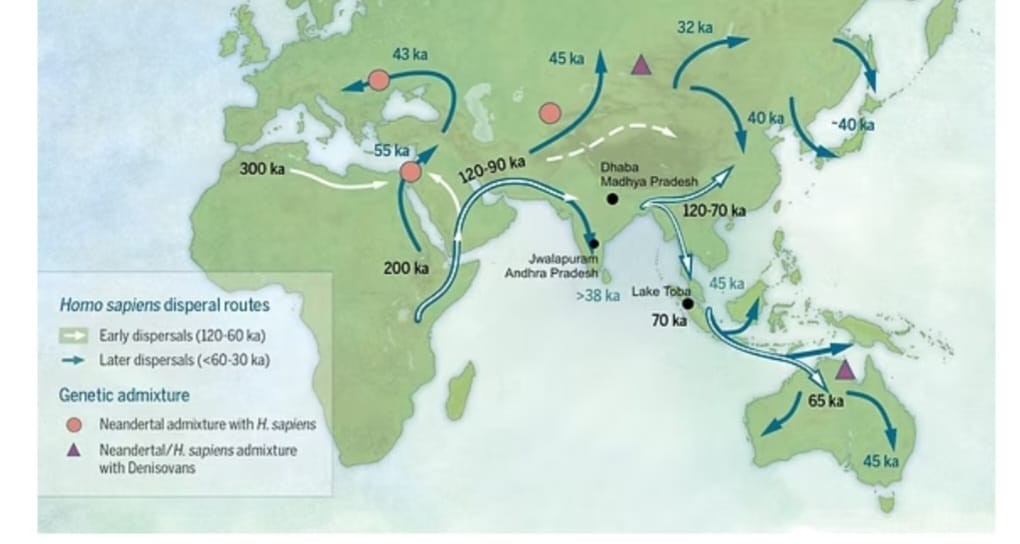
    The most revolutionary discoveries from Rakhigarhi, however, are not about the size of its walls but about the DNA of its people. In a landmark study published in the journal Cell, an international team of scientists sequenced the genome of a 4,500-year-old skeleton from the mature Harappan period at the site. The findings were stunning: the DNA showed no trace of the R1a1 genetic marker. This marker, often simplistically referred to as the “Aryan gene,” is strongly associated with the Steppe pastoralists of Central Asia. Its complete absence in the ancient Harappan individual indicates that the founders of this vast urban civilization were not outsiders who migrated from the north. Instead, the genetic analysis revealed that the people of Rakhigarhi were primarily a mix of two indigenous groups: Ancient Ancestral South Indians (AASI) and Iranian-related agriculturalists. This supports the view that the Harappan Civilization was a largely local development, born from the fusion of distinct population groups that had been living on the subcontinent for millennia. The evidence strongly suggests that the great Indus Valley cities were built by a people who were genetically distinct from the population that would later compose the Vedas. The Rig Veda is generally dated to around 1500 BCE, a period after the decline of these great cities and coinciding with the time when Steppe ancestry began to appear in the region.

    Adding a further layer of wonder to this ancient city is the discovery of a six-foot-tall skeleton of a woman. A height of six feet, or approximately 183 centimeters, is impressive even by contemporary global standards, let alone for a Bronze Age individual dating back to around 2500-2000 BCE. That this towering skeleton belonged to a woman is particularly remarkable. For archaeologists, her stature is a powerful indicator of exceptional health and nutrition. Attaining such height requires a diet rich in protein and essential nutrients, combined with a freedom from chronic childhood diseases that stunt growth. This suggests that the woman likely belonged to a privileged, well-fed elite class within the city. Her existence is tangible, bone-deep proof that the Harappan civilization at its peak was not merely surviving but thriving, producing a populace capable of remarkable physical development. While the average height of most Rakhigarhi inhabitants was likely far more modest, this individual stands as an outlier who reveals the potential for prosperity and status within the metropolis. Her grave goods, burial position, and location within the cemetery may further indicate whether she was a priestess, a queen, a warrior, or simply an unusually tall member of a robust population. Regardless of her specific role, her bones add a deeply human dimension to the genetic data, reminding us that behind the abstract percentages of ancestry were real people of exceptional stature and presence.

    The Rakhigarhi findings have revealed a migration of Central Asian Steppe peoples into India around 2000 to 1500 BCE, a period after the mature Harappan cities had already begun to decline. The R1a1 marker, absent in the 4,500-year-old skeleton, is found in many modern South Asian populations, meaning that the genetic mixing happened later. The six-foot woman, with her imposing frame and indigenous ancestry, serves as a powerful symbol of this pre-Vedic world. She was tall, healthy, and part of a civilization that built the first great cities of South Asia without the genetic input of the Steppe herders. Together, the massive scale of the settlement, the absence of the R1a1 marker, and the extraordinary stature of this one woman paint a cohesive picture: Rakhigarhi was the largest, most prosperous, and most uniquely indigenous of the Harappan giants. The silent bones of this ancient metropolis have finally spoken, and they tell a story of a sophisticated, local, and remarkably healthy civilization that deserves its place at the very center of the Indus Valley story.

  • The Buddha Statue and the Beginnings of Indian Idolatry

    The story of Indian sculpture and idolatry culminates in the Buddha. The Buddha is historically a human teacher, not a creator‑god yet in later devotional practice he is revered as if he were a god. This transformation is visible most clearly in the first human‑form Buddha‑statue, created by the Gandhara/Greco‑Buddhist artists of the 1st century BCE–1st century CE. That statue marks the moment when the Buddha becomes a fully visible, anthropomorphic divine‑like presence in religious life.

    Before this, early Indians mostly avoided direct anthropomorphic statues of the Buddha. Instead, artists used symbols: the stupa, the wheel, the empty throne, the Bodhi tree, and footprints. These aniconic devices kept the Buddha conceptually beyond human form, emphasizing his transcendence rather than his physicality. It is only in the Gandhara region—where Greek and Indian traditions intersected under the Indo‑Greek and Kushan empires—that the Buddha finally receives a clear human‑form statue, and it is here that the first major “Buddha‑idol” is born.

    Greek and Indo‑Greek sculptors in Gandhara drew on the Apollo‑type of classical statuary: youthful, serene, idealized, with wavy hair, a calm face, and a poised, upright body. They adapted this Hellenistic schema to the Buddha, giving him a god‑like aura while retaining fundamentally Indian elements: the monastic robe, the hand‑gestures (mudrās), the halo, and the lotus throne. The result is a Greco‑Buddhist Buddha‑statue that looks like an Apollo‑style Greek god from the front but carries the doctrinal and ritual weight of Buddhism. This is not a mere “copy” of Apollo; it is a selective modeling of the Buddha’s form on the Apollo‑type, while the meaning remains Buddhist.

    The Buddha’s physical features in these early Gandharan statues further reinforce this quasi‑divine status. His head bears the uṣṇīṣa, the rounded top‑knot‑like protuberance that in Buddhist texts counts as one of the 32 major marks of a great being, is a symbol of wisdom and enlightenment. His elongated earlobes, another of the canonical marks, evoke his royal past and the heavy earrings of a prince, but in art they also suggest heightened capacity to hear the suffering of beings—an image of compassionate attentiveness. These features, borrowed from textual descriptions and earlier idea‑forms, are now hardened into stone, making the Buddha’s spiritual qualities visible and tangible.

    Chronologically, these first Buddha‑statues are not the oldest idols in India. Stone and terracotta Yakshas and Yakshis date back to the 3rd–1st centuries BCE. Yakshas were not full‑blown cosmic gods but more like powerful spirits—guardians of trees, wealth, and sacred spaces. They appear in early Jain, Buddhist and Brahmanical thought as attendant deities, standing at the edges of the sacred.

    Yet when the first Buddha‑statue appears in Gandhara, the religious center of gravity shifts. The Buddha, already a human‑born and human‑enlightened teacher, is now given a permanent, visible, human‑like body that can be worshipped, carried, and installed in temples and stupas. He becomes the central axis of the religious world: the Buddha‑statue now receives the primary focus of prayer and pilgrimage. In this devotional horizon, the Gandhara‑created Buddha‑statue can be seen as the first anthropomorphic representation of a religious figure who is later treated like a god.

    Thus, the Buddha stands at the junction of human history and divine‑like reverence. The Gandhara/Greco‑Buddhist artists who first gave him a sculpted, human form did not invent the Buddha, but they did invent the Buddha‑idol as we know it: a figure at once youthful and timeless, Hellenistic in style and Buddhist in spirit, human in origin yet divine‑like in worship.

  • Whole Truths About Whole Milk

    Milk has always been regarded as a complete food, but the way it is processed and marketed has created a distorted picture of its nutritional value. Whole milk, whether from cows or buffaloes, is naturally balanced, containing fat, protein, calcium, and fat‑soluble vitamins. Buffalo milk is especially rich, with higher calcium, protein, and vitamin D compared to cow’s milk, and its fat carries lower cholesterol despite being heavier in calories. This natural balance is not accidental. Vitamin D is present to enable calcium absorption. Buffalo milk with higher calcium naturally contains more vitamin D, while cow’s milk with lower calcium contains less. In this sense, whole milk does not need fortification, because it already has as much vitamin D as is required to utilize the calcium it provides.

    The problem arises when milk is processed to remove fat. Skimming separates the fat fraction, and with it the fat‑soluble vitamins such as A and D. These nutrients are not destroyed or lost; they remain in the cream, butter, or ghee. But once separated, they are no longer available in the skimmed milk where they are needed to work alongside calcium. Vitamin D in butter or ghee has little use for calcium absorption, because the calcium is left behind in the skimmed milk. This separation breaks the natural synergy of milk’s nutrients. Fortification is then introduced as a corrective measure, but it is an artificial fix to a problem created by processing. In India, fortification policies have focused mainly on toned and double‑toned milk which are widely consumed in urban areas. Yet fortification is not universal and not all brands fortify their toned and double toned milk leaving consumers uncertain unless they check packaging carefully.

    The promotion of low‑fat dairy has a history, shaped more by commercial interests than by science. In the mid‑20th century, saturated fat was linked to heart disease and industry seized on this narrative to market low‑fat milk as healthier. This was not simply about public health. By removing fat, companies could sell cream, butter and ghee separately turning one product into multiple revenue streams. Low‑fat milk became the “health” product, while the extracted fat was marketed as premium items. The science was simplified into a slogan—fat equals bad—ignoring the complexity of dairy fat which contains beneficial fatty acids and has a different cholesterol profile depending on whether it comes from cows or buffaloes. The result was a profitable system built on selective use of science in which low‑fat milk was promoted as superior even though it required fortification to restore nutrients displaced by separation. In India, this global narrative was imported into the dairy sector through the promotion of toned milk. Dairy Industry positioned toned milk as the modern and healthier option aligning with both public health messaging and commercial interests. Whole milk contains natural vitamin D for absorption of calcium. Toned milk when fortified may help address the deficiencies but fortification is voluntary and inconsistent.

    Thus, milk processing undermines natural nutritional balance. Separation of fat removes vitamins from the fraction where they are needed, leaving calcium without its natural partner. Fortification is an artificial solution to a problem created by industry. The push for low‑fat dairy was not purely science‑driven but heavily shaped by commercial interests that misused selective evidence to create a profitable narrative. Whole milk remains nutritionally robust offering a natural synergy of fat, calcium and vitamin D. While low‑fat milk may have a place in certain diets, its promotion as universally superior reflects more of an industry ploy than a scientific truth. Milk is best understood as a natural food whose value lies in its unprocessed whole state and whose role in health depends on context, moderation and respect for its inherent balance.