

• Every Cell Counts: Understanding Protein’s True Role in Health

    Every Cell Counts: Understanding Protein’s True Role in Health

    Protein is not merely a nutrient for bodybuilders or a macronutrient to be counted by fitness enthusiasts. It is, quite literally, the structural and functional fabric of every cell in the human body. From the enzymes that digest our food to the antibodies that fight infection, from the hemoglobin that carries oxygen to the neurotransmitters that shape our thoughts and moods—every critical process depends on protein. Yet, despite its fundamental importance, protein deficiency remains a widespread and deeply misunderstood problem, particularly in India, where calorie intake often masks a hidden starvation of amino acids.

    The average Indian diet, rich in rice, roti, and flavourful vegetables, is paradoxically protein-deficient. A typical thali provides plenty of carbohydrates and fats but falls short of the body’s daily protein requirements, which range from 0.8 to 1.2 grams per kilogram of body weight for an average adult. The issue is not that Indian foods lack protein—dal, chana, and dairy are respectable sources—but that portion sizes are skewed. A large bowl of rice with a small scoop of dal reverses the ideal ratio, leaving the body with insufficient building blocks. Furthermore, absorption is just as critical as intake. Low stomach acid, chronic use of antacids, phytates in unsoaked grains, and drinking tea immediately after meals can all prevent the body from actually utilizing the protein eaten. Simple practices like soaking legumes, chewing food thoroughly, and separating chai from meals by an hour can dramatically improve absorption.

    The consequences of this deficiency differ starkly between children and adults, a distinction that is often overlooked. In children, whose brains are rapidly developing, protein deficiency manifests as delayed learning, poor attention span, and lower academic performance. The brain is literally being built with inadequate materials, leading to lasting cognitive deficits that may never fully reverse. In adults, however, the signs are more functional and mercifully reversible. Brain fog, mood swings, low motivation, and irritability are common—these arise because neurotransmitters like dopamine and serotonin cannot be synthesized without adequate amino acids. Many adults are prescribed antidepressants or stimulants when, in fact, their brains are simply starving for protein.

    A common myth holds that high protein damages kidneys. The truth is more nuanced: for healthy individuals, intakes up to two grams per kilogram are safe. The danger exists only for those with pre-existing kidney disease or for those who chronically exceed two grams per kilogram over many years. Another misconception concerns complete proteins—those containing all nine essential amino acids. While eggs, dairy, and soy are complete, traditional Indian meals achieve completeness through complementation, such as pairing dal with rice or roti, which together provide all essential amino acids. Vegetarians need not panic, but ensuring a glass of milk, a bowl of curd, or soy chunks in the daily diet is a reliable strategy.

    Ultimately, protein is not a niche concern for athletes. It is a universal requirement for growth, repair, immunity, cognition, and emotional stability. In a country where one in three children is stunted and where brain fog is normalized as adult life, the solution is neither expensive nor exotic. It is simply a matter of awareness: eating more dal than rice, adding an egg or a glass of milk, soaking grains, chewing well, and remembering that every cell in the body is waiting for its share of this essential building block.

  • Kidney Bean or Rajma: The Remarkable Journey

    Kidney Bean or Rajma occupy a special place in the Indian diet today, particularly in North India, where rajma-chawal is among the most popular and comforting meals. Rich in protein, fibre, minerals, and complex carbohydrates, rajma has earned recognition as one of the most valuable plant-based proteins available to ordinary households. Yet its story is far more interesting than its nutritional profile alone. Rajma is not an ancient Indian crop. Its journey from the Americas to the Indian subcontinent, and its eventual transformation into a staple food, reflects the combined influence of global agricultural exchange, scientific research, and local food culture.

    The kidney bean originated in Central and South America. Like potatoes, tomatoes, chillies, peanuts, and several other crops that are now deeply embedded in South Asian cuisine, it arrived in Asia after the Columbian Exchange that followed the voyages of Christopher Columbus. For centuries, Indian agriculture relied primarily on indigenous pulses such as arhar, moong, urad, masoor, and chana. These crops formed the backbone of India’s protein supply, especially in a society where a large section of the population preferred vegetarian diets for cultural, religious, or economic reasons.

    India remains one of the world’s largest consumers of pulses. The prominence of legumes in Indian diets is not accidental. Pulses provide affordable protein to millions who may not regularly consume meat, eggs, or fish. Long before modern nutrition science explained amino acids and protein quality, Indian food traditions evolved combinations such as dal-roti, khichdi and dal-bhat. These combinations complement one another nutritionally and provide a more balanced protein intake than cereals or pulses consumed separately.

    Rajma entered this already pulse-loving environment but had to be adapted to local conditions before it could become a successful crop. Here, the role of the Punjab Agricultural College at Lyallpur assumes great importance. Established in undivided Punjab during the British period, the institution became one of South Asia’s foremost centres of agricultural research and education. Scientists there worked on introducing, testing, and adapting various crops and varieties suited to the soils, climate, and irrigation systems of northwestern South Asia. Rajma was among the crops that benefited from this scientific attention. Through selection and adaptation, varieties suitable for local cultivation were developed, allowing the crop to spread more widely among farmers and consumers.

    The significance of the Lyallpur institution extends beyond rajma alone. Following Partition in 1947, Lyallpur became part of Pakistan and eventually developed into the University of Agriculture, Faisalabad. On the Indian side, the need for a major agricultural university led to the establishment of Punjab Agricultural University at Ludhiana. In many respects, both varsitiess inherited the intellectual traditions, research culture, and agricultural vision of the old Lyallpur college. It is therefore fair to regard the Punjab Agricultural College, Lyallpur, as the mother of two of the most important agricultural universities in South Asia.

    Although rajma is strongly associated with Punjab and North India today, it is by no means unique to India. In fact, kidney-beans are consumed extensively across Africa, particularly in countries such as Kenya, Uganda, Rwanda, Burundi, and Tanzania. In many of these regions, beans serve a role similar to that played by pulses in India: they provide an affordable and dependable source of protein for large populations. Just as Indians combine rajma with rice or wheat, many African communities combine these beans with maize, millet, sorghum, or other staple grains. These dietary patterns evolved independently but reflect similar nutritional realities.

    Modern nutritional science has further enhanced the reputation of rajma. It is rich in protein, dietary fibre, iron, magnesium, potassium, and folate. Regular consumption supports digestive health, helps regulate blood sugar levels, promotes satiety, and may contribute to improved cardiovascular health. As concerns about sustainability grow, legumes such as rajma are also receiving attention because they require fewer resources and generate a smaller environmental footprint than many forms of animal protein.

    Thus, the story of rajma is much more than the story of a bean. It is a story of global movement, scientific adaptation, agricultural innovation, and cultural acceptance. A crop that originated in the Americas found a home in the fields of Punjab, was nurtured by agricultural scientists at Lyallpur (now Faisalabad) and later at Ludhiana and eventually became a beloved part of Indian cuisine. Today, rajma stands not only as a nutritious food but also as a symbol of how knowledge, agriculture, and culture can work together to enrich everyday life.

  • Megatherium: The Engineers of the Last Ice Age

    The giant ground sloth Megatherium americanum, which roamed Latin America during the Pleistocene epoch, i.e., the last Ice Age, was a creature of staggering paradox. Comparable in size to a modern African elephant, reaching up to six meters in length and weighing roughly four metric tons, this colossal herbivore has long been dismissed as a slow, dim-witted giant—a simple leaf-eater whose tiny brain (no larger than an orange) supposedly limited it to instinct alone. But a closer look at the fossil evidence, particularly the discovery of vast underground tunnels carved into rock, tells a very different story. Megatherium and its kin were not mere brutes; they were intelligent, thinking animals capable of planning, problem-solving, and multi-generational engineering projects that still survive today.

    The most compelling evidence for their intelligence lies in the paleoburrows of southern Brazil and Argentina. These are not simple holes in the ground. Some tunnels stretch over six hundred meters in length, stand nearly two meters tall, and feature rounded ceilings to resist collapse, gently sloping floors for drainage, and branching chambers that suggest deliberate architectural design. Most tellingly, the walls and ceilings are covered with deep, parallel claw marks—fossilized signatures of excavation. These grooves are not random scratches but systematic, overlapping patterns, indicating that the animal understood how much force to apply and in which direction to scrape in order to remove rock or compacted soil efficiently. Creating such a tunnel required not just strength but spatial reasoning, cause-effect thinking, and a mental image of the finished shelter before the work began.

    What elevates this behavior beyond mere instinct is the sheer scale and persistence of these burrows. Many are far larger than any single animal would need for protection from predators or the elements. Some tunnels show evidence of use by multiple generations of sloths, suggesting that knowledge was passed from parent to offspring—that young sloths learned the techniques of excavation by watching their elders, and that families returned to the same burrows for centuries. That is culture. That is teaching. That is evidence of minds capable of planning beyond the immediate moment, of remembering safe havens across decades, and of cooperating to build something that would outlast any single individual.

    Megatherium also faced one of the most dangerous predators ever to walk the earth: early humans. When humans entered South America around twelve thousand years ago, they encountered a giant sloth that had evolved no fear of upright, tool-using hunters. And yet, Megatherium survived alongside humans for thousands of years. It did so by being clever—by using its massive burrows as refuges that humans, who needed light and open space, were reluctant to enter. It adapted its foraging patterns. It remembered seasonal food sources. It outsmarted spear-wielding hunters for millennia. That is not the behavior of a reflex-driven automaton; that is the behavior of a thinker.

    And yet, for all their intelligence, the giant ground sloths are gone. Climate shifts at the end of the Ice Age altered the plant communities they depended on, and the pressure of human hunting proved too much. They vanished around ten thousand years ago, leaving behind only bones and those extraordinary claw-marked tunnels. Their smaller cousins, the tree sloths of Central and South American jungles, survived—but the architects of the paleoburrows did not. Their extinction carries a quiet horror: intelligence, no matter how genuine, does not guarantee survival. Megatherium could think, plan, teach, and build. But it could not outrun a changing world. The claw marks in the rock are a memorial—not just to a lost species, but to a lost brain. And they ask us, the intelligent species that remains, what we will leave behind when our own time runs out.

    #archeology#archeologiatrentino#architecturelovers#archeologist#archeologymuseum#Argentina#brazil#trinidadandtobago#chile#paraguay#Bolivia#uruguay#suriname#ecuador#colombia#venezuela

  • Illusion & Reality – Commitment $ Friction

    The recent visit of US Secretary of State Marco Rubio to New Delhi brought a sharp focus onto India’s shifting economic architecture, especially after his public reaffirmation that India remains committed to $500 billion purchase spread over 5 years of American goods under an interim trade framework. While this massive headline figure was celebrated by Washington as a major triumph for its bilateral agenda, its reception within India has been marked by deep strategic silence. The Ministry of Commerce has quietly sought to reframe the announcement as a declaration of commercial intent rather than a binding legal obligation. This distinction is crucial because the underlying commercial logic of the original bilateral trade agreement was heavily disrupted earlier this year when the US Supreme Court struck down the legal foundation for reciprocal tariffs, pushing Washington toward a flat global tariff policy that eliminated India’s carefully negotiated trade advantages. Consequently, the deal functions less as a firm contract and more as a tentative roadmap for rerouting existing global procurement toward American suppliers to manage bilateral friction.

    Yet, this geopolitical maneuvering is unfolding against a backdrop of severe domestic macroeconomic stress. The Indian Rupee has been locked in an aggressive, eighteen-month downward slide, culminating in a volatile trading session where the currency hit an intraday low of 96.42 per dollar before consolidating right on the edge at 94.99. Standard textbook assertions that blame a globally dominant greenback fail to explain this descent, given that the US Dollar Index has actually weakened, allowing other major emerging market currencies to strengthen. While standard market commentary often attributes currency stress to general emerging market outflows, the reality is that foreign funds are leaving only India, while other emerging markets like South Africa, Brazil, Mexico, the Philippines, and Vietnam are doing remarkably well against the weakening greenback.

    To stop this bleeding, some have suggested giving Foreign Portfolio Investors a concession in capital gains tax, but such a cosmetic patch is not going to stop their withdrawals from Indian markets. Foreign funds are fleeing because the Nifty 50 in dollar terms has generated deeply negative returns over the past year, completely eroding principal capital through currency depreciation. This massive capital flight has culminated in a historic milestone where Taiwan officially overtook India to become world’s fifth-largest stock market. Driven by the global artificial intelligence boom and the absolute market dominance of Taiwan Semiconductor Manufacturing Company, global capital has rotated aggressively out of India’s expensive, traditional banking and IT sectors into Taiwan’s chip monopolies. This market cap flip has given Dalal Street a brutal reality check regarding its historic valuation premium, which was built on heavily inflated macroeconomic growth narratives. Independent economic reviews, including reports by former Chief Economic Advisor Arvind Subramanian and a technical “C” grade from the International Monetary Fund, have long warned that India’s real GDP was mathematically overstated due to single-deflation errors that masked the structural collapse of the informal economy.

    When priced in real-time dollars, the size of the Indian economy is far smaller than the pre-revision projections. The IMF’s April report downsized India’s GDP for calendar year 2025 to $3.92 trillion, and the State Bank of India’s nominal projection of Rs.345 lakh crore for fiscal year 2026 works out even lower. This domestic strain has finally caused local retail investors to abandon their narrative of stubborn resilience and panic-selling over Rs.26,000 crore in May alone to protect their diminishing savings. To prevent an outright market collapse, government-backed DIIs pumped in over Rs.82,000 crore effectively using public savings from state insurance and pension funds to absorb assets that foreign institutions and small investors are discarding. With both the capital and current accounts bleeding dollars simultaneously, government economists have green-lit the aggressive selling of forex reserves to prevent a breach of the triple-digit threshold. By burning through over fifteen billion dollars in just two weeks, dragging the war chest to a fourteen-month low of $681 billion, the central bank is deploying a costly short-term band-aid that leaves India standing isolated as the ultimate fragile economy.

  • In Praise of the Humble: Why Guava is the Anti-Superfood We Truly Need

    In an age where wellness is a spectacle—a parade of acai bowls, chia puddings, and goji berries, each with a glossy Instagram story and a premium price tag—we are taught that health must be exotic, rare, and expensive. It must be flown in from a distant cloud forest or foraged from an ancient plateau. We have, in our relentless pursuit of the new and the elite, forgotten a fundamental truth: sometimes, the most profound nourishment grows quietly in our own backyards, unassuming and common. It is time we rediscovered the guava—not as another “superfruit” to be commodified, but as the humble, democratic anti-superfood we desperately need.

    Look past its sometimes-speckled, imperfect skin. This fruit is a quiet nutritional titan. It boasts four times the Vitamin C of an orange, a stunning dose of fiber for gut health, and a portfolio of minerals, all wrapped in a package of about 37 calories. It performs this feat not in a laboratory of food science, but on a hardy, resilient tree that asks for little and gives abundantly.

    Yet, to reduce the guava to a mere spreadsheet of nutrients is to miss its deeper genius. Its true power lies in its radical accessibility and integration. While trendy superfoods often extract value (both economic and cultural) from vulnerable ecosystems and communities, the guava is a great equalizer. In the Indian subcontinent, it is as much the street vendor’s savory snack, dusted with chaat masala, as it is the subject of slokas in Ayurvedic texts. Its leaves, brewed into a tea, are a grandmother’s remedy for everything from stomach troubles to sleepless nights—a fact now finding resonance in modern studies on its flavonoids and sedative properties.

    This is where the guava silently school’s our modern wellness industrial complex. It doesn’t belong to one culture or one income bracket. It is as much a part of Unani Tibb medicine, with its Graeco-Arabic principles classifying its cold, moist temperament, as it is a backyard staple in Greece, the very Unan that gave the system its name. It is a global citizen that has been adopted, not appropriated, becoming richer in meaning with every home it has found.

    And herein lies its most subversive quality: its humility.

    The guava does not need a celebrity endorsement or a sleek package. It is often ignored in fancy grocery stores in favor of more glamorous, waxed contemporaries. It is flawed, sometimes gritty with seeds, and ripens quickly. Yet, this very “commonness” is its superpower. It teaches us that well-being is not a luxury to be purchased, but a practice to be cultivated from what is local, resilient, and whole. It asks us to value the unpretentious—to find the extraordinary in the everyday.

    In championing the guava, we champion a different ethos. One that values: Resilience over Rarity: It grows where it is planted, feeding communities. Holism over Hype: Every part—fruit, leaf, seed—is useful in a circle of nourishment. Wisdom over Marketing: Its benefits are encoded in centuries of traditional medicine, not a trending hashtag.

    So, the next time you see a guava, don’t overlook it. See it for what it is: a quiet rebel in a world of noisy consumption. A testament to the idea that the best things in life aren’t the rarest or the most photogenic, but the most reliable, the most generous, and the most deeply woven into the fabric of living well.

    Let’s put down the expensive powders for a moment. Pick up the humble guava. In its sweet, tangy flesh, we might just taste a healthier, more grounded, and more equitable philosophy of wellness itself.

  • Rupee’s Struggles from Silver Coin to Fiat Currency.

    The Indian rupee’s journey from its silver origins to its present-day struggles against the U.S. dollar is a story that reflects both historical continuity and modern economic pressures. In its earliest form, the rupee was literally a coin of silver, standardized by Sher Shah Suri in the 1540s at 178 grains, or about 11.53 grams. This weight was almost identical to the traditional South Asian unit of weight known as tola, which was later fixed at 180 grains or 11.66 grams. For centuries, the rupee’s value was tied directly to silver, and its stability depended on the global price of the metal. The British pound sterling had a similar origin, initially representing a pound weight of sterling silver, though it later shifted to gold. The U.S. dollar, by contrast, was a newer invention, born from the European thaler and defined in the Coinage Act of 1792 as 371.25 grains of pure silver about 24.1 grams. This meant that in terms of silver weight, one U.S. dollar was worth approximately two Indian rupees, a parity that shaped early trade relations.

    Over time, however, the reliance on silver became a liability. In India, the rupee remained tied to silver well into the 20th century, even as other major economies shifted to gold. The Great Depression of the 1930s caused silver prices to collapse, destabilizing the rupee and forcing India to abandon the silver standard. From then on, the rupee was pegged to the British pound sterling, which itself had been linked to gold until Britain left the gold standard in September,1931. After independence in 1947, India gradually moved toward a managed currency system, eventually adopting fiat money under the Reserve Bank of India. The U.S. dollar, meanwhile, had already shifted decisively to gold with the Gold Standard Act of 1900, and later became the anchor of the Bretton Woods system after World War II. That system pegged the dollar to gold at $35 per ounce, with other currencies tied to the dollar. The arrangement lasted until 1971, when President Nixon ended dollar convertibility to gold, ushering in the modern era of floating fiat currencies.

    This historical backdrop makes today’s currency movements all the more striking. In 2026, the Indian rupee has depreciated about 13 percent year-to-date against the U.S. dollar. What makes this depreciation unusual is that the U.S. dollar itself has weakened against most emerging market and advanced economy currencies. The Reserve Bank of India has intervened in to stabilize the rupee, tightening liquidity and selling dollars in spot and NDF markets. The rupee’s weakness is particularly notable because it comes at a time when the dollar itself is softening globally. This divergence underscores India’s external fragility, rooted in its trade structure and capital flows, rather than a simple reflection of global currency trends.

    Looking at the broader arc, the rupee’s struggles today echo its historical dependence on external factors. Just as silver price collapse once destabilized the rupee, today’s capital out-flows exert similar pressure. The U.S. dollar, by contrast, has long since shed its ties to silver and gold, and its role as the world’s reserve currency gives it resilience even when it weakens. The pound sterling, too, has evolved into fiat money, detached from its silver and later gold origins. All three currencies illustrate the shift from tangible metal standards to managed fiat systems, but India’s rupee remains more vulnerable than its peers because of structural economic dependencies.

    In sum, the rupee’s depreciation in 2026 is a reminder of India’s unique challenges. From its silver coin origins to its modern fiat form, the rupee has always been shaped by external forces, whether the global silver market of the 1930s or the capital market of today. Its current slide highlights the need for structural reforms to reduce dependence on imports and attract stable capital inflows.

  • Apple: Mythology, Folklore and Health

    From the earliest myths to modern orchards, the apple has carried a remarkable weight of meaning. In folklore across cultures, it was never just a fruit—it was a symbol of immortality, temptation, healing, and discovery. Greek mythology spoke of the golden apples of the Hesperides, guarded by nymphs and coveted by Hercules as part of his Twelve Labors. Eris, the goddess of discord, used a golden apple inscribed “to the fairest” to ignite the quarrel that led to the Trojan War. In Norse tradition, the goddess Iðunn kept apples that granted eternal youth to the gods, without which even divine beings would wither. Irish tales told of Connla, who received a magical apple from a fairy maiden that sustained him endlessly, until he followed her into the otherworld. In Arthurian legend, Avalon—the Isle of Apples—was a mystical land of healing and eternal life. Even in the Arabian Nights, a magic apple from Samarkand was said to cure all disease.

    The apple’s duality is striking. In the biblical tradition, though the fruit of Eden was never named, Latin translations linked “malum” (apple) with “malum” (evil), cementing the apple as the forbidden fruit of temptation. In fairy tales like Snow White, the poisoned apple became a symbol of deception and danger. Yet in other contexts, apples were life-giving, gateways to other realms, or cures for illness. This tension between nourishment and peril gave the apple its enduring place in cultural imagination.

    Beyond myth, apples became a symbol of health and knowledge. The proverb “An apple a day keeps the doctor away” originated in 19th-century Wales, reflecting the idea that regular fruit consumption promotes well-being. Modern nutrition science validates this wisdom: apples are rich in dietary fiber, vitamin C, and antioxidants, while being low in calories and high in water content. They support digestion, immunity, and hydration, making them a functional food that bridges folklore and medicine. The apple also became a metaphor for intellectual discovery. Isaac Newton’s observation of a falling apple in the 1660s inspired his thinking on gravity. Though the tale of an apple striking his head is embellishment, the image endures as a symbol of curiosity and the spark of scientific insight.

    In India, apples carry both cultural and economic significance. Kashmir was the original heartland of apple cultivation. Its cool climate and fertile soil nurtured varieties like Ambri, Red Delicious, and Hazratbali. Mughal gardens often featured apple orchards, and the fruit became a symbol of the valley’s bounty, celebrated in poetry and art. For centuries, Kashmir remained synonymous with apples, its orchards producing fruit prized for flavor and heritage.

    Himachal Pradesh entered the apple story later, but its rise was transformative. In 1916, Samuel Evans Stokes, an American missionary settled in Kotgarh near Shimla, introduced Red Delicious saplings from the United States. His vision and persistence convinced locals to adopt apple farming, though initially on a modest scale. By the mid-20th century, Himachal was producing thousands of apple boxes annually, but it was still far from the scale of Kashmir’s orchards.

    The turning point came with Pratap Singh Kairon, Chief Minister of Punjab in the late 1950s and early 1960s, when Himachal was still part of Punjab. Kairon promoted horticulture as a state-level policy, investing in infrastructure and encouraging farmers to expand orchards. Under his leadership, apple farming moved from small-scale cultivation to organized, commercial production. This period saw the introduction and spread of Golden Delicious, the yellow apple that thrived in Himachal’s mid-altitude regions. Sweet, long-lasting, and ideal for transport, Golden Delicious became the defining variety of Himachal’s apple revolution.

    From then on, Himachal emerged as India’s “Apple State.” Districts like Shimla, Kullu, and Kinnaur became hubs of production, and apples turned into the backbone of the state’s economy. While Kashmir retained its heritage varieties and cultural symbolism, Himachal built a reputation for organized farming. Together, the two regions now account for the bulk of India’s apple production, each with its own identity: Kashmir with its traditional Ambri and poetic associations, Himachal with its Golden Delicious and modern horticultural success.

    The journey of apples in India thus mirrors the fruit’s broader story. From mythological immortality to biblical temptation, from Newton’s falling apple to the Welsh proverb of health, and finally from Kashmir’s ancient orchards to Himachal’s Golden Delicious revolution, the apple has remained a fruit of meaning as much as nourishment. It is at once a cultural symbol, a scientific metaphor, and an economic lifeline. In every bite, one tastes not just sweetness but centuries of history, myth, and human ingenuity.

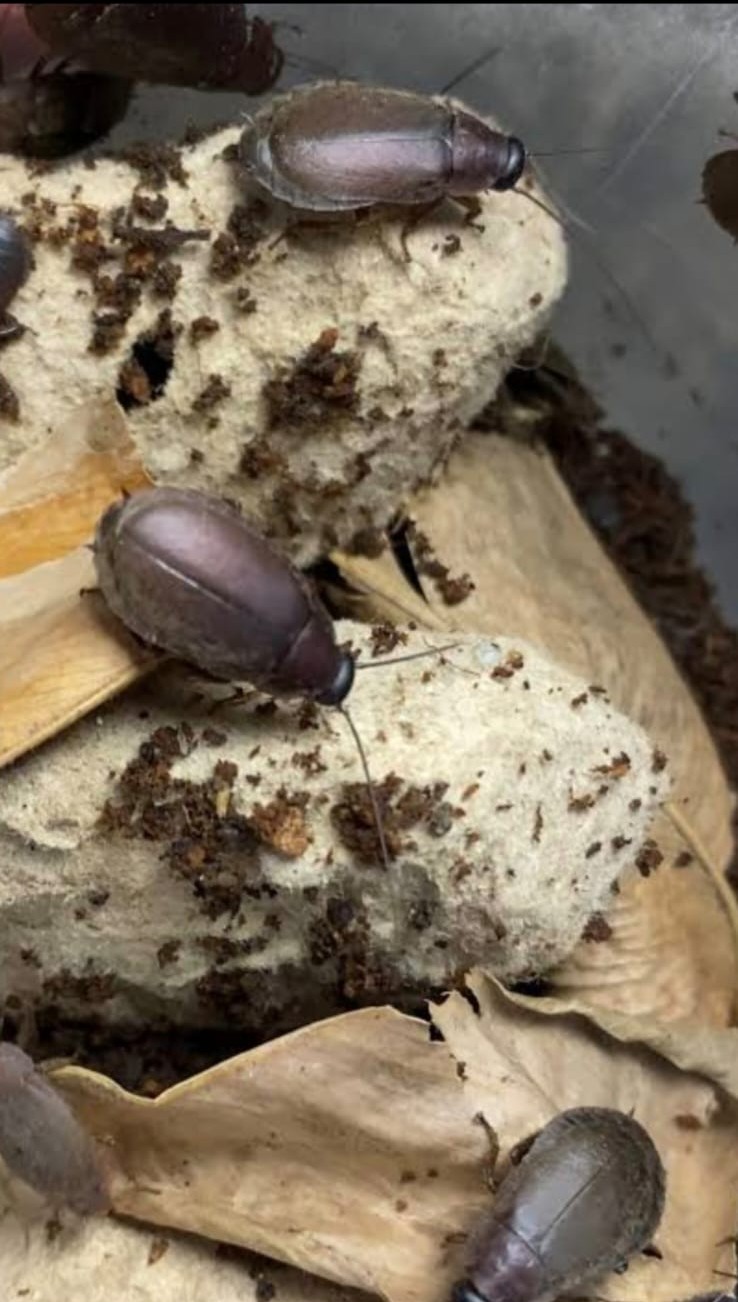
  • Cockroach Janata Party: Can It Become India’s Next Political Disrupter

    The sudden rise of the so-called “Cockroach Janata Party” or CJP has surprised many observers of Indian politics. Barely days old in public consciousness, it has already generated enormous discussion across social media platforms, especially among urban youth. Many dismiss it as a passing internet joke, while others see in it the early signs of a deeper political current. Whether it survives or disappears is still uncertain, but the phenomenon itself reveals much about the changing nature of politics in India.

    The symbolism of the “cockroach” is central to the movement’s appeal. What began as an insult directed at unemployed and frustrated youth was quickly appropriated and transformed into a badge of survival and resistance. The cockroach, after all, is known for endurance. Many young Indians facing unemployment, insecure work, rising costs, shrinking opportunities, and political exclusion identified with this image. The movement’s humour, memes, sarcasm, and AI-generated imagery gave it a language very different from traditional political communication. Yet beneath the jokes lies visible anger.

    Some comparisons with the rise of the Aam Aadmi Party are inevitable. AAP too emerged at a moment when many people felt ignored by the political establishment. It used unconventional communication, volunteer networks, and urban frustration to create a powerful political identity. At the time of its birth, many commentators dismissed it as an experiment that would quickly fade away. Yet it went on to form governments and reshape politics in Delhi and Punjab.

    Critics of the comparison argue that India’s entrenched caste networks, local patronage structures, and electoral machinery make it impossible for a meme-driven movement to become a serious political force. But those same realities existed even before the AAP emerged. Political systems often appear rigid until they suddenly shift. History repeatedly shows that established political equations can be disrupted when a new social mood captures public imagination.

    At present, however, CJP remains more a political mood than a political organisation. It has visibility, symbolism, and emotional resonance, but it does not yet possess the structure that sustains electoral politics in India. A successful political force requires organisation at the ground level, local leadership, financing, policy positions, booth management, and long-term discipline. Social media virality can create visibility quickly, but durable political institutions are usually built slowly.

    Still, political movements do not always begin as formal parties. Sometimes they begin as cultural or ideological energies before acquiring electoral shape. The relationship between the RSS and BJP is often cited as an example. The RSS itself did not begin as an electoral organisation. Over decades, a broader ecosystem emerged, eventually giving rise to political representation through the Jana Sangh and later the BJP. Similarly, AAP emerged from the anti-corruption movement before becoming a structured political party.

    Yet the BJP itself has evolved significantly over time. While many BJP leaders came from RSS backgrounds, many others entered from Congress and regional party traditions. As political parties grow, they often absorb leaders, styles, and methods from multiple sources. The current BJP under Narendra Modi and Amit Shah is often described as far more centralised and leadership-driven than the earlier cadre-oriented BJP. Figures such as Subramanian Swamy frequently claim that tensions exist between the BJP leadership and the RSS. Whether exaggerated or not, such discussions reflect the reality that political organisations change once they become dominant electoral machines.

    In that context, CJP may eventually resemble the Congress tradition more than the RSS model. The Congress historically functioned as a broad umbrella party capable of absorbing different ideologies, castes, regions, and social groups. It was less a rigid ideological cadre organisation and more a flexible political platform united by broad emotional and political themes. CJP too currently appears driven more by shared frustration and anti-establishment sentiment than by any coherent ideological doctrine.

    Its supporters seem united less by a detailed political programme and more by common feelings: anger at unemployment, distrust of elites, resentment against concentration of power, and exhaustion with conventional politics. This is why the movement resonates strongly with sections of digitally connected youth who feel unseen by established parties. The movement’s humour itself becomes political. Memes, irony, and satire are not merely entertainment; they are methods of expressing alienation in a generation shaped by the internet.

    Whether CJP becomes a serious political force or fades into internet history will depend on what happens next. If it remains confined to memes and symbolic protest, it may disappear as quickly as it emerged. But if it develops organisation, leadership, policy direction, and real-world networks, it could evolve into something larger. Indian politics has repeatedly shown that seemingly marginal currents can become mainstream far faster than experts expect. Right now, the Cockroach Janata Party may look chaotic, humorous, and improbable. Yet beneath the satire lies a serious question: how long can a political system ignore the frustrations of an entire generation before those frustrations begin to seek new political forms?

  • Standalone Crisis – India’s Financial Vulnerabilities Diverge from Global Tide

    The modern economic reputation of India was built on a foundational promise of predictable, tightly managed currency stability. The central bank prided itself on turning the rupee into a defensive shield within the emerging market universe, keeping its annual depreciation against the US dollar to a steady, manageable crawl. This structural predictability acted as an institutional magnet, drawing international funds into Indian equities under the firm belief that their asset gains would not be wiped out by sudden currency shocks. However, recent dramatic shifts have upended this calculus. The currency broke out of its historic bands to touch record lows near 97/USD, cannibalizing equity gains and turning the country into an expensive valuation trap for international fund managers. The resulting behavior has been a calculated, structural de-risking rather than a temporary panic, evidenced by foreign portfolio investors systematically dumping billions of dollars in Indian stocks, pushing foreign ownership of the equity market down to a fourteen-year low.

    This loss of international faith is exacerbated by an aggressive global tech rotation. Capital is migrating away from India’s services-heavy landscape toward North Asian hardware hubs to feed the exponential infrastructure needs of the artificial intelligence boom. While local policymakers previously pointed to domestic institutional flows and automated retail systematic investment plans as an absolute firewall against foreign flight, this domestic defense reveals an internal contradiction. The massive institutional buying numbers reported weekly are heavily padded by historical, passive automation and state-backed fund deployment. By contrast, the active retail trading base is hitting a visible exhaustion point. Individual small investors are manually hitting the sell button to protect their capital, pulling out billions of rupees from direct stock holdings. This means that while automated retail cash indirectly funds institutional buying, active retail minds are simultaneously voting to withdraw direct liquidity from the table.

    The frontline battleground of this crisis shifted directly to the trading desks, where the central bank launched a heavy, coordinated counter-offensive to halt a speculative run on the 97/USD threshold. Using an ambush strategy, the monetary authority aggressively dumped hundreds of millions of dollars into the thin, pre-market segment to break the morning momentum of short sellers before regular trading even commenced. Throughout the day, the central bank conducted relentless, level-agnostic dollar sales through state-run banks to crack upward bids, successfully dragging the rupee back toward the 95/USD zone. This aggressive intervention, however, would have extracted a severe physical price. Official statistical data of even the previous week confirms that foreign exchange reserves plummeted by over $8 billion in a single week to settle near $688 billion.

    Furthermore, market analysts emphasize that the headline reserve figure remains a structural overstatement of unencumbered cash. A deep look at the central bank’s ledger reveals short forward book of outstanding sales contracts, representing future dollar commitments that are legally binding but not deducted from current weekly reports. When these liabilities are subtracted, India’s true net reserves compress significantly, drastically shrinking the highly publicized eleven months of import cover. Realizing that burning physical cash at this rate is unsustainable, the central bank announced a five-billion-dollar buy-sell swap auction. This tactical maneuver temporarily pulls dollars back from commercial banks while injecting rupee liquidity to patch up the domestic cash crunch caused by open-market dollar sales.

    This compounding external pressure isolates India from its peer emerging markets, transforming what could have been a generic global cycle into a highly localized crisis. Unlike the universal taper tantrum of thirteen years ago, which was driven by a rampant broad US dollar that crushed all developing economies simultaneously, the current global environment is relatively stable, with the dollar index softening and peer currencies in Latin America and Africa posting robust gains. India stands alone with the external balance of payments under unprecedented strain.

  • Mustard Oil – The Heart Friendly Oil

    Mustard oil is more than a cooking medium in eastern India; it is a marker of regional identity shaped by ecology, agriculture, and long historical experience. The Gangetic plains and the Brahmaputra valley form one of the world’s most productive mustard-growing belts. Fertile alluvial soil, cool winters, and extensive river systems create ideal conditions for mustard cultivation as a rabi crop after rice harvest. Abundant, resilient, and easy to press locally, mustard became a dependable oil in a pre-industrial economy where communities cooked with what grew naturally around them. Over time, this ecological availability translated into culinary centrality. Eastern Indian cuisine evolved in close dialogue with this landscape. Rice from floodplains, fish from rivers and wetlands, seasonal vegetables, and mustard oil together formed a self-sustaining food system. Mustard oil’s pungency pairs especially well with fish, cutting through its natural oiliness and enhancing flavour rather than masking it. Dishes such as shorshe ilish, light fish jhols, and simple fried fish are inconceivable without mustard oil; replacing it with neutral oils is often experienced as a loss of authenticity. In this sense, mustard oil functions much like olive oil in the Mediterranean—a defining expression of place. Beyond taste, everyday household practices reflected empirical knowledge. In many eastern homes, vegetables suspected of carrying worms or parasites were washed with water and rubbed with a few drops of mustard oil before cooking. Modern studies now confirm that mustard contains compounds such as allyl isothiocyanate with antimicrobial and antifungal properties. While not a substitute for proper washing or cooking, this practice reduced surface contamination and illustrates how traditional kitchens encoded practical biochemical wisdom long before formal science named it. What emerges is not nostalgia but logic. Mustard oil represents climate-appropriate nutrition, agricultural sustainability, and cultural continuity. It is warming in cool winters, resistant to spoilage in humid conditions, locally produced, and integrated into a closed ecological loop. Over thousands of years, eastern Indian societies refined their food habits through observation, survival, and adaptation. Mustard oil, therefore, is not merely traditional—it is a highly rational, sustainable cooking fat that evolved organically from land, rivers, and lived experience.