
The story of humanity is far richer and stranger than the solitary figure of modern man walking alone across the planet. Some twenty-one species of human, or at least of bipedal apes more closely related to us than to chimpanzees, have left their traces in the African and Eurasian fossil record. We are simply the last ones standing. This is not a tale of linear ascent from ape to angel, but of a dense, tangled bush of related populations that rose, branched, coexisted, and mostly vanished.
Near the base of that bush stand two of the earliest contenders for the title of first hominin. Sahelanthropus tchadensis, known from a nearly complete skull and fragmentary limb bones found in Chad, lived roughly seven to six million years ago, right around the time our lineage is thought to have split from that of chimpanzees. Its small canines and the positioning of the skull suggest an upright posture; recent analyses of its femur have been interpreted as evidence of bipedal walking, though debate continues. A little later, around six million years ago, Orrorin tugenensis appears in the hills of Kenya. Its thigh bones also carry marks of upright locomotion while still allowing for climbing. Neither was a solitary Adam or Eve. Both belonged to populations of small-brained, ape-faced bipeds navigating a changing African landscape of forest and grassland.
From these deep roots the tree ramified. Australopiths of various kinds flourished for millions of years. Early members of our own genus, Homo, appeared by about 2.8 million years ago. Later forms—erectus-like populations, the Neanderthals, the Denisovans, the diminutive “hobbits” of Flores, Homo naledi, and others—shared the planet with one another and, eventually, with us. Many of these species were not our direct ancestors. They were cousins, side branches that diverged, sometimes interbred with our own line, and then disappeared. To say that Homo sapiens evolved “from” the other twenty is therefore imprecise. We share deep common ancestry with them, but evolution does not proceed by each species obligingly turning into the next. It proceeds by populations changing, splitting, and occasionally exchanging genes.
Our own species is the latecomer. The oldest fossils widely accepted as Homo sapiens date to approximately 315,000 years ago at Jebel Irhoud in Morocco, with other early African remains falling in the same broad window of three hundred thousand years. By that time the earlier hominin diversity was already thinning. Within the last forty thousand years we became the sole remaining human species. The genetic markers popularly called Mitochondrial Eve and Y-chromosomal Adam are younger still—coalescence points for the maternal and paternal lineages of living people, dating to roughly one hundred to three hundred thousand years ago. They were not the first humans, nor the only ones alive in their day; they simply happen to be the ones whose particular genetic lines survived unbroken to the present.
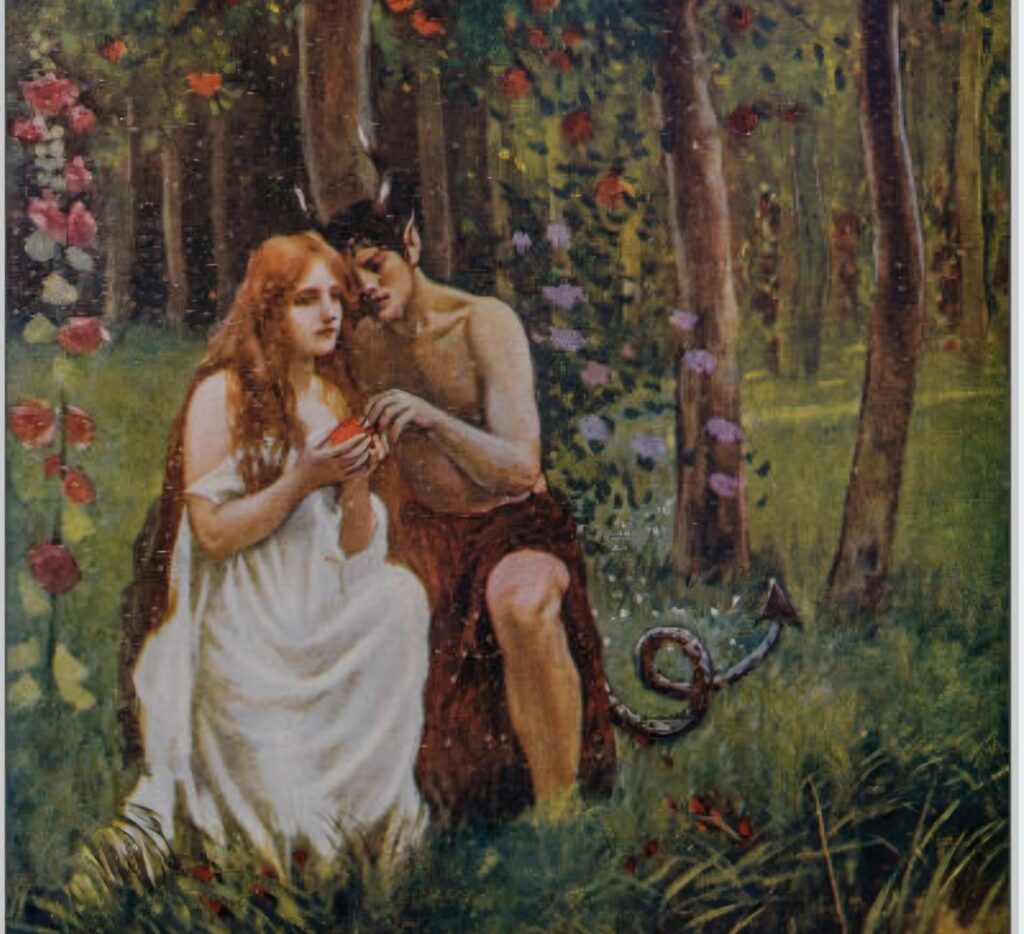
It is natural, when contemplating such deep time, to reach for the language of beginnings. If Adam and Eve are understood simply as the first humans, the scientific record offers no single couple to match the description. The transition to bipedalism, larger brains, tool use, and eventually modern anatomy unfolded across many generations and many thousands of individuals. There was never a moment when only two people existed and from them all others descended. The traditional narratives that speak of a first pair address questions of meaning, identity, and moral origin. The fossil and genetic evidence addresses the material history of populations. The two accounts need not be forced into the same frame.
What remains is a quieter, more expansive truth. We are the product of a long and crowded experiment in bipedal life. Dozens of related forms once walked the earth. Most are gone. Their bones remind us that our loneliness as a species is recent, and that the path to the present was never a straight road walked by a solitary pair, but a braided stream of many lives flowing through deep time. OK
Leave a Reply