
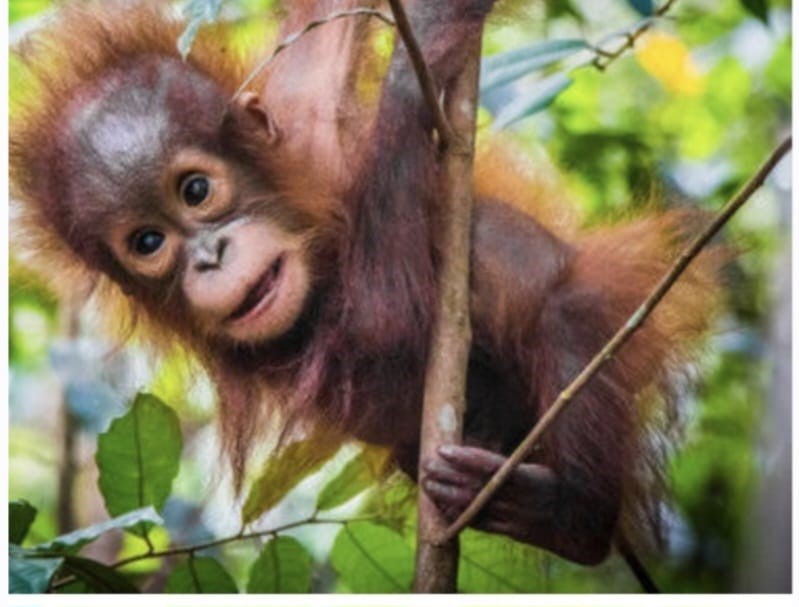
Orangutans, the “people of the forest,” are among the most intelligent and charismatic of the great apes. Yet their very existence is hanging by a thread. Across Indonesia and Malaysia, these arboreal giants are being squeezed out of their rainforest homes by deforestation, palm oil plantations, and the relentless march of human development. The story of orangutan conservation is not just about saving a species—it is about confronting the choices humanity makes in the name of progress, and whether we are willing to share the planet with beings whose survival depends on the forests we so casually destroy.
The challenges are immense. Palm oil, a cheap and versatile ingredient found in everything from biscuits to shampoo, has become the single greatest driver of orangutan habitat loss. Vast swathes of rainforest have been cleared to make way for monoculture plantations, leaving orangutans with nowhere to forage, nest, or roam. In Borneo alone, more than half of orangutan habitat has been lost in just two decades. The fires that often accompany this deforestation are equally devastating. In Kalimantan, wildfires in 2026 burned through 60 percent of orangutan habitat, leaving thousands of apes starving and disoriented. These are not isolated incidents—they are systemic, recurring assaults on the very ecosystems orangutans depend upon.
The illegal wildlife trade adds another layer of cruelty. Baby orangutans are prized in the exotic pet market, fetching tens of thousands of dollars. To obtain them, poachers kill the mothers, leaving infants traumatized and vulnerable. The recent rescue of five baby orangutans in Odisha, India, highlights the global reach of this trade. Found abandoned in a plantation, these infants were calm and comfortable around humans—clear evidence they had been smuggled and raised in captivity. Their presence in India, far from their native forests, underscores the scale of trafficking networks that treat endangered species as commodities.
Against this bleak backdrop, rehabilitation centers have become sanctuaries of hope. Sepilok in Sabah, Malaysia, established in 1964, was the world’s first orangutan rehabilitation facility. Its structured programs—quarantine, nursery care, forest school, and semi-wild release—have returned hundreds of orangutans to the wild, with an impressive success rate. Semenggoh in Sarawak offers a semi-wild model, where orangutans roam freely in forest reserves but still receive supplemental feeding. In Indonesia, centers like those run by Yayasan Inisiasi Alam provide emergency care for orangutans displaced by wildfires and deforestation. These institutions are not just rescue facilities; they are laboratories of resilience, teaching orphaned apes how to climb, forage, and build nests, skills they would normally learn from their mothers over six to eight years.
The rehabilitation process is painstakingly slow. Orangutans are among the slowest-reproducing mammals, with females giving birth only once every six to eight years. This means that every lost individual is a blow to the species’ survival. Rehabilitation must replicate the maternal bond, with caregivers acting as surrogate mothers, guiding infants through “forest school” where they learn to identify fruits, swing through the canopy, and avoid predators. Only when they demonstrate independence are they moved to pre-release islands, semi-wild environments where their survival instincts are tested. Finally, they are released into protected forests, fitted with GPS collars and monitored by field teams. Success is measured not just in survival, but in reproduction—when rehabilitated orangutans give birth in the wild, it signals that the cycle of life has been restored.
Yet rehabilitation alone cannot solve the crisis. Without intact forests, there is nowhere to release these apes. Conservation must therefore extend beyond rescue centers to the broader landscape. Habitat corridors that connect fragmented forests are essential to maintaining genetic diversity. Stronger enforcement against trafficking and poaching is critical. Equally important is community collaboration. The people living at the edge of forests are often caught between poverty and conservation. Supporting them with sustainable livelihoods—such as eco-tourism, agroforestry, or certified palm oil—can reduce reliance on destructive practices and foster coexistence.
The plight of orangutans forces us to confront uncomfortable truths. Our consumer choices, from the snacks we eat to the cosmetics we use, are directly linked to the destruction of rainforests. The rescued infants in Odisha are not just victims of smuggling; they are symbols of a global failure to protect one of our closest relatives in the animal kingdom. But they are also reminders that it is not too late. With concerted effort, orangutans can be rehabilitated, forests can be restored, and coexistence can be achieved. The question is whether we have the will to act.
Orangutans are more than conservation statistics. They are sentient beings with rich emotional lives, capable of laughter, grief, and ingenuity. To lose them would be to lose a mirror of ourselves, a living testament to the diversity of life on Earth. Saving them is not charity—it is a moral obligation, a recognition that our fate is tied to theirs. If the forests fall silent, it will not just be the orangutans who vanish. It will be a piece of humanity itself. OT
Leave a Reply