The oldest human question
Death is the one certainty every human society has had to confront. Yet how we confront it has never been fixed. We have buried, burned, exposed, cached, and sometimes simply abandoned our dead. The archaeological record shows that mortuary practice is not a single human instinct but a changing cultural technology—one that reflects belief, ecology, social organization, and power.
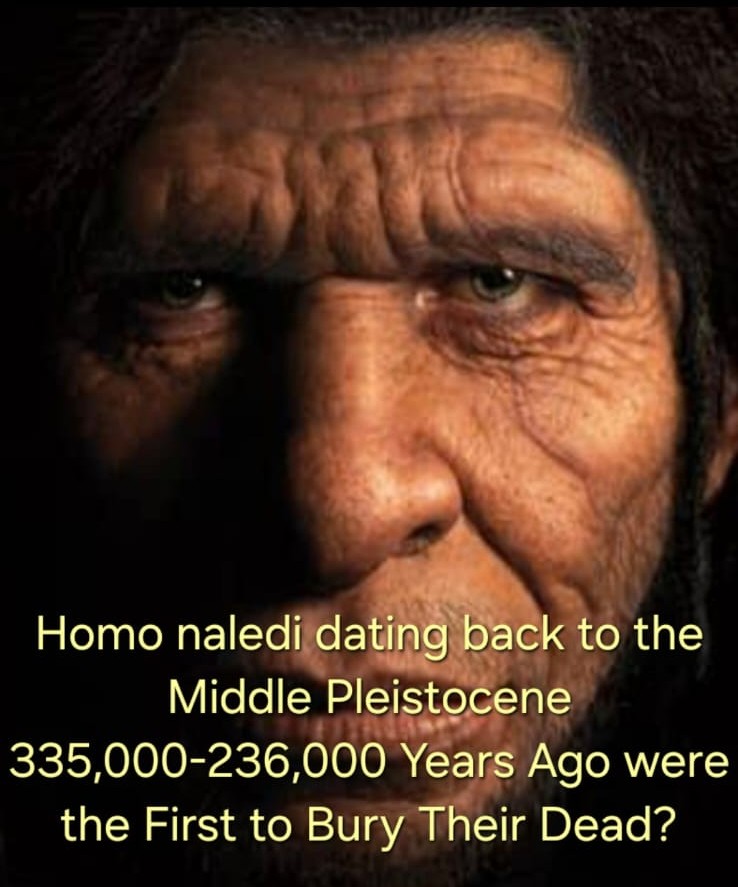
The popular claim that Homo naledi “buried its dead” captures this fascination. It would be remarkable if a small-brained relative of ours, living hundreds of thousands of years ago, had already practised burial. But the evidence is more complicated—and more interesting—than the headline suggests.
Not all early humans buried
The strongest evidence for burial outside our own species belongs to the Neanderthals. At sites across Europe and western Asia, Neanderthal bodies were placed in shallow graves or prepared depressions, with the earliest widely accepted examples dating to roughly 130,000–120,000 years ago. Many specialists now accept that Neanderthals buried their dead at least occasionally, though the extent of ritual or symbolic meaning remains debated.
Early Homo sapiens were burying their dead in the same broad period. The caves of Skhul and Qafzeh in Israel contain some of the oldest widely accepted human graves, suggesting that burial emerged among both Neanderthals and modern humans in the Middle Palaeolithic.
Other Homo species are less clear. At Sima de los Huesos in Spain, remains of many individuals were accumulated in a deep cave chamber more than 200,000 years ago. This may represent deliberate “funerary caching”—bodies carried or dropped into the cave—but it is not proof of burial in a dug grave.
Homo naledi is the most controversial case. Its remains were found deep within South Africa’s Rising Star cave system, in places difficult to reach and hard to explain by accident. Some researchers argue that bodies were placed in shallow depressions and covered with sediment; others say the evidence does not establish intentional burial. The safest formulation is that Homo naledi may have deliberately deposited its dead in caves, but whether it buried them remains unresolved.
Denisovans, despite being close relatives of both Neanderthals and modern humans, present no accepted evidence of burial. Their known fossils are few and fragmentary, mostly teeth and bone fragments from Denisova Cave. Genetic closeness does not translate automatically into shared funerary customs.
Burial was never universal
This history undermines a comforting assumption: that burial is a timeless, universal human practice. It was not. Even among Neanderthals and early modern humans, burial appears to have been intermittent rather than routine. Many communities likely treated their dead in ways that left little trace—through exposure, scattering, cave deposition, or secondary processing of bones.
Nor did burial simply evolve in a straight line toward modern practice. In much of Europe, inhumation gave way to cremation during the later Bronze Age, especially with the Urnfield tradition from about 1300 BCE. Cremation was not a rejection of the dead; it was another way of transforming them.
The earliest known cremation is much older than the Bronze Age. Mungo Lady, found at Lake Mungo in Australia, dates to about 40,000 years ago. More recent regional examples include a roughly 9,000-year-old pyre at Beisamoun in Israel and a newly reported cremation at Hora 1 in Malawi, dated to about 9,500 years ago. But cremation became a dominant rite only much later.
The dead can be treated without burial
Zoroastrian practice offers a striking reminder that burial is not the only respectful way to dispose of a body. Traditional Zoroastrians place their dead on a raised stone platform, the dakhma or Tower of Silence, where vultures consume the flesh. This is excarnation: a deliberate mortuary system, not neglect.
Its logic is theological. In Zoroastrian belief, a corpse becomes ritually impure after death, while earth, water, and fire are sacred. Burial would pollute the earth; cremation would pollute fire; disposal in water would pollute water. Exposure allows vultures and natural processes to complete the work without contaminating the elements.
Tibetan sky burial is another form of excarnation, though its religious meaning differs. In both cases, the body is not discarded; it is returned to a wider cycle of life through birds, air, and landscape.
Children complicate the picture
The treatment of infants and young children reveals how varied mortuary customs can be. In many ancient societies, newborns and unweaned infants were not buried like adults. They might be placed in pots, buried beneath house floors, gathered in communal cemeteries, or deposited in wells and cisterns.
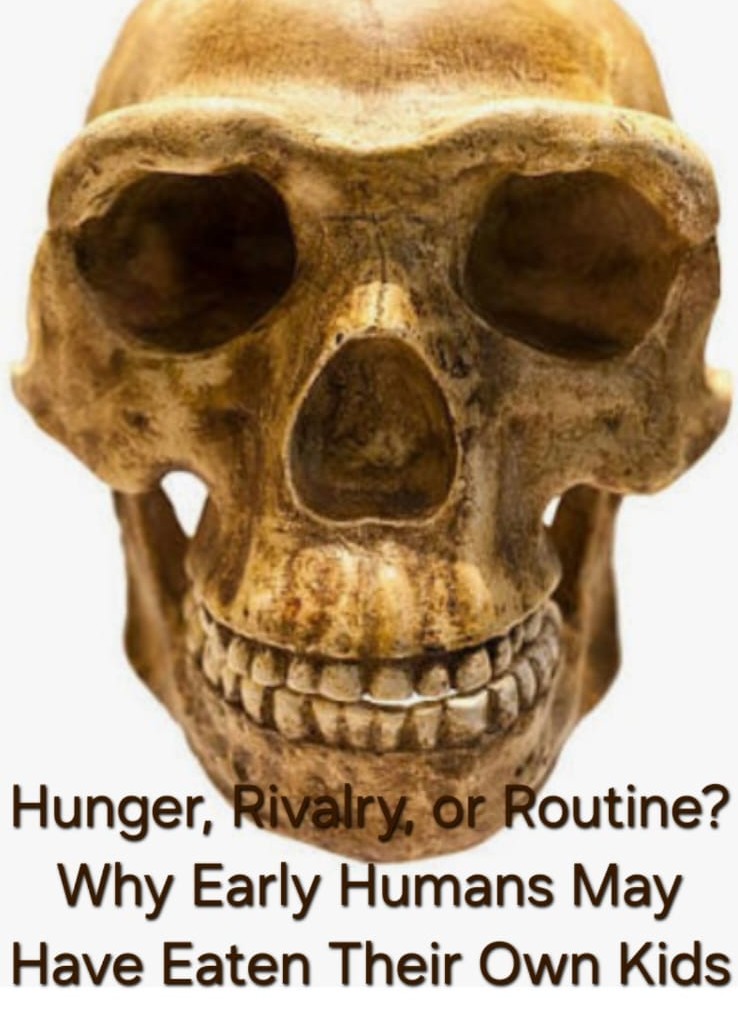
Such deposits do not automatically indicate infanticide. At Roman-period sites in East Yorkshire, neonatal burials followed careful, age-specific rules, suggesting formal funerary customs rather than careless disposal. Elsewhere, however, concentrations of infant remains—in drains, wells, or pits—have been interpreted as possible evidence of infanticide or abandonment.
The distinction matters. High infant mortality was a grim reality of premodern life. A cluster of infant bones may reflect a special burial custom, natural deaths, or deliberate killing. Archaeology can sometimes distinguish these possibilities, but often cannot do so with certainty.
What India shows today
Cremation also remains a living example of cultural variation. India is probably the country where the greatest number of people are cremated, given its population size and the Hindu majority’s customary rite. Hindus, Sikhs, Buddhists, and Jains generally cremate, while most Muslims and many Christians bury their dead.
But India does not have the highest proportion of cremations. Japan does, nearly 100% of deaths there involve cremation, shaped by Buddhist and Shinto traditions and by practical constraints such as limited burial space. India’s national rate is roughly 80%, but its enormous population means its absolute number of cremations likely exceeds every other country’s.
The distinction between number and proportion matters. India cremates more people in total; Japan cremates almost everyone.
Death reveals the living
Mortuary practices are often read as windows into belief in an afterlife, ancestor worship, or symbolic thought. Sometimes they are. But they also reveal more mundane realities: mobility, disease, scarcity, social hierarchy, territorial claims, and the practical problem of what to do with a decomposing body.
A grave can mark affection, status, or memory. Cremation can express purification, transformation, or release. Exposure can protect sacred elements from pollution. A jar burial can mark a child’s age and social position. None of these practices is simply more “advanced” than another.
The deeper lesson is that humans have never had one relationship with death. We have had many. What the archaeological record shows is not a single human way of dying, but a long, uneven conversation about what a body means after life has left it.