
There is a peculiar and profoundly important distinction that often gets lost in the popular retelling of South Asian history. We speak of the Aryan “invasion,” the Greek “conquest,” the Turkic “onslaught,” and the British “colonial project” as if they were all chapters in the same story of outsiders arriving. But this is a fundamental misreading of history, one that flattens a complex, beautiful, and deeply human narrative into a simplistic sequence of foreign dominations. The truth is far more remarkable: with the singular exception of the modern European colonial powers, almost every group that entered the subcontinent of South Asia throughout its long history never left. They did not sail back to Greece, ride back to the Central Asian steppes, or march back to Persia. Instead, they married, they settled, they built temples and tombs, they spoke new languages, and they became the very ancestors of the billion people who call this region home today. South Asia is not a museum of ancient arrivals; it is a living, breathing graveyard of empires that gave birth to a continuous and resilient civilization.
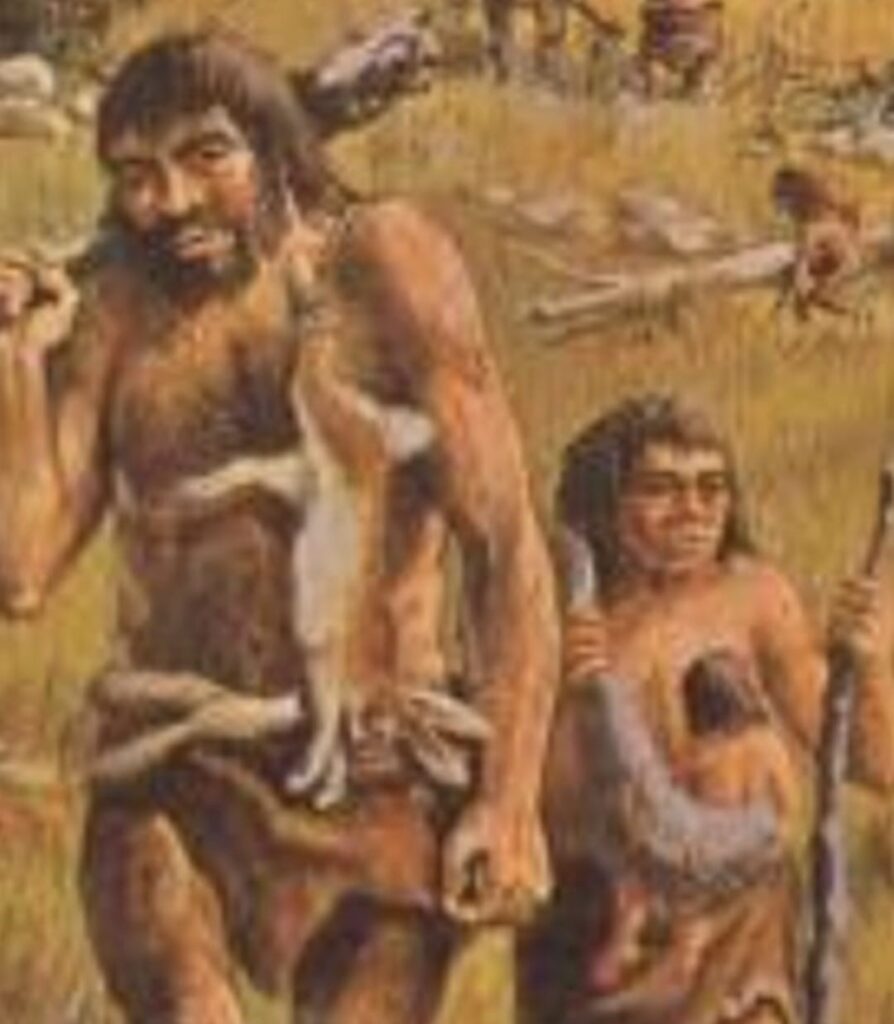
The story of the first Homo sapiens arriving in South Asia some 70,000 to 50,000 years ago sets the stage for this perpetual process of migration and assimilation. These were the deep ancestors, the original hunter-gatherers whose genetic footprint remains strongest in the tribal populations of the south and the Andaman Islands. Then came the great linguistic and demographic shifts. The Dravidian-speaking peoples, who are believed to have entered South Asia in the Proto-Elamite period (c. 3200–2700 BCE) were once spread across the entire subcontinent, with their language perhaps even linked to the enigmatic Indus Valley Civilization. They were an indigenous population whose deep ancestry, the “Ancient Ancestral South Indians,” diverged from other groups tens of thousands of years ago. The arrival of the Indo-Aryans around 1500 BCE was the first major migration event recorded in the collective memory. Modern archaeology and genetics paint a picture of a slow, prolonged migration of steppe pastoralists.
This pattern repeated itself with astonishing consistency for millennia. When Alexander the Great marched his army to the Indus in 326 BCE, he left behind more than just a legend. He left garrisons of tired, wounded, and opportunistic soldiers—Greeks, Persians, and Macedonians—who chose to stay and marry local women. These small settlements evolved into the Indo-Greek Kingdoms, a remarkable fusion where Hellenic art met Buddhist spirituality to create the sculptural masterpieces of Gandhara. The Greeks did not depart with Alexander; they were absorbed. The same fate befell the Scythians, the fearsome nomadic horsemen who swept down from Central Asia around 150 BCE. They established the Indo-Scythian kingdoms, ruled as provincial governors, and then quietly faded into the local population, leaving behind only traces in the gene pool of northwest of the subcontinent. The Alchon Huns, who shattered the Gupta Empire in the 4th century CE, were remembered for their brutality, yet even they did not retreat. Their descendants stayed, assimilated, and their fierce warrior culture blending with the martial traditions of the region.
The arrival of Islam introduced yet another layer to this ancient mosaic. The Arabs who conquered Sind in 711 CE established the first Islamic state in the subcontinent, their political rule lasted a few centuries. However, the Arab merchants who settled along the Malabar Coast in Kerala did not leave. They married local women, and their descendants, the Mappila Muslims, are an integral community in South India today. The centuries of Turkic rule, from the Delhi Sultanate in 1206 to the Mughal Empire, represent the most dramatic example of this phenomenon. The Turks and the Turco-Mongols who came with Babur were not simply colonial administrators. They intermarried with locals, adopted Persianized Indian culture, and gave birth to a new language—Urdu—that was born on the battlefields and in the bazaars of North India. By the time of the later Mughals, they were far more Indian than Central Asian. Even the Mongol hordes of the 13th and 14th centuries, who terrorized the Delhi Sultanate with constant raids, contributed to the region’s mixing; their very presence spurred the movement of peoples and forced the sultans to adapt, but the Mongols themselves were repelled without leaving a permanent political dynasty. Yet they too left behind traces in the local populations.
The great exception to this rule of settlement and integration is the modern European colonial project. The Portuguese, French, and especially the British came with different ethos. They arrived not to settle permanently but to extract wealth, governed by an industrialized racial hierarchy that actively discouraged intermarriage and maintained a strict social distance from the local population. British officers served their term and sailed home. When the British Raj ended in 1947, they left. The French departed from their colonies, and the Portuguese were finally expelled from Goa in 1961. They were the only ones who truly came, ruled, and left. In doing so, they threw the rest of history into sharp relief.
The history of South Asia is a story of perpetual homecoming. The Indo-Aryans, Greeks, Scythians, Huns, Arabs, Turks, Mongols, etc., all came, fought, ruled, and then became South Asian. This is the fundamental reality that makes the question “Who belongs in South Asia?” not only irrelevant but absurd. Everyone belongs, because everyone who arrived stayed. And those who truly left—the British and the other European colonizers—left behind a political legacy of borders that cannot contain the immense, interwoven and resilient human tapestry they found. EK
Leave a Reply