Author: sustenanceandstories@gmail.com

  • South Asia’s Living Archive: Reading the 65,000 Years of Human History in the Subcontinent

    The Mosaic in Our DNA

    Look closely South Asia, and you will see a human tapestry of unmatched diversity—hundreds of languages, distinct cultural traditions, and an extraordinary spectrum of physical features. For centuries, our understanding of who we are was shaped by local myths, sacred texts, or colonial classifications that attempted to divide us into rigid, isolated categories. But over the last two decades, a quiet revolution has taken place inside genetics laboratories around the world. By reading the ancient stories written directly into human DNA, science has handed us a profound, humbling truth: there is no such thing as a pure race. Every single person in the subcontinent is the product of profound ancient unions. We are not a collection of separate peoples, but a living, multi-layered mosaic.

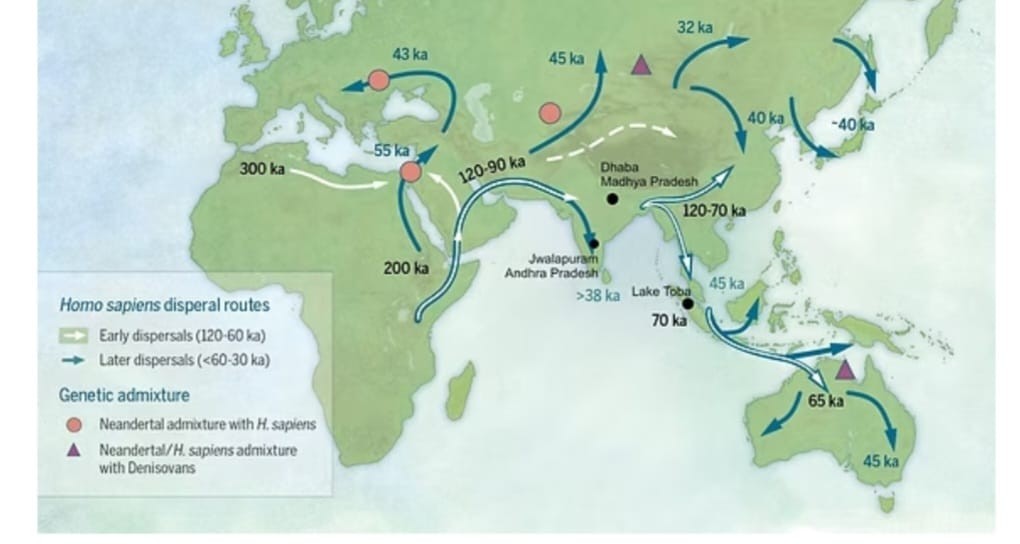
    The foundation of this mosaic was laid roughly 65,000 years ago, when a small group of Homo sapiens left Africa, following the warm coastlines of the Indian Ocean. These intrepid pioneers became the first modern humans to settle in South Asia, leaving an indelible genetic footprint that scientists call the Ancient Ancestral South Indian (AASI) lineage. This deep hunter-gatherer root is the bedrock layer of subcontinental genetics. Whether in the high Himalayas, the fertile plains, or the southern tip of Tamil Nadu, every native South Asian carries this deep prehistoric heritage. The indigenous Andamanese populations—such as the Onge and Jarawa—remain our closest living bridge to these ancient settlers, preserving a genetic line that also echoes across the ocean in Aboriginal Australians and Papuans.

    Over the millennia, this initial hunter-gatherer foundation was transformed by dramatic new waves of human movement. Sometime between 10,000 and 7,000 years ago, communities carrying genetic markers related to early Iranian hunter-gatherers and Zagrosian farmers moved into northwestern South Asia. Their integration with the resident hunter-gatherers sparked a cultural and technological boom that culminated in the Indus Valley Civilization—one of the greatest urban experiments of the ancient world. Ancient DNA extracted from a Bronze Age burial at Rakhigarhi revealed that this metropolis was built by a deeply mixed population, free from Central Asian Steppe or Middle Eastern farmer genetics. As climate shifts caused these bronze-age cities to decline after 1900 BCE, their inhabitants migrated southward and eastward, carrying with them what scholars strongly believe was the Proto-Dravidian language family.

    Yet the subcontinent’s story was far from complete. Around the same time the Indus cities faded, new groups were moving across the landscape. Bronze Age pastoralists from the Eurasian Steppe began migrating into northern areas between 1900 and 1500 BCE, bringing with them cattle-herding practices, patriarchal social structures, and the early Indo-Aryan dialects. Simultaneously, from the east, wet-rice farmers speaking Austroasiatic languages crossed over from Southeast Asia, with incoming males marrying into local hunter-gatherer groups and giving rise to today’s Munda and Khasi communities. Soon after, Sino-Tibetan groups descended from the Yellow River basin along the eastern Himalayas and Brahmaputra valley, adding another vibrant genetic and linguistic layer to Northeastern India.

    What genetics ultimately proves is that for tens of thousands of years, South Asia was an open, dynamic crossroads—a grand melting pot where diverse populations met, traded, intermarried, and forged new cultures. It was only around 2,000 years ago, as strict social rules and endogamy became institutionalized, that this fluid intermixing slowed down, freezing these diverse ancestral ratios into the specific community profiles we see today. Our ancient DNA tells an inspiring story. Every South Asian carries the legacy of Africa’s first wanderers, the builders of the Indus Valley, the pastoralists of the Steppe, and the farmers of Southeast Asia.

  • The Sea Anemone and the Secret of Our 600-Million-Year-Old Heritage

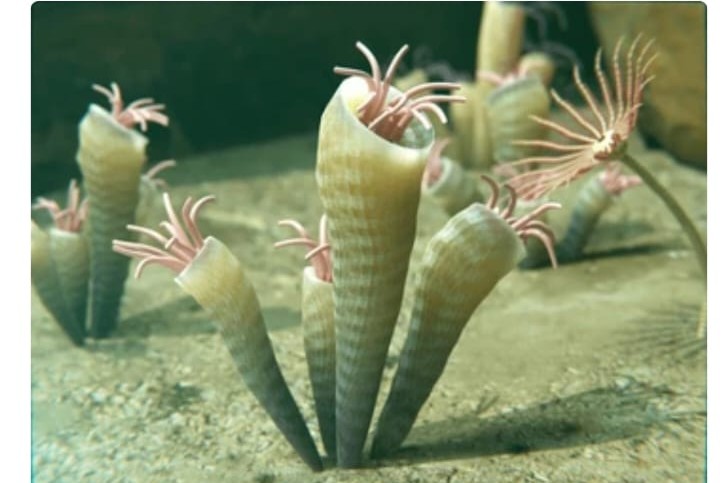
    The search for humanity’s origins often leads us to fossils of ancient mammals, dinosaurs, or early human ancestors. Rarely do we imagine that one of the most important clues to our own biological history might be hidden inside a soft-bodied sea creature anchored to a rock on the ocean floor. Yet that is precisely what a recent scientific discovery suggests.

    Researchers have found that sea anemones use a developmental mechanism known as BMP-Chordin shuttling, a process that helps organize the body during embryonic development. On the surface, this may sound like a technical detail of biology. In reality, it has profound implications for our understanding of evolution and the origins of animal life.

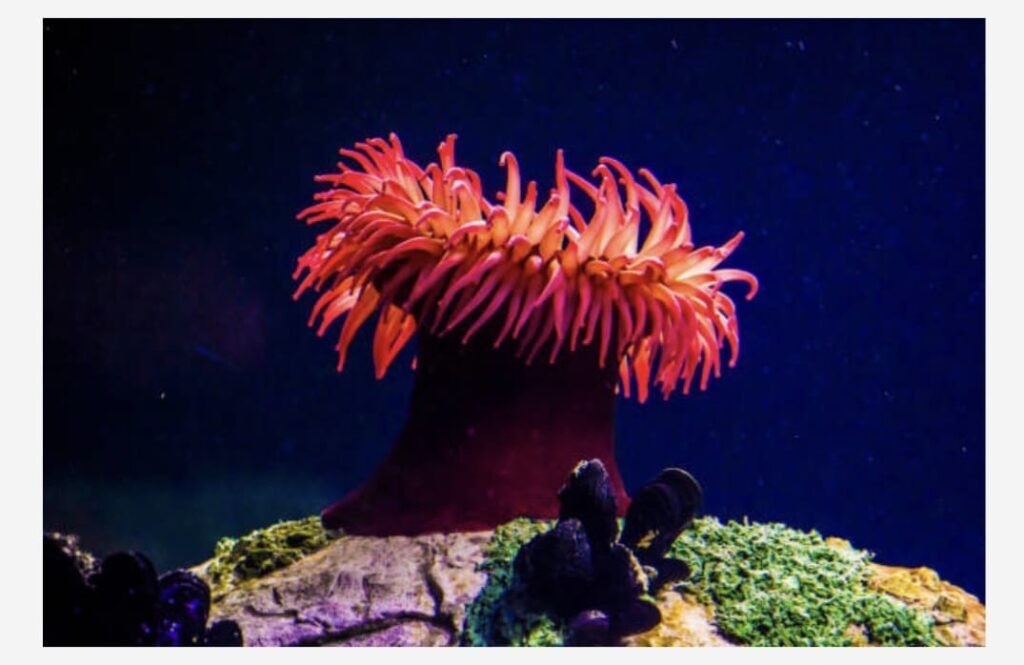
    Sea anemones belong to a group called cnidarians, which also includes corals and jellyfish. They possess no brain and lack the complexity that we normally associate with advanced animals. Nevertheless, researchers have discovered that these seemingly simple creatures use the same molecular toolkit employed by animals as diverse as frogs, flies, worms, and humans to establish fundamental body structures. This finding suggests that one of the key mechanisms responsible for shaping animal bodies is far older than previously believed.

    At the heart of the discovery are Bone Morphogenetic Proteins, or BMPs. These proteins act as signalling molecules during embryonic development. They help cells determine where they are located within a developing organism and what they are destined to become. Depending on the signals received, cells may develop into nervous tissue, skin, organs, or other specialized structures. In effect, BMPs provide embryos with a positional map.

    However, BMPs do not work alone. A molecule called Chordin regulates their activity. By binding to BMPs and transporting them through a process known as shuttling, Chordin helps establish the concentration gradients that guide tissue formation and define body axes. Together, BMPs and Chordin function as a biological navigation system, ensuring that cells develop in the correct place and at the correct time.

    What makes the new finding remarkable is that the BMP-Chordin system was already known from animals with bilateral symmetry, creatures possessing a clear left and right side, a front and back, and a top and bottom. Humans, insects, fish, birds, and countless other animals belong to this category. Sea anemones, by contrast, have long been regarded as members of a more ancient and simpler branch of life.

    The discovery that sea anemones use essentially the same developmental machinery narrows the apparent gulf between cnidarians and bilaterians. It suggests that the common ancestor of these groups, which lived more than 600 million years ago, may already have possessed the molecular tools required to organize a complex body plan.

    The timeline is astonishing. Life itself emerged on Earth roughly 3.8 billion years ago. For most of that immense span of time, the planet was inhabited only by microscopic organisms. Complex multicellular animals appeared relatively late. The ancestor implied by the BMP-Chordin discovery lived long before the Ordovician Period and even before the celebrated Cambrian Explosion, when animal diversity expanded dramatically.

    In other words, long before trilobites crawled across ancient seafloors and hundreds of millions of years before the first dinosaurs or mammals appeared, evolution may already have developed a sophisticated genetic mechanism for organizing animal bodies.

    This realization challenges a common misconception about evolution. We often imagine progress occurring through the continual invention of entirely new biological systems. Increasingly, however, science reveals that evolution is also a story of conservation. Ancient genetic tools are retained, modified, and repurposed across vast stretches of time. The same developmental instructions that help shape a sea anemone today may be related to those that guide the formation of the human nervous system and body axis.

    There is also a philosophical dimension to this discovery. Humanity has traditionally viewed itself as separate from simpler forms of life. Yet the deeper scientists probe into genetics and development, the more evident our connections become. A creature without a brain, living quietly beneath ocean waters, may preserve evidence of biological instructions shared with us across more than 600 million years of evolutionary history.

    The sea anemone’s message is both humbling and inspiring. It reminds us that the roots of our existence run deeper than civilizations, continents, or even vertebrates. They extend into a distant world where the earliest animals were experimenting with the molecular blueprints that would eventually give rise to coral reefs, insects, whales, and human beings. In that sense, the discovery is not merely about sea anemones. It is about understanding how, from a common ancestral toolkit, evolution built the astonishing diversity of life that inhabits Earth today. OT

  • From Sunlight to Breath: How Climate Shaped the Human Face

    Look at human faces across the world and one feature immediately announces our evolutionary diversity: the nose. Noses differ in height, projection, width and nostril shape from one population to another. These differences are not merely cosmetic. The nose is one of the body’s most sophisticated air-conditioning systems, and its architecture appears to carry an imprint of the environments in which our ancestors lived.

    Every breath begins its journey through the nose. Before air reaches the lungs, the nasal passages warm it, humidify it and filter out particles. The nasal cavity is lined with blood-rich tissue and mucus, while its intricate internal structures, particularly the turbinates, create extensive contact between inhaled air and the warm, moist nasal surfaces. By the time air reaches the deeper respiratory tract, it has already undergone substantial conditioning.

    That makes the nose an obvious candidate for climate adaptation. In cold, dry air, the conditioning job is demanding. A relatively narrow and elongated nasal passage can increase interaction between incoming air and the warm, moist nasal lining. The geometry also influences airflow and turbulence, helping the nose transfer heat and moisture to the air before it reaches the lungs. In warm, humid environments, incoming air requires less warming and humidification, and broader nasal passages may permit airflow with lower resistance.

    Human populations living for thousands of generations in different climates consequently developed different averages in nasal form. The pattern is not absolute—there is enormous variation within every population—but the geographical signal is striking enough to have attracted evolutionary investigation.

    A particularly important study appeared in PLOS Genetics in 2017. Zaidi and colleagues compared variation in nose shape among populations and used QST–FST analysis to ask whether differences were greater than would be expected from genetic drift alone. They found that nares width and alar-base width showed greater differentiation than expected under drift alone. More importantly, nostril width was significantly associated with temperature and absolute humidity: wider nares were more common in warmer, more humid ancestral environments, while narrower nares were associated with cooler, drier environments. The authors concluded that some aspects of nose shape may have been influenced by local adaptation to climate, while cautioning that human evolutionary history is complex and other forces may also have contributed.

    The nose therefore provides an intriguing example of a larger evolutionary principle: environment can leave a measurable imprint on anatomy. Genetics does not deliberately redesign the body when the climate changes. Instead, populations contain inherited variation, and over many generations natural selection can alter the frequency of variants that affect survival and reproduction under particular environmental conditions.

    Skin pigmentation offers an even clearer example. Melanin can be thought of as the body’s biological sunscreen, absorbing and scattering ultraviolet radiation and helping protect tissues from excessive UV exposure. Human pigmentation varies geographically in ways strongly associated with ancestral ultraviolet environments. The nose, by contrast, is less a solar shield than a respiratory climate-control device.

    Together they tell a remarkable story. One part of the human body is tuned, in evolutionary terms, to sunlight; another is partly tuned to the temperature and moisture of the air. Body proportions, facial structure and other traits likewise bear the influence of geography, diet, disease environments and other selective pressures.

    This does not mean that humanity consists of neatly separated biological races. Human populations have always migrated, mixed and exchanged genes, and most human genetic variation exists within populations rather than between rigid racial categories. What we see as racial or ethnic differences are therefore better understood as overlapping patterns of population variation, produced by a complicated mixture of ancestry, migration, genetic drift, natural selection and historical circumstance.

    Evolution has no master plan and no preferred human appearance. It works locally, generation after generation, through the relentless interaction between inherited variation and the environment.

    The result is written on our faces. Dark skin can reflect adaptation to intense ultraviolet radiation. A nose can reflect adaptation to the demands of breathing cold, dry or warm, humid air. Our faces are, in a sense, evolutionary maps—records of where our ancestors lived and the physical challenges they repeatedly encountered.

    The next time we look at a human face, therefore, we are not simply seeing appearance. We are seeing the accumulated history of an extraordinary species learning, generation by generation, how to live with the planet. PT

  • That Ancient Jolt Still Lives in Us

    The sudden startle when a coiled shape appears in the grass or a spider skitters across the floor is more than a modern quirk. It is a living echo of deep evolutionary history—one that continues to shape how our brains scan the world.

    An Alarm Wired Over Tens of Millions of Years

    Long before humans walked upright, our primate ancestors shared habitats with snakes. Constrictors arrived roughly 100 million years ago; venomous species followed around 60 million years later. These animals were cryptic, often motionless, and capable of delivering lethal strikes. Individuals better at spotting them survived to reproduce. Over deep time, that pressure favored neural circuits tuned for rapid detection. The result is a perceptual bias that remains unusually strong in humans and other primates today: we notice snakes and spiders faster than many other objects, even when they are only partially visible or appear in our peripheral vision.

    How Snakes Helped Sculpt the Primate Brain

    The leading explanation is the Snake Detection Theory. It argues that the need to spot these threats helped drive key primate traits—forward-facing eyes, sharper visual acuity, and specialized brain regions such as the pulvinar. Studies in macaques show that certain neurons in this region fire more strongly and more quickly to images of snakes than to faces, hands, or simple shapes—sometimes by 15 to 25 milliseconds. Even the texture of scales itself acts as a potent visual trigger. Some primate lineages also evolved partial physiological resistance to certain neurotoxins, consistent with an ongoing evolutionary arms race. Spiders, while less central to the core theory, have coexisted with primates for tens of millions of years and elicit similar rapid attentional responses in many people.

    Born Ready to Notice, Not Born Afraid

    Here the story grows more nuanced. Infants as young as six months already show greater physiological arousal—measured by pupil dilation—to pictures of snakes and spiders than to flowers or fish. They also display preferential looking toward schematic snake forms. Yet this is not the same as innate terror. Careful developmental research finds that young children often attend to these animals without showing clear avoidance or distress. What evolution appears to have provided is a preparedness: an attentional bias plus a learning advantage. Fear of snakes and spiders is acquired more readily—and can be more resistant to extinction—than fear of modern dangers such as cars or electrical outlets. Twin studies suggest moderate heritability for animal fears, typically in the 30–50 percent range. The rest depends on experience: watching a parent flinch, a single startling encounter, cultural stories, or repeated safe exposure that gradually quiets the alarm.

    Living With an Old Circuit in a New World

    The outcome is a system that still works remarkably well at its original job—flagging potential danger before full conscious analysis—yet is only loosely coupled to full-blown phobia. Many people feel the jolt and move on. Others develop intense aversion. A few keep snakes or spiders as pets. The variation itself is instructive. Evolution equipped us with a sensitive detector and a readiness to learn; culture, individual temperament, and life experience decide how loudly that detector sounds.

    That sudden startle, then, is neither pure instinct nor pure learning. It is an ancient preparedness still operating in modern brains—an inheritance that once helped our ancestors survive and that continues, for better or worse, to color how we see the living world around us. OK

  • The Amputee of Liang Tebo in Indonesian Borneo: How Stone Age Surgeons Rewrote the Story of Human Survival

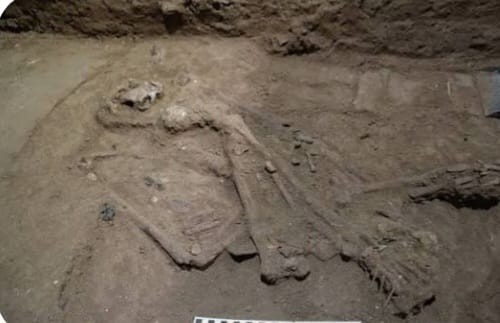
    Deep in the limestone karst forests of Indonesian Borneo, inside a humid cavern known as Liang Tebo, archaeologists uncovered a grave that quietly shattered our fundamental assumptions about the rise of human civilization. The skeleton belonged to a young adult Homo sapiens who died roughly 31,000 years ago. What caught the researchers’ attention was the individual’s left leg: the lower third of the tibia and fibula had been cleanly severed by a deliberate, angled cut. It was not the jagged crunch of a crocodile attack, nor the crushing blow of a fallen boulder. It was a surgical amputation—the oldest ever found, predating the advent of agriculture by tens of thousands of years.

    Even more astounding than the operation itself was what happened afterward. Osteological analysis revealed that the procedure took place when the individual was a child of ten or twelve. The bone had healed seamlessly, showing years of remodeling without a single trace of fatal infection. The child survived the complex surgery and lived for another six to nine years in the rugged, unforgiving terrain of a Late Pleistocene rainforest.

    For over a century, traditional anthropology operated under a cozy assumption: that complex medicine, deliberate surgery, and extended care for the disabled were luxuries of settled life. The standard narrative held that only after humans abandoned nomadic foraging for permanent farming communities could we produce the food surpluses, leisure time, and division of labor required to sustain non-productive members and experiment with advanced healing. Liang Tebo rendered that narrative obsolete. Performing a successful limb amputation in a tropical environment—where heat and humidity make lethal infection almost inevitable—required extraordinary anatomical precision. Someone had to know how to navigate major arteries to prevent fatal hemorrhaging, sever tissue cleanly, and apply effective botanical antiseptics and painkillers derived from the surrounding jungle.

    Yet the medical feat is only half the story; the human feat is greater still. A child missing a lower leg in a mobile hunter-gatherer group cannot run, hunt, or easily traverse steep mountain slopes. Living for nearly a decade after such an injury meant that a community consciously chose to carry, feed, protect, and nurture a severely disabled member. They did not abandon the child to the elements.

    This discovery does not stand entirely alone; rather, it serves as the capstone to a growing body of fossil evidence proving that long-term social care is a deep, evolutionary hallmark of the human lineage. In the Shanidar Cave of Iraq, the 45,000-year-old remains of a Neanderthal known as Shanidar 1 revealed a man who lived into middle age despite a crushed eye socket that left him blind, a withered and fractured right arm, and a severe limp. More than half a million years ago in Spain, a Homo heidelbergensis child with a severe cranial deformity was nurtured into adolescence. Even earlier, nearly 1.8 million years ago in Dmanisi, Georgia, an elderly Homo erectus survived for years without teeth, relying on companions to pre-chew or soft-process tough meats and wild plants.

    Why did our ancient ancestors invest so heavily in those who could not immediately contribute to the physical strain of daily survival? Evolutionary theory points to a powerful mix of genetic preservation, mutual reliance, and cultural memory. In small, closely knit foraging bands, helping a relative preserved shared genes. Caring for the injured also established an essential social safety net; in a hazardous world where anyone could break a leg tomorrow, nursing today’s victim guaranteed your own future care. Crucially, non-hunting elders and disabled band members carried irreplaceable cultural knowledge—where to find hidden water holes during century-level droughts, how to detoxify rare plants, and how to navigate changing seasons.

    Ultimately, these ancient bones remind us that compassion is not a modern luxury invented by cities or modern science. Long before we built cities, tilled fields, or wrote down our histories, we held each other’s hands through the dark, bound each other’s wounds, and refused to leave the vulnerable behind. NI

  • How Tiny Spores Reshaped the History of Life from Barren Rocks to Living World

    About 470 million years ago, Earth was a profoundly different planet. Life flourished, but almost all of it was confined to the oceans. The seas of the Ordovician Period were crowded with trilobites, brachiopods, mollusks, corals, cephalopods, and some of the earliest vertebrates. Marine ecosystems were undergoing a spectacular diversification, making the oceans the undisputed center of biological activity. Meanwhile, the continents were largely barren expanses of rock, mud, sand, and sediment, with little to suggest the vibrant terrestrial landscapes we know today. [en.wikipedia.org], [britannica.com], [ucmp.berkeley.edu]

    Imagine standing on a shoreline at that time. You would not see forests waving in the breeze or hear the sounds of insects and birds. There were no trees, no flowers, no grasslands, and no animals roaming the land. Rivers wound their way across largely lifeless terrain, carrying sediments through landscapes that had yet to be transformed by vegetation. Earth was, in many respects, still a marine planet. [ucmp.berkeley.edu], [en.wikipedia.org]

    Yet beneath this apparent emptiness, a revolution was quietly beginning. The first clues come not from spectacular fossils of leaves or stems, but from microscopic spores preserved in ancient rocks. Scientists have discovered fossilized tetrahedral spores dating to the Ordovician, evidence that primitive plants had already begun venturing onto land. These tiny remnants may seem insignificant, but they represent one of the most consequential events in the history of life. [ucmp.berkeley.edu]

    The transition from water to land was not simply a change of address. It was a leap into an environment filled with challenges. Aquatic organisms benefited from constant moisture, buoyancy, and relatively stable conditions. On land, survival was far more demanding. Early plants had to find ways to avoid drying out, obtain and distribute water, support themselves against gravity, reproduce without being permanently submerged, and withstand direct exposure to sunlight, wind, and fluctuating temperatures.

    These challenges drove a series of evolutionary innovations. Protective outer coverings helped limit water loss. Primitive transport systems gradually improved the movement of water and nutrients. Structural tissues provided support. Reproductive strategies evolved to reduce dependence on standing water. Each adaptation represented a small step forward, but together they enabled plants to establish a permanent presence beyond the water’s edge.

    The Silurian Period marked a significant advance in this process. While the earliest pioneers may have appeared during the Ordovician, the Silurian witnessed a broader colonization of terrestrial environments by simple plants. These organisms were small and lacked the sophistication of modern vegetation. They did not yet possess the towering trunks, extensive root systems, or complex leaves that characterize later plants. Nevertheless, they were achieving something remarkable: proving that life could thrive on land. [en.wikipedia.org], [ucmp.berkeley.edu]

    What makes this story so important is that the consequences extended far beyond the plants themselves. As vegetation spread across the continents, it began reshaping the very fabric of Earth’s environment. Plant growth helped stabilize soils that had previously been vulnerable to erosion. Organic matter accumulated, creating richer substrates capable of supporting additional forms of life. New ecological niches emerged, attracting fungi and other organisms that could exploit these evolving habitats.

    Over time, the presence of plants transformed the continents from barren surfaces into increasingly complex ecosystems. The impacts rippled throughout the biosphere. Once vegetation established itself, opportunities arose for arthropods and, much later, vertebrates to venture onto land. Food webs expanded. Biodiversity increased. Entirely new evolutionary pathways became possible.

    The significance of this transformation is difficult to overstate. Without the successful colonization of land by plants, there would have been no forests, no grasslands, and no terrestrial ecosystems capable of supporting the extraordinary diversity of animal life that followed. The Devonian forests that appeared later were built upon foundations laid by these pioneering Silurian and Ordovician plants. Eventually, those developments would help make possible the emergence of amphibians, reptiles, birds, mammals, and ultimately human beings.

    Modern discussions of Earth’s history often focus on dramatic events such as mass extinctions, asteroid impacts, or the rise of dinosaurs. Yet the quiet spread of tiny spore-producing plants onto barren continents may have been equally transformative. It lacked the drama of catastrophe, but its consequences were far more enduring. A handful of simple organisms, scarcely noticeable by modern standards, altered landscapes, created ecosystems, and redirected the course of evolution.

    From today’s perspective, lush forests and green fields appear natural and inevitable. In reality, they are the outcome of a revolutionary biological conquest that began hundreds of millions of years ago. The fossilized spores preserved in ancient rocks remind us that the modern terrestrial world traces its origins to a modest beginning: the moment when a few pioneering plants first ventured from water onto land and changed Earth forever. OT

  • Ink, Ice and Identity: The Beauty, Agony and Politics of Siberia’s 2,500-Year-Old Maiden

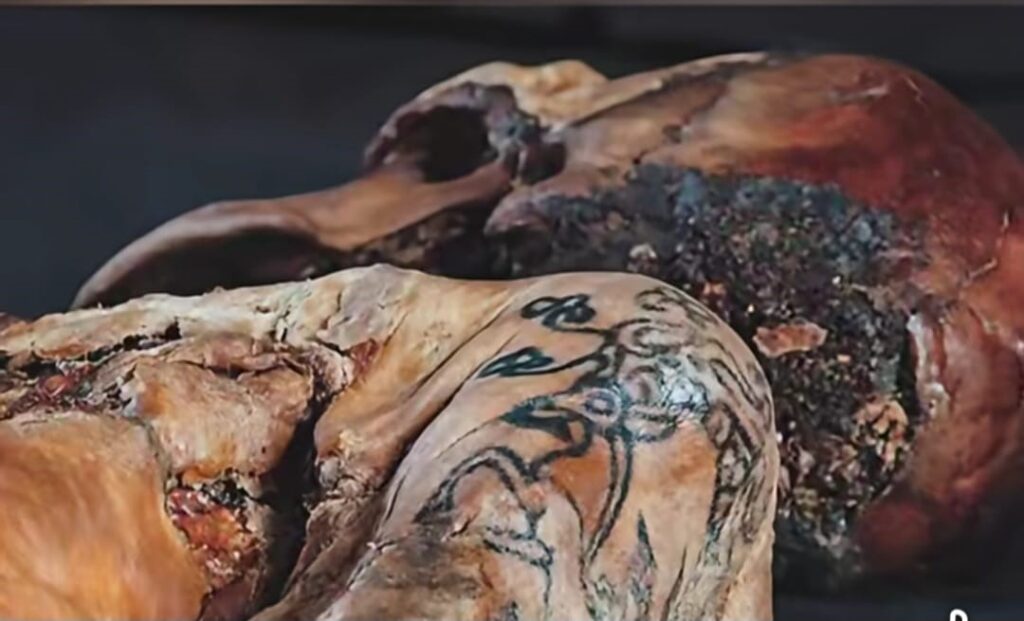
    High on the wind-swept Ukok Plateau, where the borders of Russia, China, Mongolia, and Kazakhstan meet, the earth held a secret frozen in time for twenty-five centuries. When archaeologist Natalia Polosmak uncovered a subterranean log chamber in 1993, she did not merely find human remains; she opened a portal into the soul of the ancient Pazyryk culture. Encased in a tomb of solid ice was a young woman, roughly twenty-five years old, whose skin bore some of the most intricate, mesmerizing tattoos ever recovered from antiquity. Dubbed the Siberian Ice Maiden, or the Princess of Ukok, her discovery ignited a global scientific fascination. Yet, her story is far more than a triumph of archaeology. It is a profound meditation on human endurance, spiritual identity, and the uneasy friction between modern scientific curiosity and indigenous reverence.

    To look at the Ice Maiden is to realize how little human nature has changed across two and a half millennia. Her body art, preserved with breathtaking clarity by the Siberian permafrost, rivals the craftsmanship of elite modern studios. Etched across her shoulders, arms, and wrists are fantastical creatures, most notably a stylized deer boasting a griffin’s beak and sprawling, flowered antlers, accompanied by panthers and rams. These marks were not crude or haphazard markings. Pazyryk artisans applied soot from hearth fires mixed with animal fats or antiseptics, painstakingly drawing thread soaked in ink beneath the skin or executing precise hand-poke punctures. These tattoos served as visual passports, recording status, spiritual rites, and readiness for the journey into the afterlife.

    The grandeur of her burial chamber speaks to a woman held in extraordinary esteem. She was laid to rest in a long-sleeved yellow blouse of wild tussar silk imported from India, a striped wool skirt, white felt stockings, and a magnificent three-foot-tall felt wig adorned with gilded wooden carvings of beasts. Six sacrificed horses, complete with elaborate leather saddles and carved wooden harnesses, accompanied her to carry her across the spiritual divide. She was served mutton on carved wooden tables, her cosmetics nestled in a felt pouch beside a horn comb. Modern magnetic resonance imaging has shed tragic light on her final days. She suffered from advanced bone and breast cancer, enduring immense physical pain that was likely soothed by cannabis, traces of which were found in a vessel at her side. Rather than a royal monarch, she was almost certainly a shaman, healer, or holy woman who transformed her suffering into spiritual authority.

    Yet, the moment science pulled her from the ice, a new tragedy unfolded—one of cultural displacement. To the indigenous Altai people, her tomb was not an archaeological site, but a sacred threshold. They revere her as Ak-Kadyn, the White Lady, a guardian priestess placed in the ground to bar the entry of evil forces from the underworld. Her removal was viewed as an act of sacrilege. When devastating earthquakes, severe storms, and economic hardship struck the Altai region shortly after her excavation, locals saw no coincidence. They recognized the fury of a disturbed guardian.

    The controversy that followed highlighted the ongoing post-colonial struggle between remote indigenous communities and central authorities. For nearly two decades, her body remained in a research facility in Novosibirsk, prompting fierce protests from Altai elders who demanded her return. While scientists stabilized her using techniques akin to those applied to Lenin, the initial excavation had already caused fungal damage, fueling arguments that her removal was as physically destructive as it was spiritually offensive.

    Though she was finally returned to the Altai Republic in 2012 and now rests in a climate-controlled sanctuary at the Anokhin Museum in Gorno-Altaysk, the debate remains unresolved. The Altai people continue to call for her full reburial in the earth of the Ukok Plateau. The Siberian Ice Maiden reminds us that ancient bodies are not merely specimens to be cataloged. They are the ancestral quiet of living cultures, demanding that we weigh our thirst for knowledge against the timeless duty of respect.

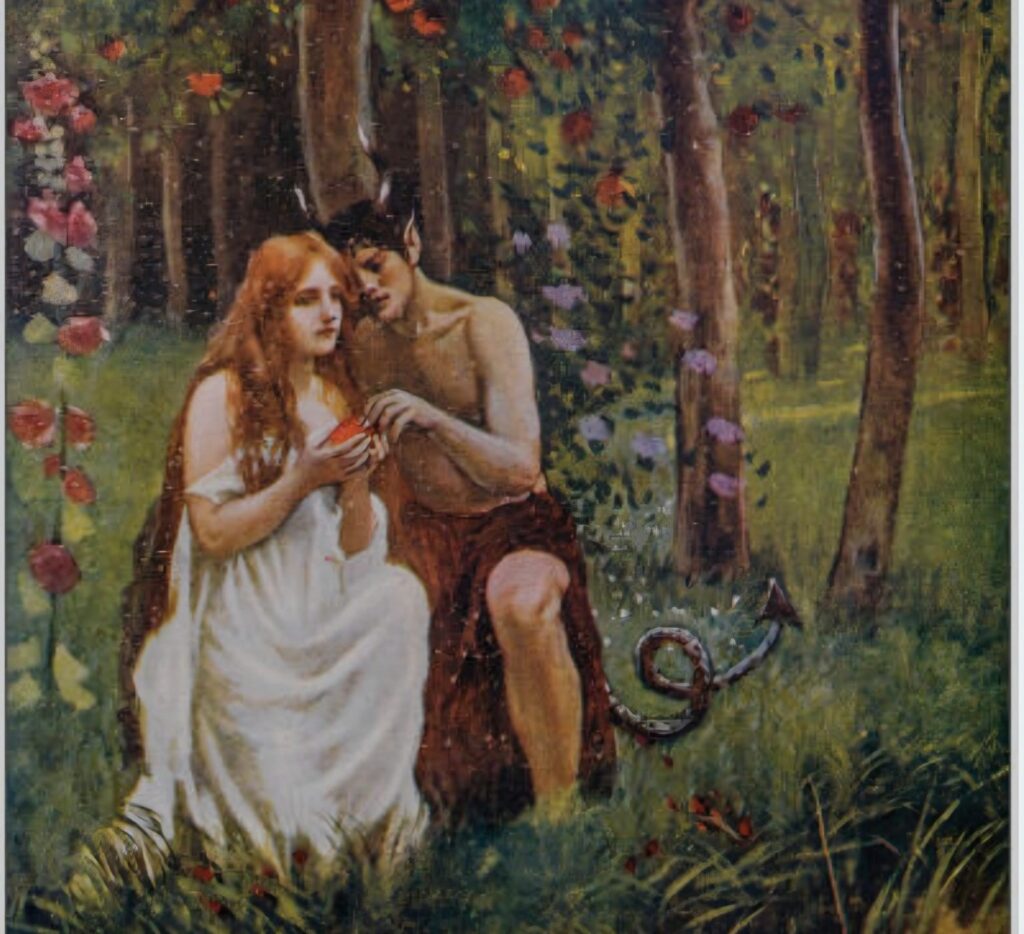
  • Adam, Eve and Fossil Record: Two Languages of Beginning

    The story of humanity is far richer and stranger than the solitary figure of modern man walking alone across the planet. Some twenty-one species of human, or at least of bipedal apes more closely related to us than to chimpanzees, have left their traces in the African and Eurasian fossil record. We are simply the last ones standing. This is not a tale of linear ascent from ape to angel, but of a dense, tangled bush of related populations that rose, branched, coexisted, and mostly vanished.

    Near the base of that bush stand two of the earliest contenders for the title of first hominin. Sahelanthropus tchadensis, known from a nearly complete skull and fragmentary limb bones found in Chad, lived roughly seven to six million years ago, right around the time our lineage is thought to have split from that of chimpanzees. Its small canines and the positioning of the skull suggest an upright posture; recent analyses of its femur have been interpreted as evidence of bipedal walking, though debate continues. A little later, around six million years ago, Orrorin tugenensis appears in the hills of Kenya. Its thigh bones also carry marks of upright locomotion while still allowing for climbing. Neither was a solitary Adam or Eve. Both belonged to populations of small-brained, ape-faced bipeds navigating a changing African landscape of forest and grassland.

    From these deep roots the tree ramified. Australopiths of various kinds flourished for millions of years. Early members of our own genus, Homo, appeared by about 2.8 million years ago. Later forms—erectus-like populations, the Neanderthals, the Denisovans, the diminutive “hobbits” of Flores, Homo naledi, and others—shared the planet with one another and, eventually, with us. Many of these species were not our direct ancestors. They were cousins, side branches that diverged, sometimes interbred with our own line, and then disappeared. To say that Homo sapiens evolved “from” the other twenty is therefore imprecise. We share deep common ancestry with them, but evolution does not proceed by each species obligingly turning into the next. It proceeds by populations changing, splitting, and occasionally exchanging genes.

    Our own species is the latecomer. The oldest fossils widely accepted as Homo sapiens date to approximately 315,000 years ago at Jebel Irhoud in Morocco, with other early African remains falling in the same broad window of three hundred thousand years. By that time the earlier hominin diversity was already thinning. Within the last forty thousand years we became the sole remaining human species. The genetic markers popularly called Mitochondrial Eve and Y-chromosomal Adam are younger still—coalescence points for the maternal and paternal lineages of living people, dating to roughly one hundred to three hundred thousand years ago. They were not the first humans, nor the only ones alive in their day; they simply happen to be the ones whose particular genetic lines survived unbroken to the present.

    It is natural, when contemplating such deep time, to reach for the language of beginnings. If Adam and Eve are understood simply as the first humans, the scientific record offers no single couple to match the description. The transition to bipedalism, larger brains, tool use, and eventually modern anatomy unfolded across many generations and many thousands of individuals. There was never a moment when only two people existed and from them all others descended. The traditional narratives that speak of a first pair address questions of meaning, identity, and moral origin. The fossil and genetic evidence addresses the material history of populations. The two accounts need not be forced into the same frame.

    What remains is a quieter, more expansive truth. We are the product of a long and crowded experiment in bipedal life. Dozens of related forms once walked the earth. Most are gone. Their bones remind us that our loneliness as a species is recent, and that the path to the present was never a straight road walked by a solitary pair, but a braided stream of many lives flowing through deep time. OK

  • Beyond Brutes: The Art, Code and Science of Our Ancestors

    We have long imagined our early ancestors as grunting brutes, scraping by on instinct, their lives nasty, brutish, and short. Yet, deep beneath the hills of France and Spain, and in the limestone caves of Indonesia and Australia, a very different picture has been preserved on stone. Thousands of years ago, early humans—and, as we now know, our evolutionary cousins—descended into absolute darkness, built scaffolding, mixed pigments with animal fat, and created masterpieces that would rival any modern gallery. These caves are not mere relics; they are the first museums and the first libraries of the human soul. And thanks to 21st-century science, we are only now beginning to read their true meaning.

    Consider the “Big Three” of Europe. In France, the Chauvet cave, over 36,000 years old, offers a world ruled by predators—lions, rhinos, and mammoths rendered with soft shading and a sense of movement that feels almost cinematic. Several thousand years later, the Lascaux cave presents a different menagerie: enormous bulls, galloping horses, and deer, painted with a “twisted perspective” that shows animals in profile while their horns face forward. Meanwhile, in Spain, Altamira dazzles with its polychromatic brilliance, its famous ceiling bison sculpted in multiple shades of ochre. Together, these three sites prove that artistic genius is not a product of civilisation—it is a product of being human.

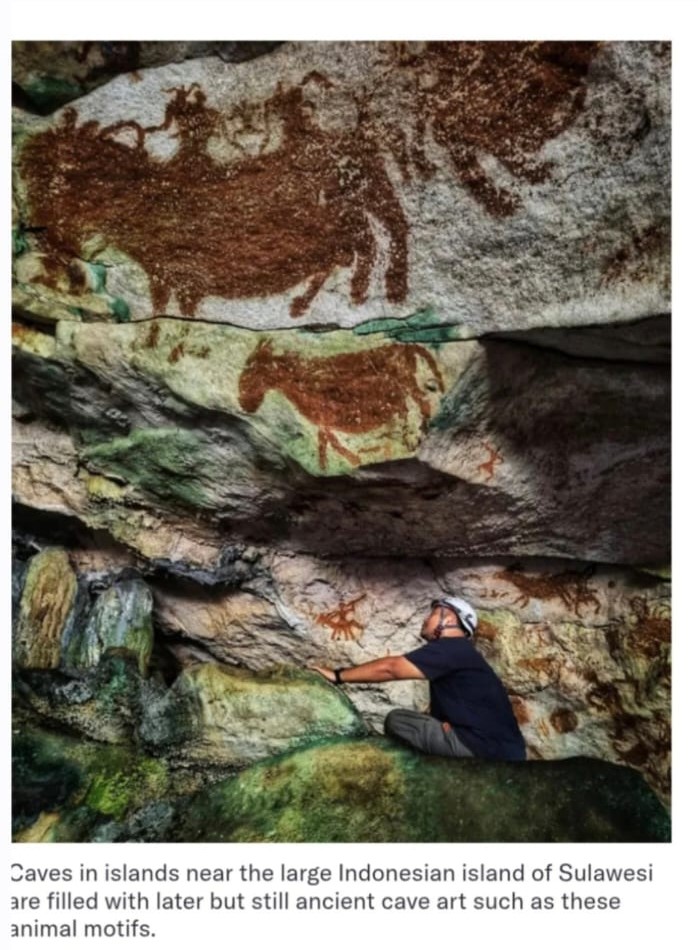
    But the European narrative has been dramatically overturned. In the caves of Sulawesi, Indonesia, researchers have discovered a hand stencil dated to at least 67,800 years ago, making it the oldest reliably dated cave art in the world . This is more than 30,000 years older than the cave art found in France . What makes this handprint even more extraordinary is its deliberate alteration—the fingers were narrowed to create a claw-like impression, suggesting a symbolic transformation of the human hand . This art was not a one-off moment of creativity; the Muna cave was used for painting over at least 35,000 years, continuing until about 20,000 years ago . The people who made these marks were likely part of the population that would eventually cross the sea and become the ancestors of Indigenous Australians .

    Australia itself holds one of the world’s most impressive and longest-continuing artistic traditions . In Arnhem Land’s Ubirr site, rock paintings range from the earliest periods to works created within living memory, with a sequence spanning from approximately 40,000 years ago to the present . The oldest known Australian Aboriginal figurative rock painting, a kangaroo in the Kimberley region, has been securely dated to between 17,500 and 17,100 years ago using radiocarbon dating of mud wasp nests . These styles evolved in response to major environmental changes, and extensive dating programs continue to provide insights into this rich artistic heritage .

    Across these continents, separated by vast oceans and tens of thousands of years, early humans all used a remarkably similar “alphabet” of symbols—red dots, hand stencils, wavy lines, and shield-like forms. The hand stencil is particularly haunting, often showing missing or deliberately bent fingers, likely a form of early sign language or clan marker. The persistence of these symbols suggests a shared neurological grammar—a universal human impulse to abstract the world into symbols, the first stirring of a proto-writing system.

    Modern technology is rewriting the history books at a breathtaking pace. 3D scanning has revealed that the most painted areas correspond to acoustic hotspots—places with the strongest echo—proving these caves were ritual theatres where sound and imagery merged . DNA analysis of pigment binders is revealing intimate details of daily life, while Uranium-thorium dating has delivered the most shocking blow to our assumptions: some red hand stencils in Spain are over 64,000 years old, proving that Neanderthals were the original artists of those specific marks.

    These discoveries confirm that early human creativity did not emerge in a single place, nor was it confined to Ice Age Europe . The Sulawesi discoveries challenge the long-held view that the earliest cave paintings originated in Europe, forcing scholars to reconsider where and how early symbolic behaviours emerged . When we look at a red handprint on a cave wall, we are looking at a mind that wondered, remembered, and desired. The technology of their creation may have been primitive, but the impulse behind it—to communicate, to codify, to awe—is entirely ours. We are still painting, still leaving our marks on the walls of our world. And, in a very real sense, those first artists are still painting with us.

    EK

  • People of the Forest on the Brink: Rescue, Rehabilitation and the Flight for Survival

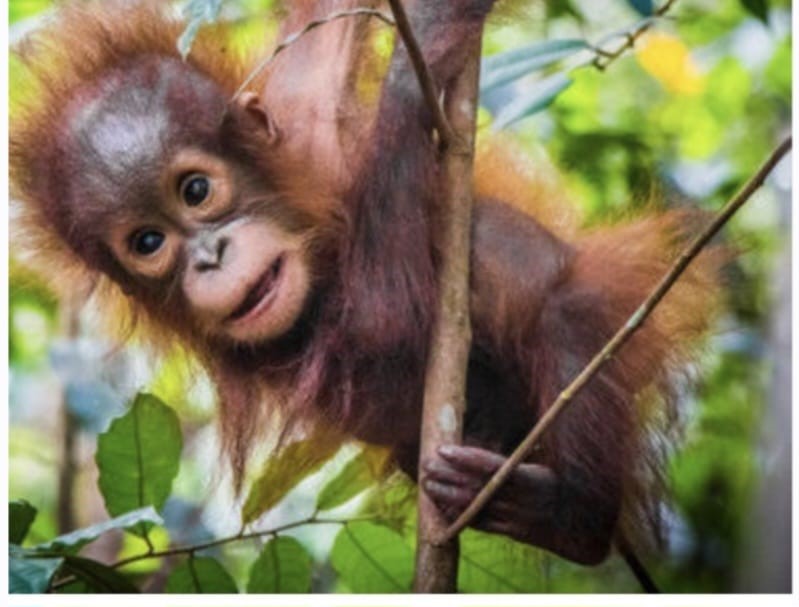
    Orangutans, the “people of the forest,” are among the most intelligent and charismatic of the great apes. Yet their very existence is hanging by a thread. Across Indonesia and Malaysia, these arboreal giants are being squeezed out of their rainforest homes by deforestation, palm oil plantations, and the relentless march of human development. The story of orangutan conservation is not just about saving a species—it is about confronting the choices humanity makes in the name of progress, and whether we are willing to share the planet with beings whose survival depends on the forests we so casually destroy.

    The challenges are immense. Palm oil, a cheap and versatile ingredient found in everything from biscuits to shampoo, has become the single greatest driver of orangutan habitat loss. Vast swathes of rainforest have been cleared to make way for monoculture plantations, leaving orangutans with nowhere to forage, nest, or roam. In Borneo alone, more than half of orangutan habitat has been lost in just two decades. The fires that often accompany this deforestation are equally devastating. In Kalimantan, wildfires in 2026 burned through 60 percent of orangutan habitat, leaving thousands of apes starving and disoriented. These are not isolated incidents—they are systemic, recurring assaults on the very ecosystems orangutans depend upon.

    The illegal wildlife trade adds another layer of cruelty. Baby orangutans are prized in the exotic pet market, fetching tens of thousands of dollars. To obtain them, poachers kill the mothers, leaving infants traumatized and vulnerable. The recent rescue of five baby orangutans in Odisha, India, highlights the global reach of this trade. Found abandoned in a plantation, these infants were calm and comfortable around humans—clear evidence they had been smuggled and raised in captivity. Their presence in India, far from their native forests, underscores the scale of trafficking networks that treat endangered species as commodities.

    Against this bleak backdrop, rehabilitation centers have become sanctuaries of hope. Sepilok in Sabah, Malaysia, established in 1964, was the world’s first orangutan rehabilitation facility. Its structured programs—quarantine, nursery care, forest school, and semi-wild release—have returned hundreds of orangutans to the wild, with an impressive success rate. Semenggoh in Sarawak offers a semi-wild model, where orangutans roam freely in forest reserves but still receive supplemental feeding. In Indonesia, centers like those run by Yayasan Inisiasi Alam provide emergency care for orangutans displaced by wildfires and deforestation. These institutions are not just rescue facilities; they are laboratories of resilience, teaching orphaned apes how to climb, forage, and build nests, skills they would normally learn from their mothers over six to eight years.

    The rehabilitation process is painstakingly slow. Orangutans are among the slowest-reproducing mammals, with females giving birth only once every six to eight years. This means that every lost individual is a blow to the species’ survival. Rehabilitation must replicate the maternal bond, with caregivers acting as surrogate mothers, guiding infants through “forest school” where they learn to identify fruits, swing through the canopy, and avoid predators. Only when they demonstrate independence are they moved to pre-release islands, semi-wild environments where their survival instincts are tested. Finally, they are released into protected forests, fitted with GPS collars and monitored by field teams. Success is measured not just in survival, but in reproduction—when rehabilitated orangutans give birth in the wild, it signals that the cycle of life has been restored.

    Yet rehabilitation alone cannot solve the crisis. Without intact forests, there is nowhere to release these apes. Conservation must therefore extend beyond rescue centers to the broader landscape. Habitat corridors that connect fragmented forests are essential to maintaining genetic diversity. Stronger enforcement against trafficking and poaching is critical. Equally important is community collaboration. The people living at the edge of forests are often caught between poverty and conservation. Supporting them with sustainable livelihoods—such as eco-tourism, agroforestry, or certified palm oil—can reduce reliance on destructive practices and foster coexistence.

    The plight of orangutans forces us to confront uncomfortable truths. Our consumer choices, from the snacks we eat to the cosmetics we use, are directly linked to the destruction of rainforests. The rescued infants in Odisha are not just victims of smuggling; they are symbols of a global failure to protect one of our closest relatives in the animal kingdom. But they are also reminders that it is not too late. With concerted effort, orangutans can be rehabilitated, forests can be restored, and coexistence can be achieved. The question is whether we have the will to act.

    Orangutans are more than conservation statistics. They are sentient beings with rich emotional lives, capable of laughter, grief, and ingenuity. To lose them would be to lose a mirror of ourselves, a living testament to the diversity of life on Earth. Saving them is not charity—it is a moral obligation, a recognition that our fate is tied to theirs. If the forests fall silent, it will not just be the orangutans who vanish. It will be a piece of humanity itself. OT