Author: sustenanceandstories@gmail.com

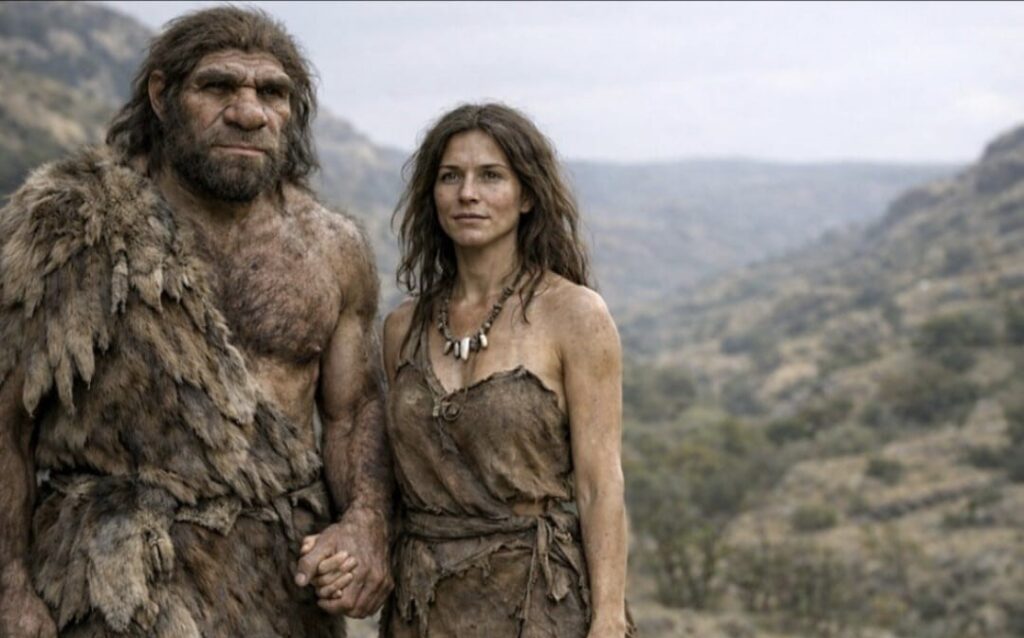
  • Unequal Intimacy of Human Evolution: When Neanderthals and Homo Sapiens Became Family

    For much of modern history, the story of human evolution was told as a procession. One species emerged, another disappeared, and Homo sapiens marched onward as the uncontested successor. Neanderthals occupied an earlier rung on the evolutionary ladder: strong, adapted to Ice Age Europe, and ultimately defeated by our supposedly superior ancestors.

    That story is now impossible to defend in its simple form. Neanderthals did not merely vanish. They met Homo sapiens, exchanged genes with them, and became part of the ancestry of people alive today. Yet the genetic legacy of that encounter is not evenly distributed across the human genome. The most intriguing clue may be what is missing: no known present-day human Y haplogroup can be confidently identified as a surviving Neanderthal paternal lineage.

    The evidence for interbreeding is no longer speculative. Most people whose ancestry lies outside Africa carry approximately 1–2% Neanderthal-derived DNA. These fragments are scattered through the genome, and some influence biological processes involving immunity, skin, hair and environmental adaptation. Neanderthal ancestry is therefore not an abstract footnote in a genetics textbook. It is part of the biological inheritance of billions of people.

    Recent genomic research also suggests that the exchange may have been strongly sex-biased. The surviving pattern is most consistent with Neanderthal males fathering children with Homo sapiens females more often than Homo sapiens males fathered children with Neanderthal females. This conclusion does not mean that prehistoric relationships followed a single social script, nor does it allow us to reconstruct individual encounters. Genetics cannot tell us whether these unions were consensual, forced, socially accepted or exceptional. It can reveal only which forms of ancestry survived and multiplied.

    The X chromosome provides an important clue. Because males possess one X chromosome and females possess two, ancestry inherited through different male and female pathways leaves distinctive genetic signatures. Neanderthal ancestry is unusually scarce on the human X chromosome, while Neanderthal X chromosomes contain an excess of modern-human ancestry. This asymmetry fits a history in which Neanderthal men and Homo sapiens women contributed disproportionately to later mixed populations.

    The Y chromosome presents an even more paradoxical story. A Neanderthal man who fathered a son with a Homo sapiens woman would have transmitted his Y chromosome to that son. Yet no such Neanderthal Y lineage is known among living human males. This does not disprove Neanderthal male–Homo sapiens female unions. A paternal line can disappear through demographic chance, reproductive disadvantage or later population expansion.

    More remarkably, the available evidence suggests that the original Neanderthal Y chromosome itself may have disappeared from later Neanderthals. Between roughly 370,000 and 100,000 years ago, a Y chromosome related to an early modern-human lineage may have entered Neanderthal populations and eventually replaced their older paternal line. In other words, Neanderthal men may have contributed genes to Homo sapiens, while Homo sapiens-related genes also transformed the Neanderthal male lineage.

    Grotte Mandrin in southern France gives this genetic story an archaeological setting. The cave preserves evidence that Homo sapiens reached the region around 54,000 years ago—far earlier than the once-accepted date for their widespread arrival in Europe. Neanderthal and modern-human occupations appear to have alternated there, suggesting repeated movements, brief settlements and unstable coexistence rather than one clean invasion.

    This matters because evolution is not a morality play. Homo sapiens did not simply defeat an inferior species, and Neanderthals were not sealed-off primitives awaiting extinction. They were a closely related human population with its own adaptations, technologies and social lives. Their disappearance as a distinct population resulted from a complicated combination of climate, demography, competition, isolation and assimilation.

    The Neanderthal story therefore unsettles not only our science but also our self-image. Human evolution was not a straight line leading inevitably to us. It was a tangled history of migration, separation, contact, reproduction and loss. We are the surviving branch, but we are not an untouched branch. Part of the Neanderthals lives in our genomes—and perhaps the most revealing evidence is found in the paternal lineage that did not survive.

    TY

  • Capital Inflows, Stagnant Signals: Decoding India’s Economic Divergence

    The Indian economic narrative is presenting a paradox where internal liquidity is clashing against growing global headwinds and structural friction. On paper, domestic markets ought to be roaring. Domestic institutional investors pumped in a massive ₹34,369.50 crore while foreign institutional investors chipped in another ₹2,514.30 crore during the current month up to yesterday. Yet despite this combined inflow exceeding ₹36,883 crore, the Sensex remains strikingly dormant, trapped in a narrow trading band. Understanding this disconnect requires peering into a broader tapestry of shifting corporate earnings, escalating geopolitical threats, central bank maneuvering, and consumer behavioral splits.

    Much of the equity market’s hesitation stems from the immediate geopolitical arena, where a fresh wave of volatility is threatening energy security and trade logistics. United States President Donald Trump issued a stern warning targeting Tehran, declaring that any country providing Iran with a commercial or financial lifeline will face tremendous economic consequences. This escalation places India in a delicate geopolitical spot. Though India has scaled back direct Iranian oil imports, it maintains crucial non-energy trade and holds key operations at Iran’s Chabahar Port, an essential maritime gateway for Indian commerce into Central Asia and Afghanistan. The threat of secondary sanctions creates compliance paranoia across financial institutions, casting a shadow over cross-border trade settlements and compounding supply concerns as Brent crude hovers near ninety-four dollars a barrel.

    This geopolitical friction feeds directly into domestic monetary strategy. The Reserve Bank of India recently kept its benchmark repo rate unchanged at 5.25 percent, holding a neutral stance to preserve maximum operational flexibility. With headline consumer price inflation recently rebounding above the four percent target due to transient food and energy shocks, the central bank left its future rate path wide open. While raising full-year real gross domestic product growth forecasts to 6.7 percent, policymakers are painfully aware that persistent oil spikes could ignite secondary inflation, forcing them to delay rate cuts or keep monetary conditions tight for longer.

    Compounding this cautious monetary backdrop is the stance of global money managers. In the latest Bank of America Asia Fund Manager Survey, India emerged as the least favoured regional market, with a net thirty-two percent of surveyed managers reporting an underweight allocation. Global capital in Asia has heavily concentrated into pure-play artificial intelligence hardware and semiconductor supply chains across Taiwan, South Korea, and Japan. Lacking direct exposure to these specialized AI hardware supply chains, Indian benchmarks are losing relative foreign portfolio flows to East Asian peers, even as high local valuations invite profit-taking from international funds during currency swings.

    Microeconomic operational reality offers its own set of mixed signals. A clear picture of this internal friction shows up in mobile hardware trends, where smartphone shipments fell eight percent in the first quarter of fiscal year 2027. This slump reflects severe memory component cost inflation and a virtual collapse in the entry-level budget segment, where shrinking margins forced manufacturers to trim low-cost product lines. Across corporate earnings more broadly, India Inc’s latest quarterly performance reveals a widening divide. High-end consumption, banking, capital goods, and auto manufacturers delivered healthy profit beats, whereas oil marketing companies suffered heavily under unabsorbed raw material spikes, and lower-income mass-market demand continued to lag under persistent living costs.

    Yet, despite this heavy list of global constraints, domestic liquidity and balance-sheet buffers are preventing a market breakdown. India’s foreign exchange reserves have surged to comfortable record highs of roughly 717 billion dollars, bolstered by steady dollar inflows raised from Non-Resident External deposit schemes. However, a massive reserve pile manages volatility rather than altering fundamental structural pressure. With the Rupee hovering near the 96 per dollar mark, the central bank uses these dollar reserves to smooth out intraday panic and unwind forward positions rather than defend a specific exchange rate line. High oil import bills and narrowing interest rate spreads mean the Rupee continues to act as an automatic economic shock absorber. Ultimately, domestic liquidity and sovereign reserve buffers have built a floor under Indian equities, but until entry-level consumer demand recovers, that liquidity wall will continue to encounter a heavy ceiling. NI

  • The Immune System’s Last Act of Invention: What Supercentenarians’ Blood Reveal about Ageing Without Decline

    A team at RIKEN in Japan sequenced the immune cells of seven people who had lived past 110 in 2019 and found something that shouldn’t, by the textbook, exist in such numbers. Scattered through their blood were CD4 T cells — the “helper” cells whose job is normally to direct the immune response, not to kill anything directly — that had somehow acquired the killing machinery of their cousins, the CD8 cytotoxic T cells. In most healthy adults, these CD4 cytotoxic T lymphocytes, or CD4 CTLs, make up a few percent of the T cell population at most. In the supercentenarians, they averaged a quarter of all T cells present, with the most dominant clones alone accounting for 15 to 35 percent of the entire CD4 pool. The cells weren’t just numerous; they behaved like killers, producing the same inflammatory signalling molecules, interferon-gamma and TNF-alpha, on stimulation as classic cytotoxic T cells, and running a transcriptional program almost indistinguishable from that of CD8 CTLs, despite still carrying the CD4 marker that supposedly disqualified them from that role.

    This week, the same Osaka University group, led by Kousuke Hashimoto, published a follow-up in Cell Reports that fills in the timeline and raises the stakes. Working with blood from twenty-eight Japanese adults split into three brackets — ages 70 to 99, centenarians, and supercentenarians — they tracked the CD4 CTL fraction rising steadily with age: a median of 4 percent in the youngest group, 9.6 percent in centenarians, and 17.6 percent in those past 110. The expansion, they found, is not a gradual thinning of the whole population toward cytotoxicity but the explosive growth of a handful of clones: the single largest clone in each person’s CD4 CTL pool accounted for an average of 33.3 percent of it, and in one centenarian, more than half. Crucially, these clones showed no sign of exhaustion, the state in which T cells that have been fighting the same target for too long lose their potency. Instead they remained active, cycling, and — when the researchers matched the receptor sequences of the dominant clones against a public database of cancer-associated T cell repertoires — turned up nearly three dozen matches to T cells previously found infiltrating lung, breast, and liver tumours. None of the study’s centenarians or supercentenarians had been diagnosed with those cancers, which led Hashimoto to a striking, if necessarily speculative, interpretation: that these expanded clones may be quietly recognising and suppressing malignant or abnormal cells before they ever progress to detectable disease.

    It is worth being precise about what has and hasn’t been shown. The paper is explicit that it does not establish that CD4 CTLs cause longevity, or that their abundance is protective against cancer; the correlation between age and cell count is real, but the causal arrow is unproven, and the sample — twenty-eight people, all Japanese — is small enough that generalising to other populations is premature. The pattern is also not exclusive to the very old: one participant younger than 100 had a higher proportion of these cells than anyone else in the study, a reminder that whatever is driving this expansion is not simply a clock running out. Independent researchers have been similarly measured. Alon Monsonego, who studies CD4 CTLs at Ben-Gurion University and was not involved in either paper, has described the new work as useful rather than a breakthrough — a foundation for follow-up studies rather than a finished explanation.

    Still, the finding sits awkwardly against a default assumption in immunology, sometimes called immunosenescence: that the immune system simply wears down with age, its cells growing fewer, less responsive, and less able to distinguish threat from self. What the two Osaka studies suggest instead is a system that, at its very extreme, is still doing something — reorganising, redeploying, converting general-purpose helper cells into what looks like a standing army of specialists tuned to whatever chronic, low-grade threats a body accumulates across eleven decades of life. Hashimoto’s own framing captures this: “immune aging is not simply a process of decline.” Whether that reorganisation is a cause of exceptional longevity, a downstream consequence of it, or simply a marker that travels alongside it, remains to be worked out. But the fact that a healthy immune system might still be actively adapting at 110 — rather than merely failing more slowly than everyone else’s — is itself worth sitting with. DE

  • The Unshakable Evidence from Fossils to DNA: Why Evolution is Biology’s Greatest Triumph

    If there is one concept that binds every branch of life sciences into a coherent whole, it is EVOLUTION. Far from being a speculative hypothesis about a distant past, evolution stands as the central, unifying framework of modern biology—a fact reinforced daily by discoveries in genetics, medicine, agriculture, and ecology. To deny evolution is not merely to reject a single idea; it is to ignore the convergence of multiple, independent lines of evidence that all tell the exact same story. And that story is not over; it is unfolding around us at this very moment.

    The historical evidence alone is staggering. The fossil record provides a chronological narrative that no other field can offer, documenting the gradual transformation of life over hundreds of millions of years. We see whales evolving from land-dwelling, hoofed mammals through a series of intermediate forms like Ambulocetus and Basilosaurus, the latter still retaining tiny vestigial hind limbs. We see the steady loss of toes in ancestral horses and the first appearance of flowering plants in the Mesozoic. Critically, fossils display law-like succession—mammals never appear in Precambrian rocks, and humans never coexist with dinosaurs. This ordered progression is precisely what common descent predicts. Anatomy reinforces this timeline with equal force. The pentadactyl limb—the one-bone, two-bone, little-bones pattern found in human arms, whale flippers, bat wings, and horse legs—makes no sense under independent creation. Why would a bat require a flying surface built from the exact same skeletal blueprint as a horse’s leg? Evolution explains it elegantly: all these species inherited that blueprint from a common tetrapod ancestor and modified it for vastly different environments. Vestigial structures, such as the human appendix or the pelvic bones of whales, are anatomical leftovers that serve little purpose but are perfectly understandable as remnants of evolutionary history.

    Yet the most powerful and irrefutable evidence arrives from molecular biology and genetics. DNA is a digital code of four letters consisting of letters A, C, G, and T. These letters represent the four nitrogenous bases of DNA: adenine (A), cytosine (C), guanine (G), and thymine (T), and we can now quantify evolutionary relationships with mathematical precision. Humans share approximately 98.8% of their DNA with chimpanzees, 98.2% with gorillas, and 96.5% with orangutans. These numbers form a strict, nested hierarchy that perfectly mirrors the family trees constructed from bones and fossils. Even more telling than the active genes are the pseudogenes—broken, non-functional copies of genes that accumulate random mutations over time. Humans, chimpanzees, gorillas, and orangutans all share the exact same broken GULO gene, which produces Vitamin C, with the same disabling mutation in the identical location. The only logical explanation is inheritance from a common ancestor who lost that function millions of years ago. Perhaps the most damning evidence against creationist narratives comes from endogenous retroviruses, or ERVs. These are ancient viral DNA sequences that inserted themselves into the genomes of our ancestors. Humans share over 200,000 of these viral insertions in the exact same positions on their chromosomes as chimpanzees and gorillas.

    Crucially, evolution is not confined to the deep past. It is observable in real-time, in our hospitals, farms, and forests. The peppered moth of England famously shifted from a light to a dark form during the Industrial Revolution as soot darkened tree trunks, then shifted back when pollution controls cleaned the air. In laboratories, Richard Lenski’s long-term evolution experiment has observed E. coli bacteria evolving a completely new metabolic trait over tens of thousands of generations. In medicine, antibiotic-resistant superbugs evolve relentlessly as random mutations allow a tiny fraction of bacteria to survive drugs, multiply, and create entirely resistant populations. Farmers battle pesticide-resistant insects and herbicide-resistant weeds that evolve within just a few growing seasons. Climate change is accelerating this process: pink salmon are spawning earlier in warming Alaskan waters, and tawny owls in Finland are shifting from grey to brown morphs as milder winters reduce snow cover. Even human activity drives evolution—poaching in Mozambique has led to a dramatic rise in tuskless elephants, while commercial fishing has caused cod and salmon to mature at smaller sizes to evade nets.

    This is the profound reality of evolution. The same DNA mutations observed in a petri dish today are precisely the type of changes that, accumulated over millions of years, produce the whales, horses, and humans we see in the fossil record. Microevolution plus deep time equals macroevolution. The fossils show the steps, anatomy shows the tools, DNA reads the instruction manual written along the way, and our own eyes observe the process continuing. Nothing in biology makes sense except in the light of evolution, and that light grows brighter with each passing year. EK

  • From the Dutchess’s Tea Table to the Military Mess: How Afternoon Tea Became High Tea

    There are few everyday customs that carry as much history in them as a cup of tea. In Britain, tea became far more than a beverage: it became a ritual, a marker of class, an expression of hospitality and eventually an institution. But the story of Afternoon Tea and High Tea is particularly fascinating because the two customs, often confused today, travelled through different social worlds before finding an unexpected second life in South Asia.

    The origins of Afternoon Tea are generally traced to Anna, Duchess of Bedford, in the 1840s. In Victorian England, fashionable households commonly had breakfast and a late dinner, leaving a long gap between the two. The Duchess reportedly began asking for tea, bread, butter and cakes in the afternoon to overcome what she described as a “sinking feeling.” What began as a personal response to hunger gradually became a fashionable social occasion. Friends were invited, tea was served with delicate sandwiches, scones, cakes and pastries, and an entirely new ritual of polite society emerged.

    Afternoon Tea acquired its glamour from the aristocracy and, eventually, from the royal world. It became associated with fine china, silverware, elegant dresses, impeccable manners and carefully arranged food. During the Victorian era, tea drinking and Afternoon Tea became powerful symbols of British refinement. The custom was not invented by the monarchy, but royal and aristocratic patronage helped give it an aura that survives to this day.

    The terminology surrounding tea, however, can be confusing. What we now call Afternoon Tea was later sometimes described as “Low Tea”, largely because it was served around a low table. It was a light social meal, usually taken in the middle or late afternoon. The word “low” referred not to its social status but to the height of the table.

    High Tea was something quite different in its original British meaning. It was traditionally served later in the day at a normal or high dining table and was a considerably more substantial meal. It was historically associated more with working- and middle-class households and could include bread, meat, potatoes and other savoury foods. Thus, contrary to popular modern usage, High Tea was not originally an aristocratic version of Afternoon Tea.

    Yet history rarely leaves customs untouched. When British institutions, including the military, established themselves in India, tea and mess traditions travelled with them. After independence and Partition, many of these customs survived in the armed forces of India and Pakistan, and later in Bangladesh as well. But they did not remain frozen in their British form. South Asia absorbed the tradition and made it its own.

    The military High Tea that became familiar in the region could be a considerably more substantial affair than the delicate British Afternoon Tea. Tea might be accompanied by sandwiches, cutlets, samosas, pakoras, savouries, cakes, biscuits and sweetmeats. In such circumstances, High Tea could function almost as an early-evening meal. Indeed, after a proper High Tea, dinner might seem entirely unnecessary.

    This is where the South Asian military tradition becomes particularly interesting. In the officers’ mess, High Tea was not merely an opportunity to drink tea. It was part of a culture of hospitality and camaraderie. Officers, families and guests could meet informally while still observing the traditions of military courtesy and orderly social interaction. The British framework remained visible, but the food and atmosphere became distinctly South Asian.

    India, Pakistan and Bangladesh therefore share more than a political and historical past. Their military tea traditions also reflect a common institutional inheritance from the British Indian Army. The three countries subsequently developed their own national identities, but the mess culture survived—and so did the High Tea.

    There is an amusing historical circle here. Tea travelled from East Asia to Britain, where it became embedded in aristocratic culture and acquired elaborate rituals. The British then carried those rituals back to South Asia, where they were absorbed, modified and transformed. Afternoon Tea remained the elegant British tradition; High Tea acquired a new South Asian personality.

    And perhaps that is why tea has survived so magnificently. It is remarkably adaptable. It can be a Duchess’s afternoon indulgence, a Victorian social ritual, a British working family’s evening meal, or a lavish military gathering in an Indian, Pakistani or Bangladeshi mess.

    The cup remains the same. The history poured into it is not. PT

  • Primate Roots of Mathematics: The Geometry of Survival – Instincts Before Proofs

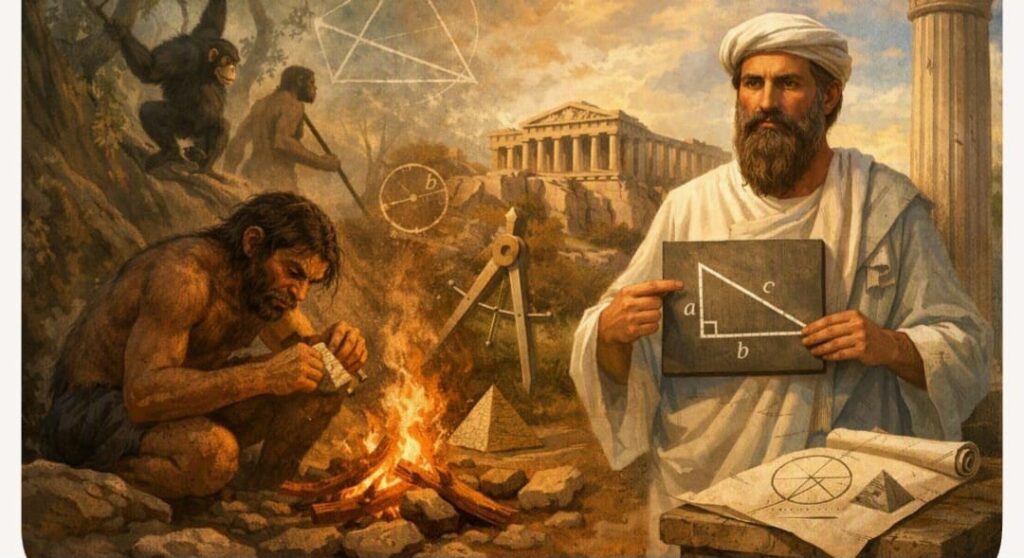
    Geometry is often celebrated as the crown jewel of human intellect, a discipline of proofs, theorems, and elegant abstractions. We imagine Euclid in ancient Greece, carefully systematizing axioms, or Pythagoras proclaiming the harmony of numbers through triangles. Yet the true origins of geometry lie far deeper, in the lived experiences of our pre‑Homo sapiens ancestors. Long before civilization, long before writing, geometry was already alive — not as theory, but as instinct, as survival, as the quiet calculations of primates leaping through forests and hominins shaping stone.

    Consider the primates who preceded us. A monkey gauging the distance between branches is performing geometry, even if unconsciously. Chimpanzees selecting sticks of the right length and angle to extract termites show an intuitive grasp of measurement. Orangutans navigating tangled canopies reveal an ability to plan routes through complex three‑dimensional space. These acts are not abstract mathematics, but they are geometry in its rawest form: the instinctive understanding of shape, distance, and proportion necessary for survival.

    As hominins evolved, this spatial intelligence deepened. Australopithecus walked upright, a shift that demanded new awareness of balance and movement. Homo erectus shaped stone tools with deliberate edges, arranged firewood efficiently, and migrated across landscapes, all acts requiring geometric reasoning. Fire itself was a geometric revolution: arranging logs into a stable structure, controlling airflow, and creating hearths demanded spatial planning. These were not abstract theorems, but practical geometry — the kind that kept our ancestors alive.

    By the time of Neanderthals and Denisovans, geometry had become cultural. Archaeological sites reveal hearths carefully constructed, shelters built with intentional proportions, and carvings with repeating patterns. These extinct cousins of ours were not mathematicians in the formal sense, but they understood symmetry, balance, and design. Their geometry was lived, not written — a language of survival expressed in stone, wood, and fire.

    The leap from instinct to abstraction came with Homo sapiens. Our species transformed intuitive geometry into symbolic thought. Early humans painted symmetrical figures on cave walls, carved repeating motifs, and aligned structures with celestial bodies. In Egypt, geometry became indispensable for measuring land after the Nile’s floods and for constructing pyramids whose angles still astonish us. In Mesopotamia, clay tablets recorded calculations of areas and volumes, showing how agriculture, architecture, and trade demanded reliable methods of measurement. What began as survival instincts matured into structured knowledge, proof, and abstraction.

    It is here that Pythagoras enters the story. Born around 570 BCE, Pythagoras believed that numbers and geometry revealed the hidden harmony of the universe. The famous Pythagorean theorem — that the square of the hypotenuse equals the sum of the squares of the other two sides — became a cornerstone of geometry, though its roots stretch back to Babylonian and Indian traditions centuries earlier. What Pythagoras contributed was not merely a formula but a philosophy: the conviction that geometry was more than practical measurement, that it was a window into cosmic order. His school in Croton treated mathematics as sacred, blending geometry with music, ethics, and metaphysics. In this way, Pythagoras gave geometry its soul, while Euclid later gave it its scaffolding.

    Euclid, writing in the third century BCE, codified geometry into a logical system in his Elements. He offered proofs, axioms, and theorems that transformed geometry into a discipline of clarity and rigor. If Pythagoras linked geometry to mystical harmony, Euclid anchored it in reason. Together, they represent two complementary traditions: one that sees geometry as a bridge to the divine, and another that sees it as the architecture of logic.

    Yet even in its most formalized form, geometry carries echoes of its origins. The circle, triangle, and square were not inventions but codifications of shapes long observed in nature and used in daily life. Euclid’s Elements may have given geometry its intellectual framework, but the raw material had been accumulating for millions of years in the minds and behaviors of our ancestors. Geometry is not merely a human invention; it is an evolutionary inheritance.

    This perspective matters. Too often, we treat mathematics as a detached discipline, divorced from the messy realities of survival. But geometry is not just about proofs on paper; it is about the leap of a primate, the strike of a stone, the construction of a hearth. Recognizing this lineage enriches our understanding of mathematics and reconnects it to the lived experiences of those who came before us. It reminds us that knowledge is not created in isolation but emerges gradually, shaped by biology, environment, and necessity.

    In an age where we marvel at advanced mathematics and its applications in technology, we should pause to honor the geometry of our ancestors. Their instincts for space and proportion were the first drafts of the discipline we now revere. Without their leaps, strikes, and fires, there would be no pyramids, no proofs, no modern science. Geometry is not just a triumph of civilization; it is a chronicle of survival turned into knowledge, of instinct refined into abstraction, and of humanity’s enduring quest to understand and shape the world. OT

  • Lowenmensch to Narasimha: A 40,000-Year-Old Recurring Faith

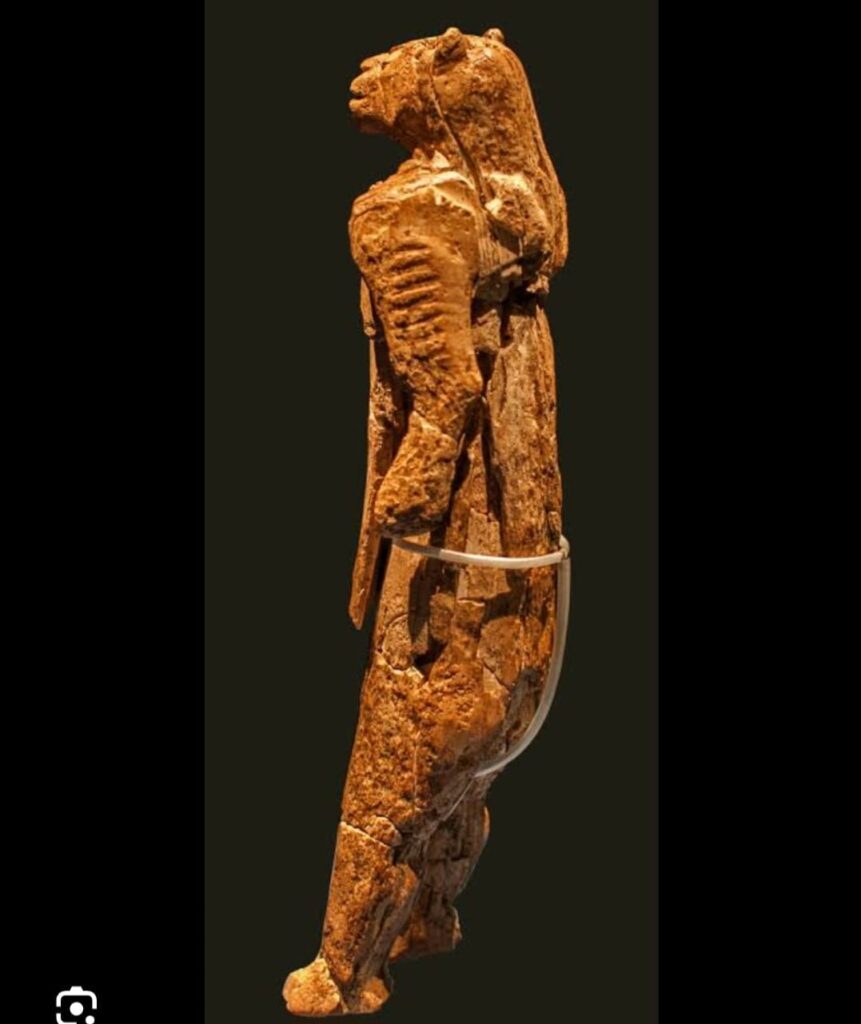
    In a cave in southern Germany, sometime around 40,000 years ago, someone picked up a piece of mammoth ivory and a flint knife and carved a figure that had no business existing in nature: a creature with a man’s body and a lion’s head. It took the better part of a century, after its 1939 discovery, for archaeologists to even reassemble the roughly 200 fragments into the 31-centimetre statuette now known as the Löwenmensch, the Lion-man of Hohlenstein-Stadel. Carbon dating places it in the Aurignacian period, making it one of the oldest confirmed sculptures on Earth. It is also, many archaeologists believe, the oldest surviving evidence of religious imagination — proof that Ice Age humans could conceive of beings that did not exist, and found that act of conception important enough to spend enormous labour giving it physical form.

    What is strange, and worth sitting with, is that this same fusion recurs across the world, in cultures with no plausible contact with each other. In India, Narasimha, the fourth avatar of Vishnu, takes the form of a man-lion specifically to solve an improbable problem: the demon Hiranyakashipu had secured a boon that he could not be killed by man or beast, indoors or outdoors, by day or night. Narasimha, being neither man nor beast, kills him at twilight, on a threshold, across his own lap — a figure whose entire theological purpose is to exist in the cracks between categories. In Egypt, the Great Sphinx of Giza, carved around 2500 BCE during the reign of Khafre, reverses the formula: a lion’s body topped with a man’s head, watching over the necropolis at Giza. Three continents, three very different timescales, and the same instinct: when humans have reached for a figure powerful enough to guard a threshold, embody a god, or represent the outer limit of imagination, they have reached for the lion fused with the human.

    The temptation, once you notice this, is to look for a hidden thread connecting them — some diffusion radiating outward from a common source. That temptation should be resisted. The Löwenmensch predates the Sphinx by roughly 35,000 years and predates any textual trace of Narasimha by even longer. There is no continuous line of transmission from Ice Age Swabia to Old Kingdom Egypt to Puranic India; these are not variations on a shared idea but independent inventions. What makes that more interesting, not less, is what it suggests about the recurring logic of the human mind rather than the migration of a story.

    Narasimha’s own history makes the point well. The polished, pillar-emerging, Hiranyakashipu-slaying Narasimha of the Puranas is a relatively late textual formalization. But the historian, Suvira Jaiswal has traced the idea’s pillar motif to totem poles worshipped by tribal communities across Odisha, Telangana, Andhra Pradesh, and Chhattisgarh, long before it was absorbed into Vaishnava scripture. The Chenchu people of the Deccan hills still worship the same figure under their own name, Obalesudu, independent of any Sanskrit text. Some scholars go further, arguing that the tribal, pre-Vedic layer of Narasimha shouldn’t be read as folklore that got absorbed into Hinduism, but as a constitutive part of it — original, not borrowed. If that reading holds, then all three of these lion-human figures may sit atop an even older and now invisible substrate: informal, pre-literate lion veneration that different civilizations, working independently, eventually dressed in the language of formal religion.

    Why the lion, specifically? It is not a difficult question to answer at the level of instinct, even if it resists proof. The lion was, for most of human prehistory across Africa and Eurasia, the apex predator sharing our landscape — the thing capable of killing us that we could not reliably kill. To fuse it with the human form is to produce a being with the one thing lions lack and humans possess: intention, morality, agency. The Löwenmensch’s makers, Narasimha’s worshippers, and Khafre’s sculptors were separated by tens of thousands of years and thousands of miles, yet they arrived at the same solution to the same problem — how do you give a face to power that exceeds your own? You borrow the fiercest animal you know, and you give it your own eyes. DE

  • Species, Cousins and the Blurry Edges of Being Human

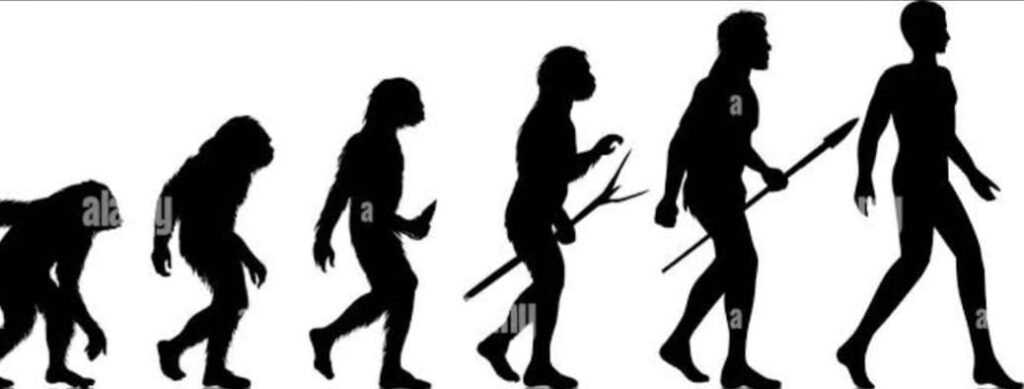
    For most of the time our species has existed, we have not been alone. Roughly twenty-one named human species, and almost certainly several more still unknown, have walked this planet. Some were tall and rangy, others short and stocky; some had brains as large as ours, others far smaller. They made tools, controlled fire, buried their dead, and in a few cases almost certainly thought about the world in ways we would recognise as human. Then, one by one, they vanished. For the last forty thousand years or so, Homo sapiens has been the sole survivor. That singular status has encouraged a quiet arrogance: the idea that we represent the inevitable peak of a tidy evolutionary ladder. The fossil and genetic records tell a different story. Humanity’s past was a tangled, bushy tree full of dead ends, side branches, and unexpected connections.

    One of the most persistent simplifications is the claim that modern humans evolved directly from Homo erectus. Homo erectus was indeed a remarkable ancestor—long-lived, widely travelled, and the first of our lineage to leave Africa in significant numbers. Yet the path from those early populations to us was neither straight nor simple. African erectus-grade groups gave rise to intermediate forms, often grouped under names such as Homo heidelbergensis or Homo rhodesiensis. From these Middle Pleistocene populations emerged, on one branch, the ancestors of Neanderthals and Denisovans in Eurasia, and on another, the early members of our own species in Africa. The details remain contested—the so-called “muddle in the middle” of the fossil record is still being sorted—but the broad outline is clear. We did not step neatly out of Homo erectus; we inherited a lineage that had already been experimenting with larger brains, more complex tools, and new ways of living for hundreds of thousands of years.

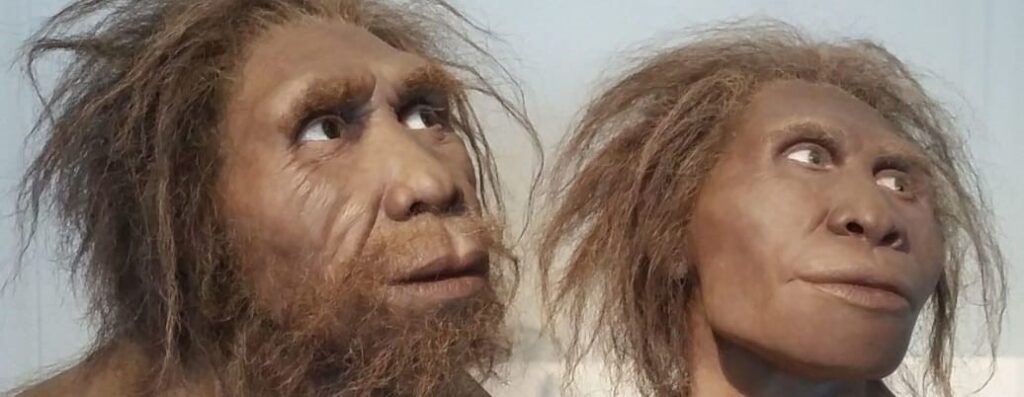
    Even more unsettling to tidy categories is the evidence of interbreeding. When Homo sapiens finally left Africa in large numbers, they encountered other human groups that had been evolving separately for half a million years or more. They did not merely coexist; they mated. The children of those unions were fertile. Traces of Neanderthal DNA survive in every non-African population today, typically between one and four per cent. Denisovan ancestry is present in varying amounts, especially among people of East Asian, Southeast Asian, and Oceanian descent. Geneticists have even recovered the genome of a first-generation hybrid whose mother was Neanderthal and whose father was Denisovan. By the strictest reading of the biological species concept—groups that can interbreed and produce fertile offspring—these populations should perhaps be regarded as subspecies or races of a single expansive human species.

    Yet most specialists continue to treat them as distinct species. The reasons are not arbitrary. Neanderthals and Denisovans differed from us in skull shape, body proportions, and many subtle anatomical details to a degree that far exceeds the variation seen among living human populations. They had followed separate evolutionary paths for hundreds of millennia, adapting to different climates and landscapes. Gene flow, when it occurred, was limited and episodic rather than continuous. Selection appears to have purged many archaic alleles, particularly those affecting fertility and the X chromosome. In this respect they resemble other pairs of closely related animals—polar bears and brown bears, coyotes and wolves—that can hybridise successfully yet remain recognisable as separate species because of morphology, ecology, and deep divergence. Speciation is a process, not a switch that flips cleanly from “same” to “different.” At the moment our ancestors met the Neanderthals, that process was advanced but still incomplete.

    The contrast with modern human “races” is instructive. Living populations differ in skin colour, hair texture, and minor skeletal traits, but the genetic distances among them are small, gene flow has been continuous, and the period of relative isolation has been brief. No living group approaches the morphological or temporal separation that characterised Neanderthals or Denisovans. Calling those archaic populations mere races collapses distinctions that the bones and the genomes both insist upon. At the same time, insisting on rigid species boundaries ignores the fertile hybrids and the DNA we still carry. The truth sits uncomfortably in between.

    What emerges from this evidence is not a story of inevitable triumph but one of contingency, contact, and incomplete separation. We are the last human species standing, yet we are also a mosaic. Fragments of other ways of being human persist inside us. The lines we draw—species versus subspecies, ancestor versus cousin, us versus them—are useful for organising knowledge, but they are also human inventions imposed on a past that was far more fluid. Understanding that fluidity does not diminish our uniqueness; it situates it. We are not the sole product of a linear march toward perfection. We are the survivors of a crowded, experimental, and occasionally intimate family history—one that left its mark in our bones, our tools, and the very sequence of our genes. OK

  • Beyond the Ticker: Why Fiscal Cushions and Foreign Buying Aren’t Calming Street Anxiety

    India’s macroeconomic story is presenting a classic study in contrasts, where balance-sheet metrics and institutional buying clash directly with growing trade vulnerabilities and cautious retail sentiment. On paper, the fundamental pillars of the fiscal engine appear good. The Union Government has already achieved nearly three-quarters of its annual asset-monetisation and disinvestment target. By locking in seventy-four percent of its goal ahead of schedule through strategic stake sales and brownfield infrastructure leases, New Delhi has bought itself substantial fiscal insurance. This capital cushion shields the national balance sheet against volatile global macro shifts, rising domestic subsidy burdens, and unexpected spending mandates. It also reassures international credit agencies that India’s fiscal deficit trajectory remains on target.

    Yet, this internal fiscal discipline stands in stark relief against a widening economic leak along the external frontier. In July 2026, the national merchandise trade deficit expanded to a six-month high of nearly thirty-two billion dollars. While domestic manufacturing and export engines hit historical records—propelled by a staggering seventy percent spike in petroleum exports and nearly sixty percent growth in local electronics production—the national import bill surged even faster. Driven by an eighteen percent rise in crude oil costs and massive inflows of industrial machinery and electronics components, imports topped seventy-six billion dollars for the month. This surge reflects an uncomfortable structural dependence on imported energy and raw materials.

    This widening external gap quickly spilled over into domestic capital markets, exposing a fascinating psychological rift among investors. Over the course of a single week, domestic institutional investors pumped over seventeen thousand crore rupees into Indian equities, backed by an additional four thousand crore rupees from foreign institutional buyers. In total, over twenty-one thousand crore rupees in net institutional capital flooded into the market. Under normal circumstances, such massive institutional support would easily propel the benchmark indices to fresh high-water marks.

    Instead, the Sensex retreated by three hundred and seventy-five points because direct retail participants took a defensive stance on the trading floor. Sensing high valuations and fearing the inflationary drag of an expanding trade gap, retail traders chose to take money off the table. The widening trade deficit serves as a persistent reminder of global volatility, oil-price exposure, and the immediate pressures facing the Indian Rupee. As retail investors navigate these mixed signals, their cautious retreat demonstrates a growing sophistication—a refusal to blindly follow institutional flows when macro headwinds mount. NI

  • Less Than Six Hours of Sleep: A Prescription for Metabolic Trouble

    In our fast‑paced world, sleeping less than six hours a night is often worn as a badge of productivity. Yet a growing body of evidence shows that this habit is not a neutral trade‑off but a slow, systemic stressor that quietly elevates the risk of high blood pressure, coronary artery disease, irregular heart rhythms, stroke, type 2 diabetes, and obesity. For anyone concerned about long‑term cardiovascular health—especially in midlife—chronic short sleep is one of the most modifiable yet under‑appreciated risk factors.

    The cardiovascular toll begins early and compounds over time. Habitual sleep under six hours is consistently associated with higher blood pressure, greater incidence of coronary heart disease, and more arrhythmias. Large cohort analyses link short sleep to roughly a 20% increase in heart attacks and up to a 48% higher risk of developing or dying from coronary disease. Mechanistically, insufficient sleep raises sympathetic tone, cortisol, and inflammatory markers, all of which constrict blood vessels, stiffen arteries, and destabilize electrical activity in the heart. The result is a physiology primed for hypertension, atherosclerosis, and irregular rhythms.

    Stroke risk follows a similar pattern. Adults who average fewer than seven hours of sleep are more likely to have a stroke, with risk rising as sleep time shortens. Meta‑analyses tie sleeping under six hours to about a 15% higher stroke risk, and in people who already have hypertension or diabetes, short sleep roughly doubles the risk of dying from stroke or heart disease. This is not merely correlation; short sleep promotes the very conditions—high blood pressure, insulin resistance, inflammation, and clotting tendency—that drive cerebrovascular events.

    Perhaps the most consequential pathway is metabolic. Sleeping five to six hours a night approximately doubles the risk of prediabetes and type 2 diabetes compared with seven to eight hours. Dose‑response meta‑analyses show a U‑shaped curve, with the lowest diabetes risk at 7–8 hours; each hour less than seven raises risk by about 9–15%, and short sleep overall is linked to a 28–30% higher incidence of type 2 diabetes. Once diabetes is present, deviating from the 7–9 hour sleep window is associated with more cardiovascular events and higher cardiovascular mortality, independent of other risk factors. In other words, short sleep not only increases the chance of developing diabetes; it also worsens outcomes for those who already have it.

    Weight gain and obesity complete the triad. Short sleep shifts appetite hormones—increasing ghrelin and decreasing leptin—while heightening cravings and reducing energy expenditure. Cross‑sectional and prospective studies consistently find that habitually short sleepers have higher body mass index and waist circumference, and meta‑analyses associate short sleep with about a 38% higher obesity risk. In one long‑term cohort, young adults sleeping under six hours were 7.5 times more likely to have an elevated BMI by age 27 after adjusting for activity and family history. Obesity then feeds back into hypertension, dyslipidemia, insulin resistance, and sleep apnea, creating a self‑reinforcing loop that further strains the heart.

    These pathways do not operate in isolation; they interact. Short sleep promotes higher blood pressure, insulin resistance, and weight gain, which together accelerate metabolic syndrome and atherosclerosis, culminating in higher risks of heart attack, stroke, arrhythmias, and heart failure. The stakes are especially high for people with existing cardiometabolic disease. Among those with hypertension or diabetes, sleeping less than six hours doubles the risk of cardiovascular death; among those with established heart disease or stroke, short sleep triples the risk of death, including from cancer.

    Recognizing this, the American Heart Association added sleep duration to its Life’s Essential 8 metrics for cardiovascular health, recommending 7–9 hours for adults. This is not a luxury; it is preventive medicine. Consistently sleeping less than seven hours raises cardiovascular mortality by about 12% and diabetes risk by roughly 38%, while short sleep is linked to a 12% higher all‑cause mortality in meta‑analyses. For most adults, moving from under six hours toward a stable 7–8 hour window can meaningfully reduce risk over time, even if perfection is not immediately achievable.

    The cultural narrative that equates minimal sleep with strength needs to change. In reality, regularly sleeping under six hours is a modifiable risk factor that quietly erodes vascular health, destabilizes metabolism, and burdens the heart. Prioritizing sleep is not indulgence; it is an investment in longevity, cognitive resilience, and cardiovascular stability. For individuals and health systems alike, treating sleep as a core pillar of prevention—alongside diet, activity, and blood pressure control—is one of the highest‑yield steps we can take to reduce the burden of heart disease, stroke, and diabetes.