Author: sustenanceandstories@gmail.com

  • People of the Forest on the Brink: Rescue, Rehabilitation and the Flight for Survival

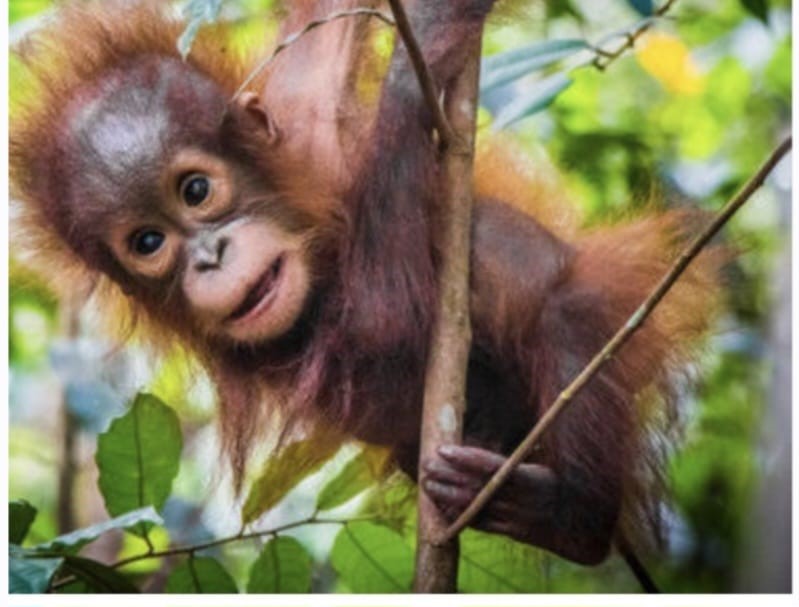
    Orangutans, the “people of the forest,” are among the most intelligent and charismatic of the great apes. Yet their very existence is hanging by a thread. Across Indonesia and Malaysia, these arboreal giants are being squeezed out of their rainforest homes by deforestation, palm oil plantations, and the relentless march of human development. The story of orangutan conservation is not just about saving a species—it is about confronting the choices humanity makes in the name of progress, and whether we are willing to share the planet with beings whose survival depends on the forests we so casually destroy.

    The challenges are immense. Palm oil, a cheap and versatile ingredient found in everything from biscuits to shampoo, has become the single greatest driver of orangutan habitat loss. Vast swathes of rainforest have been cleared to make way for monoculture plantations, leaving orangutans with nowhere to forage, nest, or roam. In Borneo alone, more than half of orangutan habitat has been lost in just two decades. The fires that often accompany this deforestation are equally devastating. In Kalimantan, wildfires in 2026 burned through 60 percent of orangutan habitat, leaving thousands of apes starving and disoriented. These are not isolated incidents—they are systemic, recurring assaults on the very ecosystems orangutans depend upon.

    The illegal wildlife trade adds another layer of cruelty. Baby orangutans are prized in the exotic pet market, fetching tens of thousands of dollars. To obtain them, poachers kill the mothers, leaving infants traumatized and vulnerable. The recent rescue of five baby orangutans in Odisha, India, highlights the global reach of this trade. Found abandoned in a plantation, these infants were calm and comfortable around humans—clear evidence they had been smuggled and raised in captivity. Their presence in India, far from their native forests, underscores the scale of trafficking networks that treat endangered species as commodities.

    Against this bleak backdrop, rehabilitation centers have become sanctuaries of hope. Sepilok in Sabah, Malaysia, established in 1964, was the world’s first orangutan rehabilitation facility. Its structured programs—quarantine, nursery care, forest school, and semi-wild release—have returned hundreds of orangutans to the wild, with an impressive success rate. Semenggoh in Sarawak offers a semi-wild model, where orangutans roam freely in forest reserves but still receive supplemental feeding. In Indonesia, centers like those run by Yayasan Inisiasi Alam provide emergency care for orangutans displaced by wildfires and deforestation. These institutions are not just rescue facilities; they are laboratories of resilience, teaching orphaned apes how to climb, forage, and build nests, skills they would normally learn from their mothers over six to eight years.

    The rehabilitation process is painstakingly slow. Orangutans are among the slowest-reproducing mammals, with females giving birth only once every six to eight years. This means that every lost individual is a blow to the species’ survival. Rehabilitation must replicate the maternal bond, with caregivers acting as surrogate mothers, guiding infants through “forest school” where they learn to identify fruits, swing through the canopy, and avoid predators. Only when they demonstrate independence are they moved to pre-release islands, semi-wild environments where their survival instincts are tested. Finally, they are released into protected forests, fitted with GPS collars and monitored by field teams. Success is measured not just in survival, but in reproduction—when rehabilitated orangutans give birth in the wild, it signals that the cycle of life has been restored.

    Yet rehabilitation alone cannot solve the crisis. Without intact forests, there is nowhere to release these apes. Conservation must therefore extend beyond rescue centers to the broader landscape. Habitat corridors that connect fragmented forests are essential to maintaining genetic diversity. Stronger enforcement against trafficking and poaching is critical. Equally important is community collaboration. The people living at the edge of forests are often caught between poverty and conservation. Supporting them with sustainable livelihoods—such as eco-tourism, agroforestry, or certified palm oil—can reduce reliance on destructive practices and foster coexistence.

    The plight of orangutans forces us to confront uncomfortable truths. Our consumer choices, from the snacks we eat to the cosmetics we use, are directly linked to the destruction of rainforests. The rescued infants in Odisha are not just victims of smuggling; they are symbols of a global failure to protect one of our closest relatives in the animal kingdom. But they are also reminders that it is not too late. With concerted effort, orangutans can be rehabilitated, forests can be restored, and coexistence can be achieved. The question is whether we have the will to act.

    Orangutans are more than conservation statistics. They are sentient beings with rich emotional lives, capable of laughter, grief, and ingenuity. To lose them would be to lose a mirror of ourselves, a living testament to the diversity of life on Earth. Saving them is not charity—it is a moral obligation, a recognition that our fate is tied to theirs. If the forests fall silent, it will not just be the orangutans who vanish. It will be a piece of humanity itself. OT

  • Originality is the Art of Borrowing Well: Genius is a Contagion, Not a Possession

    We like to believe in genius. We like the romance of the solitary creator who suddenly sees what nobody else could see and produces something entirely original. Culture has built almost a mythology around such people: Homer, Shakespeare, Mozart, Beethoven, Einstein, the Beatles and David Bowie. We call them geniuses because it is comforting to imagine that extraordinary creativity comes from an extraordinary individual mind. But digital theorist Tony D. Sampson challenges precisely this idea. His provocative proposition is that “natural creative genius” is a myth. Genius, he suggests, is less a possession of an exceptional individual than something that spreads through society.

    The idea becomes even more compelling when viewed through Gabriel Tarde’s theory of social contagion. Tarde argued that society advances through imitation. Ideas, habits, behaviours and inventions move from person to person, but they are rarely copied exactly. Each person modifies what he or she receives, producing variations that can then spread further. Creativity, in this sense, resembles evolution. Something already exists; somebody imitates it, changes it, combines it with something else and passes the altered version onwards. What we eventually call an “original” idea may therefore be the latest mutation in a very long chain of cultural transmission.

    Harold Bloom’s famous concept of the “anxiety of influence” takes the argument into literature. The great poet, Bloom suggested, does not create in an empty intellectual landscape. He must confront his predecessors, wrestle with their influence and establish his own identity in relation to them. Even the strongest creator is therefore caught in a paradox: to become original, one must first inherit. The new work is simultaneously an act of creation and an argument with the past.

    Look at the celebrated names of cultural history through this lens and the mythology begins to change. Homer did not invent storytelling. Whether we regard the Homeric epics as the work of an individual poet or the culmination of an oral tradition, they emerged from a vast inheritance of myths, language, characters and storytelling conventions. Brahms did not invent classical music; he absorbed an immense musical tradition and transformed it. The Beatles absorbed American blues, rhythm and blues, rock ‘n’ roll, skiffle and countless other influences before transforming popular music. Bowie drew upon music, theatre, fashion, literature, visual art and the performers who preceded him. Their achievements were extraordinary, but they were not created in cultural isolation.

    This does not make them less creative. It may make their creativity more impressive. Their genius was not that they produced something from nothing, but that they could take material already circulating through culture and recombine it so brilliantly that it became something new. Perhaps originality is not the absence of influence but the ability to transform influence.

    There is another uncomfortable part of the argument. Who gets recognised as a genius may depend on considerably more than raw creative talent. Education, wealth, leisure, technology, mentors, publishers, galleries, universities, recording companies and social networks all provide opportunities to develop an idea and make it visible. Two equally imaginative people may produce equally interesting work, yet only one may have the connections and resources necessary to reach a large audience.

    History also tends to simplify creative achievement. We remember the Beatles but forget many of the musicians who influenced them; we remember Bowie but not every performer, designer and artist whose work entered his creative universe. The cultural ecosystem disappears and the individual name remains. The genius becomes a convenient shorthand for a process that was actually collective.

    There is, therefore, a profound difference between saying that exceptional creative ability exists and saying that “natural genius” exists. Human beings clearly differ in imagination, intelligence, musicality, artistic skill and the ability to make unusual connections. Some individuals achieve things that are genuinely extraordinary. But their originality is never entirely theirs. Every creator inherits a language, a culture, a vocabulary of ideas and a world of influences.

    Perhaps, then, genius is better understood not as something one possesses but as something one catches. An idea moves from one mind to another, is altered, intensified and passed on. The exceptional creator becomes a particularly powerful carrier of that cultural contagion.

    Genius is a contagion, not a possession. We inherit it, absorb it, mutate it and pass it on. The greatest creators are not those who create without influence, but those who transform influence so completely that we forget where it came from. PT

  • The Silent Ancestors: How Science Rewrites Ancient History of South Asia

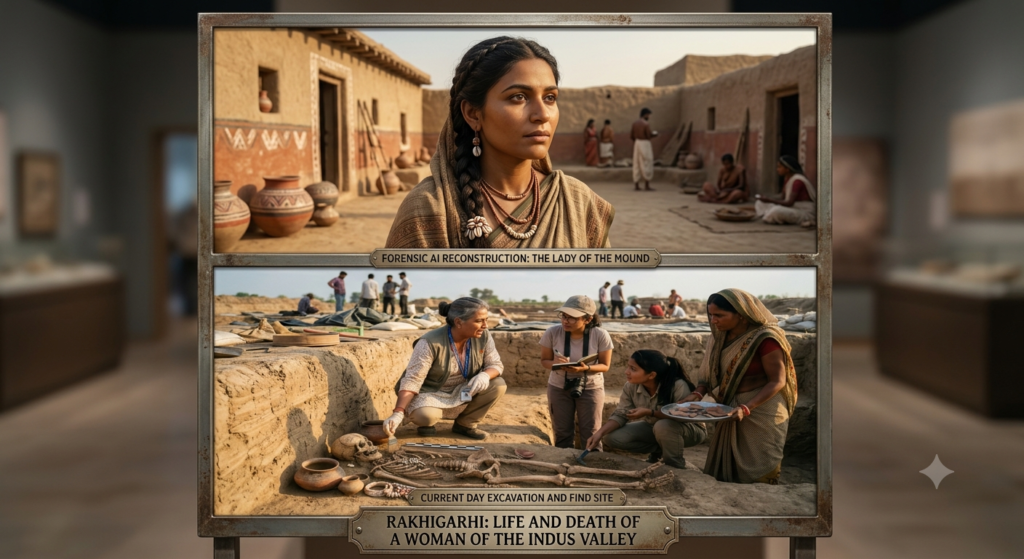
    For generations, the urban wonders of the Indus Valley Civilization were shrouded in romantic mystery. We marveled at the grid-planned streets of Mohenjo-daro and the vast brick granaries of Rakhigarhi, but we spoke of their creators as a phantom people—an ancient society that somehow vanished into the sands of time. Sensational internet rumors occasionally resurrected them as mythic giants, spinning tales of six-foot-tall matriarchs uncovered in ancient Haryana. Yet, when modern science finally unlocked the secrets of the buried past, the reality proved far more profound than any internet legend. Through the lens of archaeogenetics, we now know that the Harappans never vanished.

    The turning point arrived with the extraction of ancient DNA from skeletal remains at Rakhigarhi, most notably a ~4,600-year-old female specimen cataloged as sample I6113. Groundbreaking research led by an international consortium of scientists succeeded in sequencing her autosomal genome, offering an unprecedented glimpse into the genetic architecture of the Mature Harappan period. The results shattered long-held myths. The ancient genome revealed a specific ancestral substrate—a distinct genetic blend of Ancient Ancestral South Indian hunter-gatherers and early Iranian-related agriculturalists.

    When geneticists mapped this ancient profile against present-day populations, the conclusion was inescapable: this “IVC-like” core is the single largest ancestral component shared across virtually every modern South Asian community. From the northern plains to the southern peninsular coasts, across diverse language families and social strata, modern South Asians are the direct biological descendants of the Indus Valley people. The civilization did not end in total demographic catastrophe or population replacement; its inhabitants simply adapted, shifted, and integrated into the evolving tapestry of the subcontinent.

    Yet, science is an exacting master that resists simple political narratives. While autosomal DNA proved undeniable continuity, the paternal genetic markers told an equally crucial second half of the story. Sequenced remains from the Rakhigarhi cemetery revealed a total absence of Central Asian Steppe pastoralist ancestry. Crucially, the R1a1 Y-chromosome haplogroup—often informally dubbed the Steppe marker or the Aryan gene—was completely missing from the Mature Harappan genetic pool.

    Because Y-chromosomes pass strictly from father to son, tracking paternal lineages requires male skeletons, but autosomal DNA from both sexes independently confirmed that Steppe-related genetic influx had simply not yet reached northwestern India by 2500 BCE. The data indicates that Steppe pastoralist migrations occurred later, around 1500 BCE, as the urban centers of the Indus Valley were waning. When these incoming groups arrived, they integrated into the massive existing Harappan demographic baseline, introducing new paternal lineages alongside the incoming Indo-European language family.

    This double revelation provides an objective, scientifically grounded framework for understanding South Asian heritage. It refutes both the notion of a total replacement of indigenous inhabitants and the counter-claim that the Indus Valley was culturally and genetically identical to later Vedic societies. Instead, the South Asian genome is a layered masterpiece. The foundation belongs to the Harappans, while later migrations added new genetic and linguistic threads to an already thriving civilization.

    Facial reconstructions performed on Rakhigarhi skulls further humanize this scientific truth. With their high cheekbones, deep-set eyes, and distinct facial contours, the ancient faces reconstructed by forensic scientists look strikingly familiar. They resemble the people walking the streets of modern South Asian cities. Science has stripped away the sensationalism and political polemics to reveal a simple, elegant truth: the builders of the ancient world are not lost to history. NI

  • Cardiovascular Disease Doesn’t Wait for Middle Age Anymore: Four in Five Young Adults are Already on the CKM Spectrum

    A new study published in Circulation: Population Health and Outcomes has delivered an uncomfortable number: 79.2% of young adults, averaging just 23 years old, already show signs of cardiovascular-kidney-metabolic syndrome, or CKM. That means roughly four out of every five people in their early twenties are carrying at least one measurable risk factor for a disease cluster most of us associate with middle age, if we think about it at all before then.

    CKM syndrome, formally defined by the American Heart Association in 2023, is built on a simple but consequential insight: obesity, diabetes, kidney disease and heart disease are not separate conditions that happen to occur together. They feed each other. Excess or poorly distributed body fat drives insulin resistance and metabolic dysfunction. That dysfunction strains the kidneys, showing up as declining filtration or rising creatinine. Kidney impairment, in turn, accelerates cardiovascular damage. Each piece amplifies the others, which is why the AHA chose to name and stage them as one interconnected syndrome rather than four unrelated diagnoses.

    The staging system runs from 0 to 4. Stage 0 means no risk factors at all. Stage 1 is excess or dysfunctional adiposity, often before any blood test would flag a problem. Stage 2 adds metabolic risk factors such as hypertension or early kidney disease. Stage 3 is subclinical cardiovascular disease or advanced kidney disease, meaning damage is detectable through testing even though the person feels fine. Stage 4 is clinical disease: a heart attack, a stroke, heart failure, or kidney failure that has already happened.

    What makes the new study notable is not just the topline percentage but what lies underneath it. Researchers, led by Boston University cardiologist Donald Lloyd-Jones, drew on a cohort of nearly 1,300 young adults and paired CKM staging with carotid ultrasound imaging, a way of directly visualizing arterial injury rather than inferring risk from lab values alone. The staging breakdown was telling: 20.7% of participants sat at stage 0, 40.2% at stage 1, 36.2% at stage 2, and 2.8% had already progressed to stage 3, meaning measurable arterial damage. Not a single participant had reached stage 4. That last detail matters. This is not a story about young people already suffering heart attacks. It is a story about the invisible early architecture of heart disease assembling itself decades before any clinical event, in bodies that otherwise appear perfectly healthy.

    That gap between early biological damage and eventual illness is exactly why the twenties deserve more attention than they currently get. Heart attacks and strokes tend to strike in the forties, fifties and sixties, so cardiovascular risk rarely enters a young adult’s thinking. But the underlying atherosclerotic process, researchers now understand, often begins accelerating well before that. A twenty-three-year-old with elevated blood pressure or early insulin resistance is not necessarily years away from consequences. Some already show the vascular fingerprints of a process already underway.

    The AHA’s own answer for intervention is a framework called Life’s Essential 8, which scores cardiovascular health from 0 to 100 across eight components: diet, physical activity, nicotine exposure, sleep, body weight, blood lipids, blood glucose and blood pressure. The first five are behavioral and modifiable day to day. The last three are the biological readouts that, in effect, determine where someone falls on the CKM staging scale. A score of 80 or above is considered ideal, 50 to 79 intermediate, and below 50 poor, though because the score is an average, a strong result on one front can mask a serious problem on another.

    None of this argues for alarm. It argues for attention. Stages 1 and 2, which capture the overwhelming majority of that 79%, are asymptomatic by definition. There is nothing to feel yet, which is precisely the problem, and precisely the opportunity. Routine screening in a person’s twenties, rather than a habit of waiting until something feels wrong, is what stands between a stage 1 finding and a stage 3 one. The biology, it turns out, does not wait for a diagnosis to begin. DE

  • Six Million Years of Bipedal Walking: Sahelanthropus, Orroin, and the Dawn of Humanity

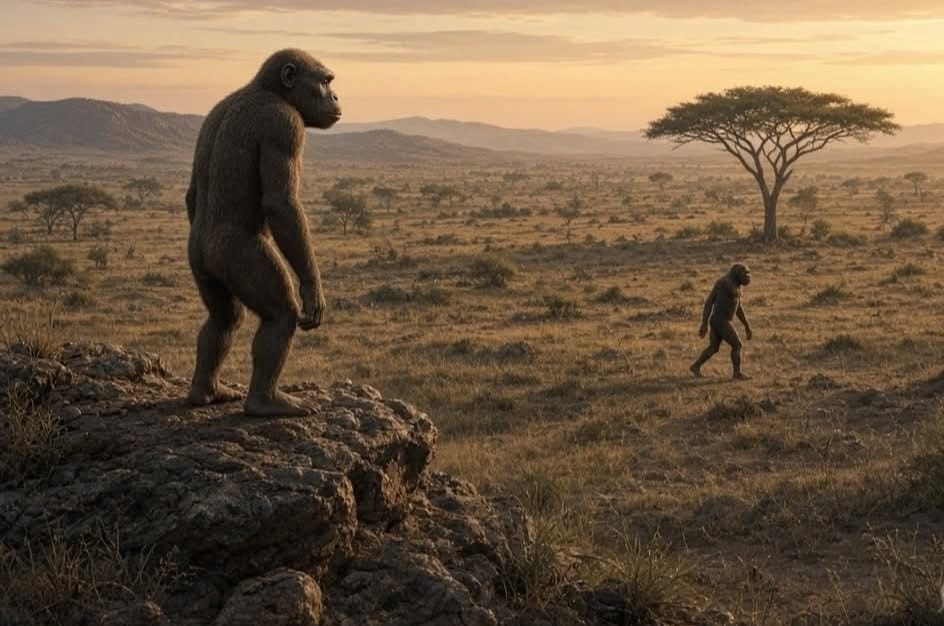
    The earliest chapters of the human story are written in the scattered bones of two small, bipedal creatures who lived in Africa some six to seven million years ago. Sahelanthropus tchadensis and Orrorin tugenensis stand at the threshold of our lineage, the first known species that can reasonably be called human in the broadest scientific sense. They were not modern people. They were not a founding couple. Yet they mark the moment when a group of African apes began to walk upright more often than not, setting in motion the long experiment that would one day produce Homo sapiens.

    Sahelanthropus tchadensis, discovered in the deserts of Chad and nicknamed Toumaï, lived between seven and six million years ago. Its nearly complete skull shows a mosaic of features: a brain the size of a chimpanzee’s, a sloping face, yet unusually small canines and a foramen magnum positioned in a way that suggests the head was balanced atop a more vertical spine. Later finds of a partial femur have been interpreted by some researchers as evidence of habitual bipedalism, though the claim remains contested. What matters is the timing. This creature lived at or near the evolutionary split between the line that led to chimpanzees and the line that led to us. Whether it sits just on our side of that divide or very close to it, Sahelanthropus is the oldest serious candidate for the first human species.

    A little later, around six million years ago, Orrorin tugenensis appears in the Tugen Hills of Kenya. Its name means “original man” in the local language, and its fossils, especially the thigh bones, offer clearer signs of upright walking. The shape and thickness of the femoral neck resemble those of later bipeds more than those of knuckle-walking apes. Like Sahelanthropus, Orrorin retained climbing abilities, moving between trees and open ground in a landscape that was already beginning to fragment. Together these two species form the opening act of the hominin radiation. They lived, reproduced, and died in social groups whose size and structure we can only guess at. But they represent the first known departure from the purely quadrupedal life of the earlier apes.

    From that distant starting point the family tree branched rather than climbed. Over the next several million years more than twenty related species appeared. Some, like the various australopiths, flourished for long periods. Others, such as the robust Paranthropus forms, specialized and then vanished. Members of the genus Homo emerged around 2.8 million years ago. Later still came the Neanderthals, the Denisovans, the island dwarfs of Flores and Luzon, and Homo naledi. Many of these were cousins rather than direct ancestors. Our own species, Homo sapiens, is a late arrival, first appearing in the African fossil record roughly 300,000 years ago. The genetic lineages known as Mitochondrial Eve and Y-chromosomal Adam are younger coalescence points within that species.

    Evolution works through changing populations across deep time. Sahelanthropus and Orrorin were the earliest known members of the broader human family. They were the first leaves on a bush that would grow crowded with relatives, most of whom would eventually disappear. What these two species give us is a sense of scale and continuity. The human story did not begin with the polished tools or the large brains of later forms. It began with small bipeds testing a new way of moving through a changing world. Everything that followed—the expansion of the brain, the mastery of fire, the spread across continents, the eventual solitude of our own species—rests on that ancient shift. In acknowledging Sahelanthropus tchadensis and Orrorin tugenensis as the first human species, we accept both the depth of our origins and the crowded company in which those origins unfolded. We are the last of a once diverse family, and the first of that family were already walking upright millions of years before any of us arrived. OK

  • Half a Billion Years of Heat and Ice: Earth Has Been Far Hotter But Never This Fast

    Earth’s climate has never stayed constant. Over the last 485 million years, our planet has moved repeatedly between much colder “icehouse” conditions and much warmer “greenhouse” states. A landmark 2024 study in Science now gives us the clearest picture yet of just how wide those swings have been, and what has driven them. The message is double-edged: yes, Earth has endured far hotter worlds than ours, but the speed at which we are pushing the climate today is unlike anything in that vast record.

    The reconstruction, called PhanDA (for Phanerozoic Data Assimilation), combines geological temperature evidence with hundreds of climate-model simulations to produce a continuous estimate of Earth’s global mean surface temperature across almost the entire Phanerozoic Eon. Instead of leaning on a single type of proxy or a single model run, the researchers statistically integrated different paleoclimate records—on the order of 150,000 sea-surface temperature estimates—with model outputs spanning a range of carbon dioxide levels and ancient continental configurations. The result is a spatially complete, time-continuous temperature history that captures both the broad arcs and the sharp spikes of Earth’s thermal past.

    What PhanDA reveals is striking. Over the last 485 million years, global average temperature has ranged from roughly 11°C to 36°C (about 52°F to 97°F), a wider span than many earlier reconstructions suggested. The coldest values correspond to recent glacial periods within our current icehouse, while the hottest peaks align with notorious greenhouse intervals such as the mid-Cretaceous and the Paleocene–Eocene Thermal Maximum. For most of this time, Earth was warmer than today, often lacking large polar ice sheets altogether. In that sense, our modern climate—cool enough to sustain extensive ice on both poles—is actually on the colder side of Earth’s long-term norm.

    One of the study’s clearest findings is the tight connection between atmospheric CO₂ and these temperature swings. The researchers identify carbon dioxide as the dominant control on variations in global climate throughout much of the Phanerozoic. When CO₂ was high, the planet trended toward sweltering greenhouse states; when it was low, ice sheets expanded and global temperatures fell. From this relationship they infer an “apparent” Earth-system sensitivity of about 8°C per doubling of CO₂. That figure is much larger than the roughly 3°C per doubling often cited for near-term, fast-feedback responses, because it includes slow feedbacks—changes in ice sheets, vegetation, and surface reflectivity—that unfold over centuries to millions of years. It helps explain why relatively modest shifts in CO₂ over geological time can correspond to dramatic reorganizations of Earth’s climate system.

    But Earth’s ancient climate should not be used to suggest today’s warming is harmless. The crucial difference is how quickly the change occurs. Many natural climate shifts in Earth’s deep history unfolded over thousands to millions of years, giving ecosystems and species time to migrate, adapt, or evolve. Today’s human-driven warming is occurring on a much shorter timescale, increasing the difficulty for ecosystems and species to keep pace. During the PETM, one of the most intense past hyperthermal events, global temperatures rose by roughly 5–8°C over several thousand years. In contrast, human activities have already warmed the planet by about 1.2–1.3°C in just over a century, with annual CO₂ emissions now roughly nine to ten times higher than during such natural carbon-release episodes. Co-author Jessica Tierney has put it plainly: we have never seen carbon dioxide and temperature rise as fast as they are rising now.

    That speed matters. Organisms, ecosystems, and human societies evolved under the relatively stable conditions of the Holocene, the last 11,700 years. The Phanerozoic record shows that Earth as a system can tolerate far higher temperatures than we experience today, but it also shows that the transitions between climate states usually played out on timescales that allowed life to track changing conditions. Rapid warming compresses those windows, increasing the risk of widespread stress, collapse, and extinction. The deep-time record is not a comfort; it is a warning that the same CO₂ that has governed Earth’s climate for hundreds of millions of years is now being pushed upward at an unprecedented rate.

    Seen in this light, the PhanDA reconstruction does not undermine concern about modern climate change; it sharpens it. It confirms that CO₂ is the master lever of Earth’s long-term climate, that the planet can and has been much hotter than now, and that the current trajectory is steering us toward greenhouse conditions not seen in millions of years—but doing so with a speed that has no analogue in the last 485 million years, The lesson is not that Earth will be fine no matter what we do. It is that the window for orderly adaptation is narrow, and we are closing it fast. TY

  • The Rupee Squeeze: How Imported Inputs and Foreign Capital Outflows Endanger India’s Stability

    India’s macroeconomic narrative often presents a picture of resilient, self-sustaining expansion, yet beneath the surface lies a complex interplay of structural vulnerabilities that span from the agricultural field to the foreign exchange desk. While the nation takes pride in its domestic self-sufficiency across fundamental food staples like wheat and rice, a critical dependency remains unaddressed. India’s true food security is acutely exposed to global supply chains, relying heavily on foreign nations for over half of its edible cooking oil requirements, essential pulse varieties, and the bulk of its agricultural inputs. This reliance means that domestic agricultural stability is fundamentally tied to international trade corridors, maritime security, and foreign currency swings.

    The vulnerability of this framework becomes particularly stark when examining fertilizers. India imports its entire supply of Muriate of Potash and over half of its Di-Ammonium Phosphate, alongside the imported liquefied natural gas required to manufacture domestic urea. When global geopolitical frictions flare or capital flows reverse, the cost of securing these vital nutrients escalates sharply. This structural weakness is exacerbated whenever foreign portfolio investors exit Indian markets, driving down the value of the Rupee. Because these agricultural inputs are priced globally in US Dollars, currency depreciation automatically inflates their landed cost in domestic terms.

    This financial dynamic confronts policymakers with an unavoidable dilemma. The government can either absorb these currency-driven cost increases by expanding the fiscal deficit through higher public subsidies, or it can pass the burden directly onto smallholder farmers. Choosing the latter risks under-application of essential fertilizers, diminished crop yields, and severe retail food inflation. Choosing the former strains sovereign fiscal health, which can paradoxically trigger further foreign capital flight and deepen currency pressures. The agricultural sector thus sits directly at the intersection of international monetary movements and real-economy supply constraints.

    At the same time, recent developments in banking liquidity reveal how global financial flows can alter internal market dynamics in unexpected ways. A massive influx of foreign currency deposits—totaling roughly 127 billion dollars—provided domestic commercial banks with an unprecedented cushion of foreign liability funding. When these dollars were converted into local currency through central bank swap mechanisms, they flooded the domestic banking system with excess Rupee liquidity. This surge in short-term bank funds drove down money market yields and Certificate of Deposit rates, as institutions substituted wholesale market borrowing with foreign currency deposits.

    Yet this internal liquidity abundance exists alongside cautious central bank interventions. To prevent this vast pool of excess Rupee liquidity from distorting short-term interest rates and pushing money market yields far below policy targets, the Reserve Bank of India has had to mop up hundreds of thousands of crores through large-scale Variable Rate Reverse Repo operations. Concurrently, strict guardrails have been imposed on the offshore Non-Deliverable Forward market to prevent speculative short-rupee bets and restrict arbitrage between offshore and onshore foreign exchange rates. These interventions demonstrate that while real-money foreign deposits can temporarily ease domestic bank funding costs, they do not dissolve the underlying exchange rate risks or the broader structural vulnerabilities of an economy reliant on imported real-world commodities.

    Compounding these structural and monetary pressures is a notable shift in real economic momentum. Private survey metrics, including recent Purchasing Managers’ Index releases, point to a gradual cooling in service sector activity—the traditional engine of India’s post-pandemic growth—alongside a broader moderation in manufacturing output. Although the service sector continues to expand and maintain employment creation, cost pressures regarding energy, labor, and digital infrastructure remain sticky, while business confidence has normalized toward historical averages.

    Ultimately, these interconnected dynamics illustrate that India’s economic health cannot be insulated solely through monetary engineering or short-term liquidity management. A surge in bank liquidity may soften wholesale borrowing rates, and central bank auctions may temporarily absorb excess domestic cash, but neither can produce domestic potash or cultivate edible oilseeds. To secure true long-term stability, India must translate its monetary policy buffers into structural real-economy solutions—diversifying agricultural crop patterns, scaling local alternative nutrients, and insulating domestic food supply chains from external currency and geopolitical shocks. NI

  • When Our Ancestors Nearly Vanished: The 1280 Who Became Eight Billion Plus

    For most of recorded history, humanity imagined itself as the intended climax of creation—an inevitable triumph of progress, the final word in a grand, unfolding plan. We pictured our evolution as a stately procession, a line of upright figures marching confidently from the shadows of the ancient past toward the brilliant light of civilisation. That comforting image is a lie. The truth is far more humbling, far more precarious, and infinitely more astonishing. We are not the heirs to a royal lineage. We are the survivors of a gauntlet that killed off nearly everything that ever walked like us.

    Consider the cast of characters that came before. Around six to seven million years ago, deep in the African continent, our lineage split from the one that would become chimpanzees. The earliest hominins emerged not as conquerors, but as fragile experiments. Sahelanthropus tchadensis in Chad, Orrorin tugenensis in Kenya, the various species of Ardipithecus in Ethiopia—these were the first tentative steps away from the trees and onto two legs. They were remarkable for their time, but they were not our grandparents. They were evolutionary dead ends, distant great-aunts and uncles who thrived and then faded into the fossil record, leaving no descendants. The African savannas changed, the climate shifted, and these early pioneers simply vanished. Extinction, it turns out, is the default setting for most species.

    Their lineage did not lead directly to us. Instead, the hominin experiment continued through other branches, eventually producing Homo erectus roughly two million years ago. This was the species that changed everything. Homo erectus was the first true globetrotter of our family tree, leaving Africa to populate vast stretches of Europe and Asia. They made sophisticated stone tools, mastered fire, and endured for nearly two million years—far longer than our own species has even existed. They were our direct ancestors. They are our great-many-times-over grandparents.

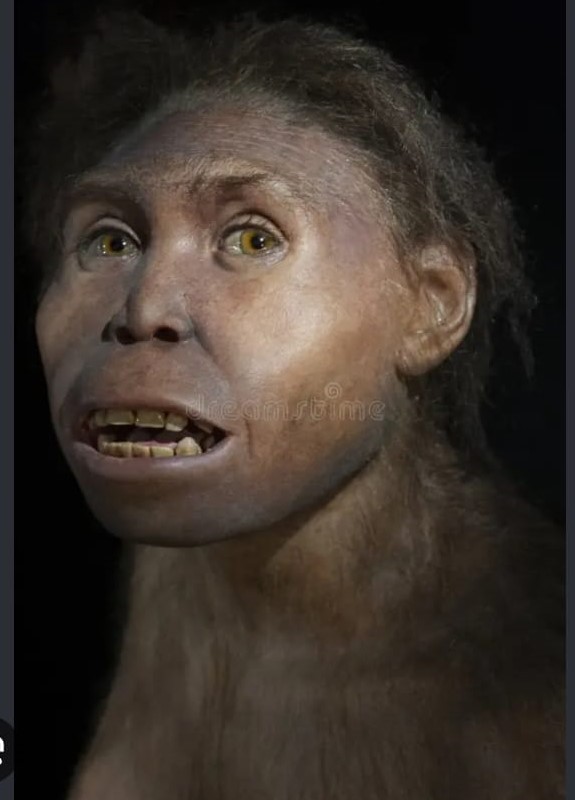
    But here is where the family tree becomes a tangled bush. Those Homo erectus populations that stayed in Africa evolved quietly and continuously, eventually giving rise to Homo heidelbergensis and, finally, to us—Homo sapiens, about 300,000 years ago. Meanwhile, the populations that had ventured into Eurasia became isolated. Cut off by distance and shifting climates, they evolved into separate branches entirely: the Neanderthals in Europe, the Denisovans in Asia, and the mysterious, diminutive “Hobbits” (Homo floresiensis) and Homo luzonensis on isolated Southeast Asian islands. These were not our ancestors. They were our evolutionary cousins—sister lineages that shared grandparents with us but took different paths. They lived alongside our forebears for tens of thousands of years, even interbreeding with them occasionally. And then, one by one, they too went extinct. Their genes linger in small traces within our own DNA, but their species are gone forever.

    The most sobering chapter in this story is not the demise of our cousins, however. It is the near extinction of our own direct line. Around 930,000 to 813,000 years ago, during a period of violent climate upheaval known as the Mid-Pleistocene Transition, the population of our Homo erectus ancestors in Africa collapsed. Severe droughts, plunging temperatures, and collapsing ecosystems reduced their numbers from perhaps 100,000 to a mere 1,280 breeding individuals. For roughly 117,000 years, our entire lineage teetered on the absolute brink of annihilation. A single prolonged drought, a single epidemic, a single volcanic winter could have erased us entirely from the history of the planet. Yet, against all odds, that tiny, desperate group held on. They survived. Their population slowly rebounded, and from that narrow thread of life emerged every single human being alive today.

    This is the stark reality of our existence. We are not the culmination of an inevitable march toward greatness. We are the descendants of refugees who scraped through a planetary crisis by sheer luck and tenacity. The early hominins of Chad and Kenya are gone. The Neanderthals and Denisovans are gone. The Hobbits and the Luzonensis are gone. Even Homo erectus itself—the species that survived that horrific bottleneck—eventually disappeared everywhere except in that one African lineage that led to us. We alone remain, not because we were destined to, but because we were fortunate.

    Every time you look in the mirror, you are gazing at a miracle of survival. You carry the genetic legacy of those 1,280 individuals who refused to let the flame die out. You are walking proof that extinction is not inevitable, that resilience matters more than strength, and that the human story is not one of entitlement, but of improbable endurance. We are not the chosen ones. We are the lucky ones. And that should make us humble, grateful, and fiercely determined to protect this fragile, fleeting experiment called humanity. EK

  • Fire, Dogs, Farms and Beyond: The Long Journey That Made Us Human

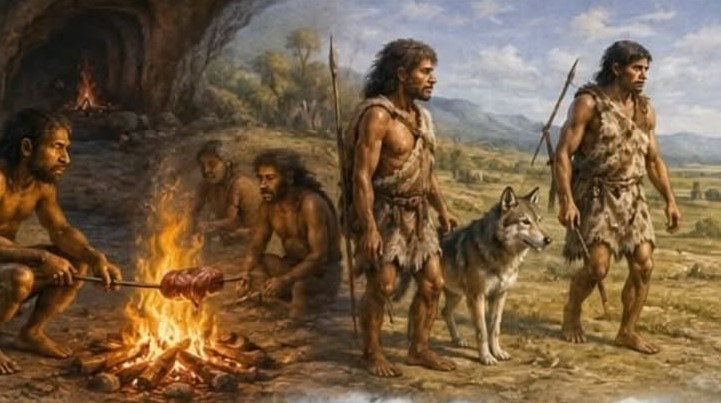
    Of all the turning points in human history, few were as consequential—or as ancient—as the mastery of fire. Around a million years ago, Homo erectus were among the early human species associated with controlled fire. We cannot say with certainty that they were the first to tame fire, but their association with fire marks a remarkable stage in human evolution. Fire provided warmth and protection, but its greatest gift may have been something less obvious: cooking.

    Roasting meat and heating roots, grains and other foods transformed the human diet. Cooking softened food, made many nutrients more accessible, reduced pathogens and made tough foods easier to chew and digest. More calories could be obtained with less digestive effort. Over evolutionary time, this may have helped support the development of the large, energy-hungry human brain, while our jaws, teeth and digestive system became different from those of other primates.

    Fire therefore did more than change what early humans ate. It helped change how they lived. People could remain active after sunset, occupy colder environments and gather around a common source of warmth and food. A technological breakthrough had begun to reshape biology, behaviour and society.

    For hundreds of thousands of years after the emergence of Homo sapiens, however, humans remained primarily hunter-gatherers. They moved with the seasons, followed animals, collected plants and survived through an intimate knowledge of nature. Yet they were already extraordinary innovators. They made tools, constructed shelters and used animal hides for protection against cold, wind and rain. Because leather and skin rarely survive archaeologically, the precise history of clothing is difficult to reconstruct, and the use of hides almost certainly predates modern humans in some regions.

    Then came another extraordinary partnership: the wolf. At least 15,000 years ago, and perhaps earlier, some wolves began moving closer to human camps. The animals that were less fearful and more tolerant of humans had an advantage around these settlements. Over many generations, this relationship eventually produced the domestic dog. It was not simply a matter of humans deciding to domesticate wolves. It was probably a long process of mutual adaptation in which two social species increasingly benefited from living alongside one another. Dogs became companions, hunting partners, guards and eventually indispensable members of human communities.

    But the greatest transformation was still to come. Around 12,000 years ago, humans in several parts of the world began cultivating plants and managing animals. Wheat and barley were domesticated in Southwest Asia; rice in Asia; maize in the Americas; and many other crops emerged through independent domestication elsewhere. Cattle, sheep, goats and pigs were also gradually brought under human control.

    Agriculture was not merely a new way of obtaining food. It changed the human experiment itself. Farming produced food surpluses. People who once had to move constantly could settle permanently. Villages grew into towns and eventually cities. Surplus food could support people who did not farm: potters, builders, traders, soldiers, administrators, priests, craftsmen and scholars. Property became important. Land could be owned, inherited and defended. Inequality grew alongside wealth. Governments, taxation, armies and increasingly complex laws became possible.

    Agriculture also changed human biology. Diets altered, populations became denser, and living close to domesticated animals created new opportunities for infectious diseases. Human populations adapted genetically to new foods and lifestyles; the evolution of lactose tolerance in some farming populations is one well-known example.

    It is tempting to tell human history as the story of kings, conquerors, priests and great civilizations. But the deeper story begins much earlier and belongs largely to anonymous generations. Someone learned to control fire. Someone discovered that food tasted better and became easier to digest when roasted or cooked. Someone fashioned a tool for working a hide. Someone allowed a wolf to remain beside a camp. Someone planted a seed and discovered that it could produce another harvest.

    Each discovery was built upon the previous one. For roughly 300,000 years, Homo sapiens has existed, but Cities, writing, states and organized religion are recent chapters in the vast human story. Civilization did not suddenly appear when the first city was built. It was accumulated slowly through countless acts of observation, experimentation, cooperation and adaptation. That is the most humbling lesson of human history. We are not the product of one invention, one civilization or one generation. We are the result of a very long chain: fire changed food; cooking changed nutrition; clothing helped us survive difficult climates; dogs changed our relationship with other species; farming changed the way we lived; and settled communities eventually created civilization.

    If fire helped make us human, farming helped make us society. The farmer, therefore, deserves to stand beside the king, warrior, inventor and philosopher in our understanding of civilization. The farmer produced the surplus that allowed others to specialize, cities to grow and civilizations to emerge. Much of the world we inhabit today—from the food on our tables to the cities around us and the institutions that govern us—rests on a revolution that began when our ancestors first learned not merely to find food, but to grow it. PT

  • From Youth to Advancing Years: Not Calendar Age, But Intrinsic Capacity Defines True Resilience

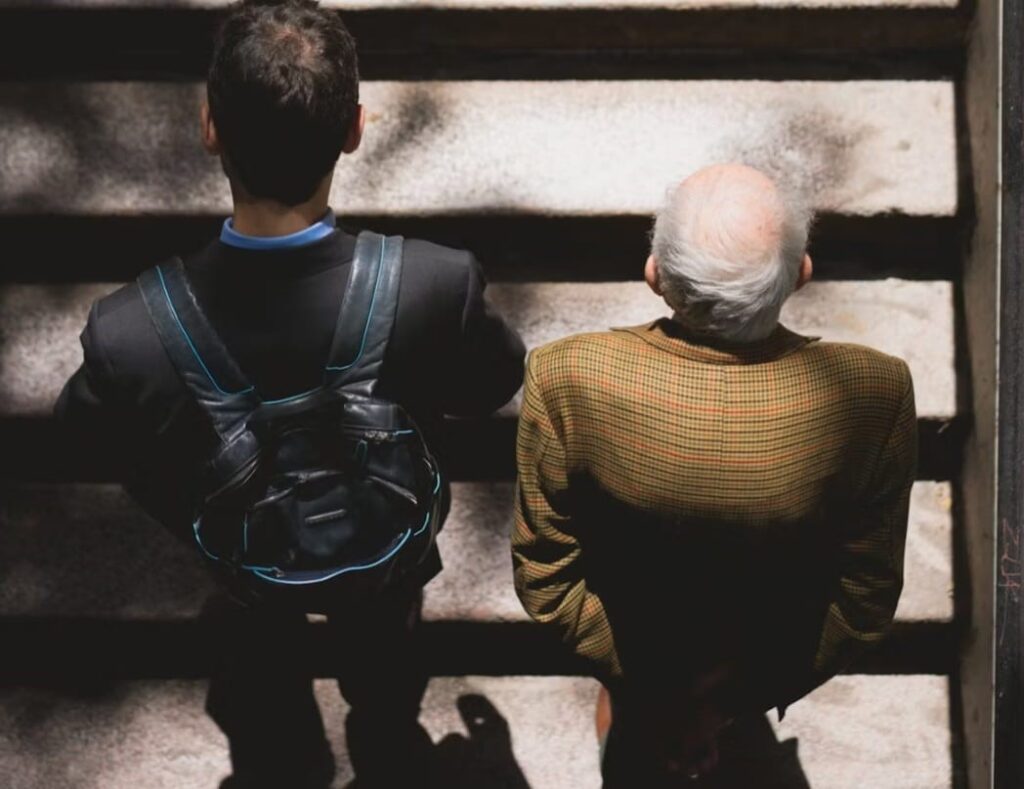
    We live in a world obsessed with age. From the moment we are born, our lives are measured in years, milestones, and birthdays. Yet, as science advances, it is becoming increasingly clear that calendar age is a crude and often misleading measure of human strength, resilience, and potential. A 70-year-old marathon runner and a 40-year-old struggling with chronic illness may share the similar chronological timeline, but their lived realities are worlds apart. What truly matters is not the number of candles on the cake, but the quality of the flame. This is where the concept of intrinsic capacity comes in — a multidimensional measure of physical and mental strength that offers a far more accurate picture of human vitality than age alone.

    Intrinsic capacity, as defined by the World Health Organization, is the composite of all the abilities that allow us to function: cognition, locomotion, sensory perception, psychological well-being, and vitality. Think of it as a holistic profile of how well we are equipped to live, adapt, and thrive. Unlike age, which is fixed and linear, intrinsic capacity is dynamic. It can be strengthened, maintained, or eroded depending on lifestyle, environment, and interventions. This shift in perspective is revolutionary. It reframes aging not as inevitable decline, but as a process that can be managed, optimized, and even reversed in certain domains.

    Research into intrinsic capacity is already underway in countries like France and the United States. France’s INSPIRE-T cohort is tracking older adults to understand how intrinsic capacity changes over time, integrating biomarkers with functional tests. In the U.S., large-scale studies like the Health and Retirement Study are embedding intrinsic capacity measures into their frameworks, while clinical trials explore how exercise, nutrition, and cognitive training can improve scores. These efforts are not just academic. They are laying the groundwork for policies that prioritize resilience over age, and for healthcare systems that treat individuals based on their functional profile rather than their birth certificate.

    The WHO has gone further, scaling intrinsic capacity globally through its Decade of Healthy Ageing initiative. Thirty countries are now contributing data to establish a baseline for healthy aging worldwide. By tracking intrinsic capacity alongside functional ability and environmental factors, WHO aims to create a universal benchmark that can guide governments, clinicians, and communities. The ambition is clear: to shift the narrative from “how old are you?” to “how strong is your intrinsic capacity?” This is not just semantics. It is a profound reorientation of how societies think about health, independence, and dignity.

    But intrinsic capacity is not only relevant to older adults. It matters just as much — perhaps even more — to people in their twenties and thirties. These are the decades when most domains of capacity peak. Cognitive sharpness, physical strength, and vitality are at their highest. Yet these years are also when habits are formed, stress accumulates, and resilience is tested. Young adults who invests in exercise, balanced nutrition, mental health, and sensory care are not just improving their present; they are safeguarding their future too. Intrinsic capacity is like a savings account. The deposits you make in youth — through learning, fitness, social engagement, and stress management — compound over time, protecting you against the withdrawals of aging.

    Consider the five pillars of a holistic intrinsic profile: cognitive function, physical strength and mobility, sensory perception, mental health and mood, and vitality and stress tolerance. Each pillar can be strengthened with deliberate action. Lifelong learning and mindfulness sharpen cognition. Strength training and active commuting build mobility. Protecting eyes from screen strain and ears from loud music preserves sensory function. Therapy, social connections, and optimism practices bolster mental health. Balanced nutrition, sleep hygiene, and recovery routines enhance vitality. Together, these pillars form a resilient structure that can withstand the pressures of time.

    The implications are enormous. For healthcare, intrinsic capacity offers a way to personalize interventions, focusing on the domains where an individual is most vulnerable. For policy, it provides a metric that can guide resource allocation, moving beyond age-based categories to capacity-based strategies. For individuals, it is empowering. Instead of being passive recipients of age, people can actively monitor and improve their intrinsic profile.

    Challenges remain. Standardizing measurement across cultures and health systems is complex. Low- and middle-income countries may struggle with infrastructure. And sustaining motivation for lifestyle interventions is never easy. Yet the potential benefits far outweigh the obstacles. Intrinsic capacity is not just a scientific concept; it is a social contract. It asks us to value people not for how long they have lived, but for how well they can live.

    Intrinsic capacity is about dignity. It is about recognizing that human strength is not measured in years, but in resilience, adaptability, and vitality. Whether you are 25 or 75, your intrinsic profile tells the real story of your health. And that story is one we can all shape, every day, with the choices we make. OT