Category: Heritage

  • What Makes Us Different from Chimpanzees and Bonobos, Our Closest Living Relatives

    We often look into the mirror and wonder what truly makes us human. Is it our capacity for language, our complex tools, or our ability to create abstract art? While these are profound milestones, a more primal and defining distinction lies right on our dinner plates. We are, quite fundamentally, the only species on Earth that cooks its food. No other animal dominates fire, and no other creature refuses to eat its meals raw in the wild. This singular art of the hearth is not merely a cultural preference or a culinary tradition; it is the biological and psychological pivot upon which the entire history of humanity turned. Yet, a common misconception lingers that modern Homo sapiens were the brilliant inventors who first struck flint to stone and tamed the flame. In truth, we did not invent the fire that forged us. We merely inherited it, receiving an ancient technology passed down through an evolutionary lineage of ancestors who had already been fundamentally remade by its warmth.

    To understand the depth of this profound inheritance, we have to look back at the vast, tangled family tree of humanity. Anthropologists point out that at least twenty-one distinct human species have walked this planet over millions of years. Many of these early ancestors, such as the famous Australopithecus, were distinctly upright but remained profoundly ape-like in their core biology. They possessed massive jaws, powerful chewing muscles, and elongated digestive tracts designed for a grueling, round-the-clock task: processing tough, raw, and fibrous vegetation. A modern chimpanzee in the wild spends up to seven hours every single day doing nothing but vigorously chewing food just to extract enough daily calories to survive. Our earliest human relatives lived under the same exhausting biological tax. They were human by genus, but they were entirely trapped in the primal constraints of a raw food economy, leaving little time or energy for anything else.

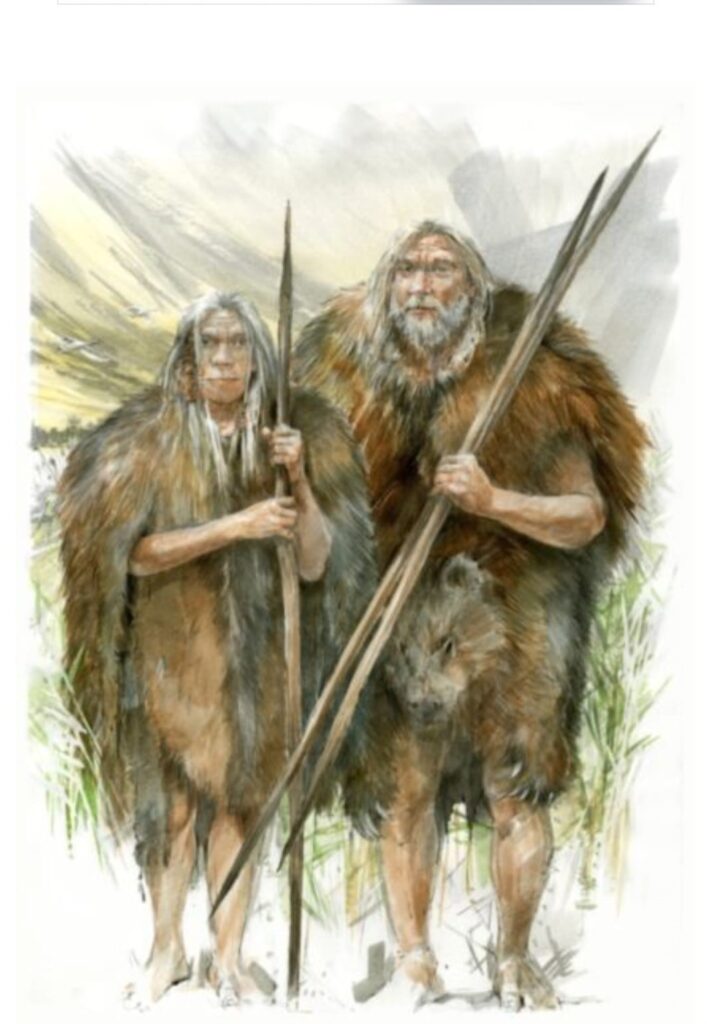
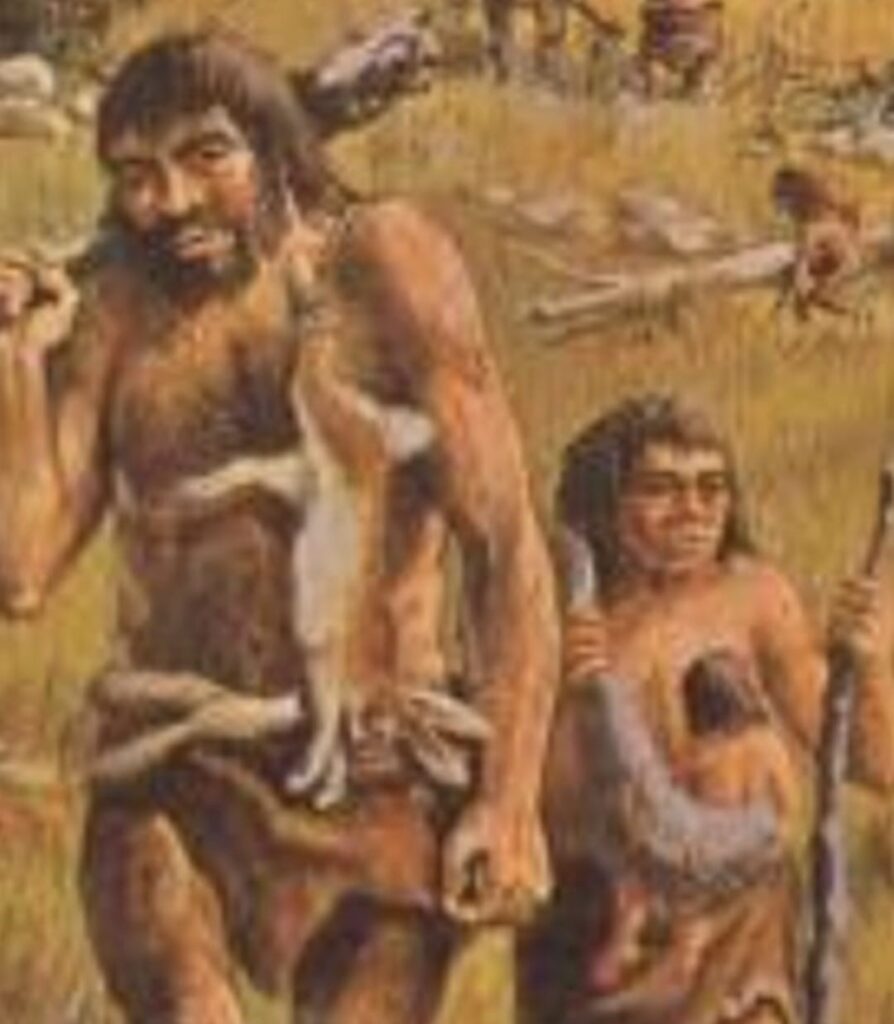
    The true evolutionary revolution ignited roughly 1.8 million years ago with the emergence of Homo erectus. This was the species that broke the biological mold, becoming the world’s first true fire opportunists. They did not yet know how to strike a spark from nothing, but they possessed the cognitive audacity to capture embers from natural wildfires sparked by lightning strikes or volcanic activity. They brought these precious flames into the safety of caves, feeding them meticulously with wood and dry animal dung, protecting them as their most sacred possession. It was during this ancestral epoch that the art of cooking truly began. By exposing meat, roots, and tubers to heat, these early humans effectively outsourced the heavy labor of digestion to the campfire. Cooking gelatinizes starches and denatures proteins, cracking open dense calorie stores that are otherwise completely inaccessible to a raw primate digestive system.

    The biological payoff of this technological shift was immediate, radical, and permanent. Because cooked food is incredibly easy for the body to break down, Homo erectus no longer needed the massive guts and heavy jaw structures of their ancestors. Over generations, their digestive tracts shrank significantly, and their chewing muscles weakened. The massive surplus of metabolic energy saved by this internal downsizing was redirected toward the body’s most energy-hungry organ: the brain. The celebrated cooking hypothesis suggests that our massive, complex brains could never have evolved on a raw diet, as there simply are not enough hours in a single day to chew the required calories. Fire, quite literally, fueled the structural growth of the human mind.

    By the time Homo sapiens finally emerged in Africa around 300,000 years ago, we were born into a world where fire was already an ancient, standard survival asset. We did not tame the flame; the flame had already been tamed by our ancestors and sculpted our modern anatomy. This ancestral gift did far more than alter our physical bodies; it radically rewired our minds and social structures. Before the mastery of fire, the setting sun brought absolute vulnerability, forcing hominins to retreat to the safety of trees to avoid nocturnal predators. Fire brought humans permanently down to the ground, conquering the darkness and providing a powerful shield against the wild. Gathering around a shared hearth extended the active day, creating a unique, illuminated space where early humans had to sit face-to-face, wait patiently for food to cook, and cooperate. It is within the flickering shadows of these ancient campfires that language, storytelling, mythology, and human culture were truly born. We became deeply social, cooperative creatures because the chemistry of the hearth supported it.

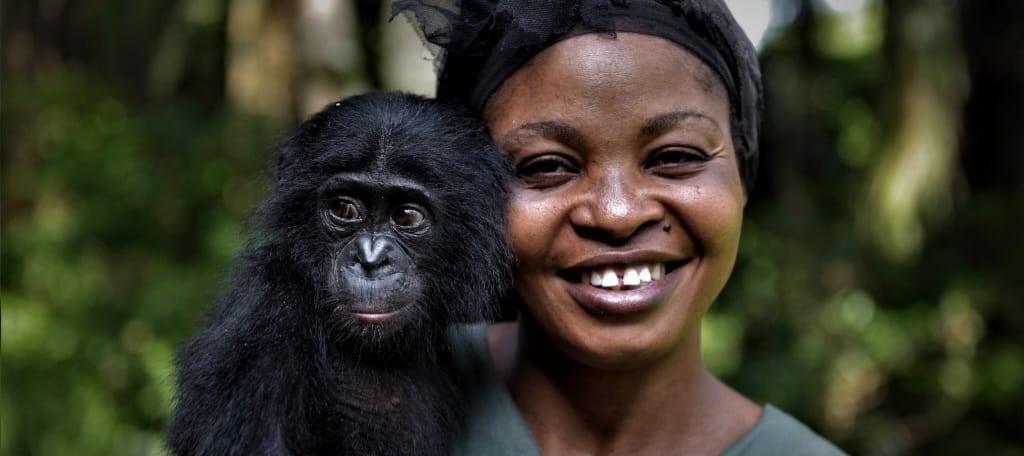
    When we look at chimpanzees and bonobos today, our nearest living relatives, we see creatures with the latent cognitive capacity to understand cooking—they consistently prefer cooked food in experiments and understand that a device can transform raw food—but they remain bound to the raw world because they cannot control or manipulate fire. Humanity’s true distinction is that our ancestors crossed that fiery threshold for us. We are not defined by our individual ability to create fire from scratch, an innovation that came much later in our history. We are defined by the fact that our very biological existence is built upon a cultural dependency on cooked meals. We are the species that fire made, living out an extraordinary evolutionary destiny sparked by ancestors who dared to bring the wildfire home. LE
  • We Are Still Becoming: What the New 155 Micro-genes Mean for Humanity

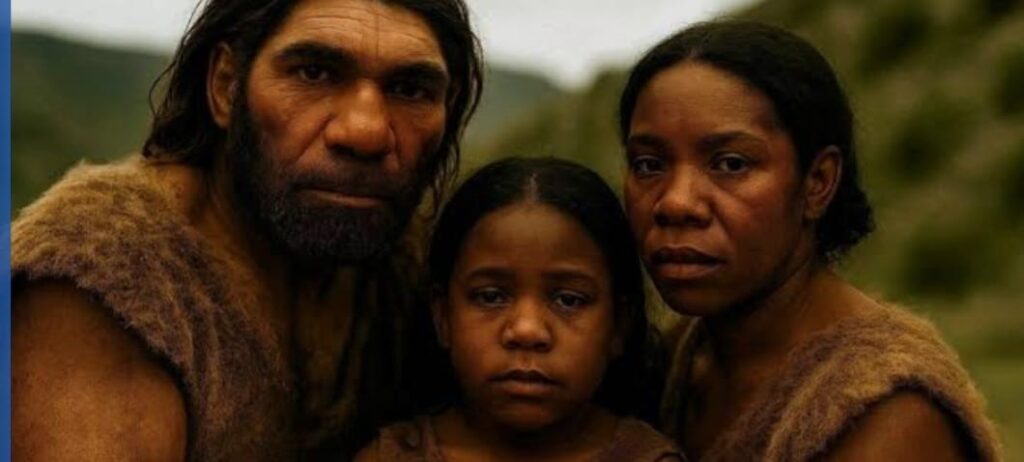
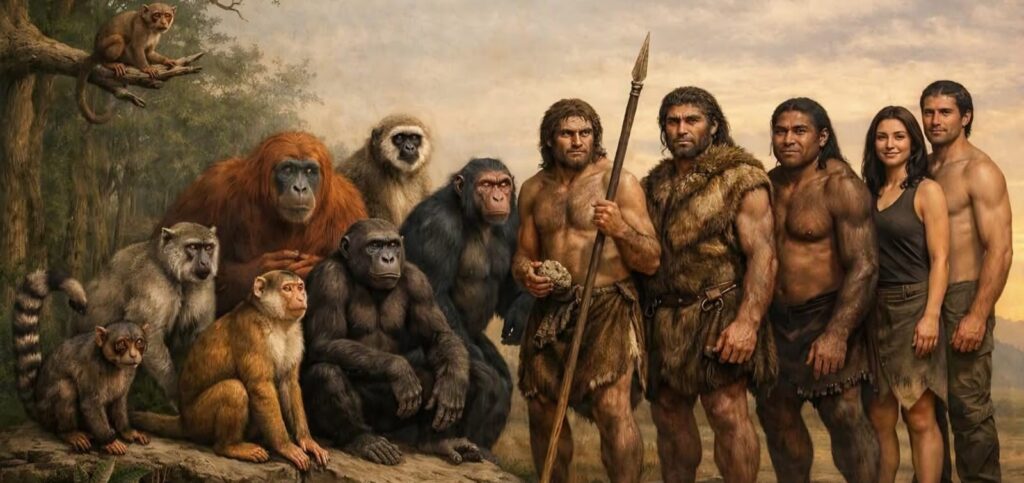
    For decades, we comforted ourselves with a quiet, arrogant assumption: that because we had invented antibiotics, built cities, and mapped the genome, we had somehow placed ourselves outside the reach of natural selection. We viewed our biology as a finished manuscript, with only minor typos left to correct. That illusion was shattered recently when scientists identified 155 previously unknown human microgenes—tiny, functional stretches of DNA that appear to have emerged from what we once dismissively called “junk.” These genetic additions are not remnants of our ancient past. They are evolution happening in real time, inside your cells, right now. And they force us to confront a profound and unsettling truth: we are not the final draft of humanity. We are a rough sketch, still being edited.

    What makes these microgenes so extraordinary is not their size but their origin. Most new genes are born through duplication—an existing gene is copied, and over millions of years, the copy mutates into something new. But these 155 genes followed a radically different path. They emerged de novo, literally from scratch, out of non-coding DNA that was previously thought to serve no purpose. They are spontaneous experiments, random stretches of genetic code that accidentally stumbled upon a function useful enough to be preserved. When researchers disabled 44 of these microgenes in lab-grown cells, the cultures showed growth defects, proving that these are not silent passengers but active participants in keeping our cells healthy. Some of them are already linked to human diseases, including muscular dystrophy, retinitis pigmentosa, and Alazami syndrome. One microgene appears to be essential for building heart tissue and appears to have emerged in the common ancestor of humans and chimpanzees after they split from gorillas—meaning it evolved, took root, and became indispensable in just a few million years.

    This discovery rewrites our understanding of evolutionary speed. We used to think of evolution as a glacier—slow, grinding, almost imperceptible. But these microgenes suggest that our genomes are surprisingly restless, constantly testing new sequences, discarding failures, and occasionally stumbling upon biological gold. The human genome is not a static blueprint; it is a living workshop, perpetually tinkering with itself. And that means the evolutionary forces that shaped our ancestors are still shaping us, albeit in ways that medicine and technology are only beginning to measure.

    Yet here is where the story takes a dramatic turn. Traditionally, evolution was driven by survival—escaping predators, enduring famines, resisting infections. Today, those pressures have largely faded for much of humanity. Instead, these new microgenes point to a different battleground: cellular maintenance, disease avoidance, and the fine-tuning of our internal “machinery”. We are not evolving to run faster or see farther. We are evolving to manage the chronic, age-related diseases that now define human suffering. That is a profound shift, and it suggests that the next great chapter of our biological history will be written not in the savanna but in the microscopic warfare within our own cells.

    But we must also confront the uncomfortable reality that natural selection is no longer the sole author of our destiny. Because modern medicine allows people with disease-linked microgenes to survive and reproduce, evolution’s cruel but effective editing function is blunted. We are accumulating genetic variations that might have been weeded out in earlier eras. This does not mean evolution has stopped—it means it has become more random, more driven by genetic drift and gene flow than by survival of the fittest. And this is precisely where human agency enters the picture.

    For the first time in four billion years, a species has uncovered the very code that writes its own existence. We are no longer passive subjects of evolution; we are becoming its architects. The discovery of these 155 microgenes is not just a scientific footnote. It is a preview of a future in which we may use tools like CRISPR to edit our own genomes, enhancing beneficial microgenes and snipping out harmful ones before they cause disease. We are standing at the threshold of a new era—one where evolution becomes a conscious choice rather than a blind process.

    Of course, this power is fraught with peril. Some of these microgenes may be “selfish,” interfering with cell division to ensure their own propagation even at the expense of the host. The human genome is not a harmonious symphony; it is a chaotic marketplace of competing interests, and we are only beginning to understand the internal conflicts that shape our biology. As we move forward, we must proceed with humility, recognizing that our knowledge is still dwarfed by our ignorance.

    But one thing is now undeniable: we are still evolving. These 155 microgenes are living proof that our genome is not a museum but a construction site. They remind us that humanity is not a finished product but a journey—a narrative without a final chapter. The question is no longer whether we will continue to evolve. The question is who will drive that evolution: the slow, blind hand of nature, or the deliberate, hopeful hand of our own intelligence. Either way, the story of our species is far from over. It is only just beginning.

  • Braided Streams of Humanity: Fragments of a Story from the First Primates

    The origins of our species are not a simple tale of linear progress, but a tangled narrative stitched together from fossils, artefacts, DNA, and climate records. For decades, scientists imagined a straightforward march from ape-like ancestors to modern humans. Yet the pace of discovery in recent years has shattered that neat picture, revealing instead a mosaic of species, overlapping timelines, and unexpected twists.

    Primates themselves emerged long before Homo sapiens, somewhere between 85 and 55 million years ago. Genetic studies push their divergence back even further, suggesting they were already evolving before the asteroid strike that ended the Cretaceous Period 66 million years ago. That cataclysm wiped out the dinosaurs, but it also opened ecological niches for mammals to flourish. Within just 100,000 years, small creatures like Purgatorius appeared in North America. These plesiadapiforms were not “true” primates, but they were close relatives, with teeth adapted for fruit and insects and bodies suited to arboreal life. They represent the first tangible step toward the primate lineage that would eventually lead to us.

    The fossil record, however, is notoriously incomplete. Small-bodied mammals rarely fossilize, and geological processes erase much of what once existed. This is why genetic clocks often suggest earlier divergence dates than fossils can confirm. The tension between DNA evidence and physical remains is a reminder that science is always provisional, always working with fragments of a much larger story.

    By the Eocene epoch, around 55 million years ago, the first true primates — Euprimates — had emerged. They carried the hallmarks of the order: stereoscopic vision, grasping hands, nails instead of claws. Fossils like Notharctus and Adapis show the diversity of these early primates, split into adapiforms (probable ancestors of lemurs and lorises) and omomyiforms (possible ancestors of monkeys and apes). Later, simiiforms such as Eosimias in Asia hinted at the beginnings of the monkey and ape lineages.

    Fast forward tens of millions of years, and the human family tree itself becomes increasingly complex. Discoveries like Homo naledi in South Africa, Homo floresiensis in Indonesia, and the Denisovans in Siberia have revealed that multiple hominin species coexisted, sometimes interbreeding, sometimes innovating independently. Ancient DNA has been crucial here, showing that our lineage is not a straight trunk but a braided stream, with genetic contributions flowing from Neanderthals, Denisovans, and perhaps others into modern humans.

    Archaeological artefacts add another dimension. Stone tools, ornaments, and cave art reveal cognitive leaps and cultural practices, but they also raise questions. When did symbolic thought first appear? How long did traditions last? The gaps in the record make it difficult to determine when innovations began or ended. Climate data helps fill in some blanks, showing how shifts in environment spurred migrations and adaptations. The expansion of tropical forests after the K-Pg extinction, for instance, created habitats that favored arboreal primates. Later, ice ages and warming periods pushed hominins to move, invent, and survive in new ways.

    What emerges is a story of resilience and contingency. Our species did not evolve in isolation but in dialogue with other hominins, with ecosystems, and with chance events like asteroid strikes and climate upheavals. Each new fossil, each strand of DNA, each sediment core adds nuance, complicating the narrative but also enriching it.

    The incomplete record is not a weakness but a challenge — a reminder that science is a process of reconstruction, inference, and debate. It is like piecing together a novel from torn pages: the plot is visible, but the details are elusive. And yet, with every discovery, the story of our origins becomes more vivid, more tangled, and more profoundly human.

  • Long Road to Humanity: Fire, Migration and Culture

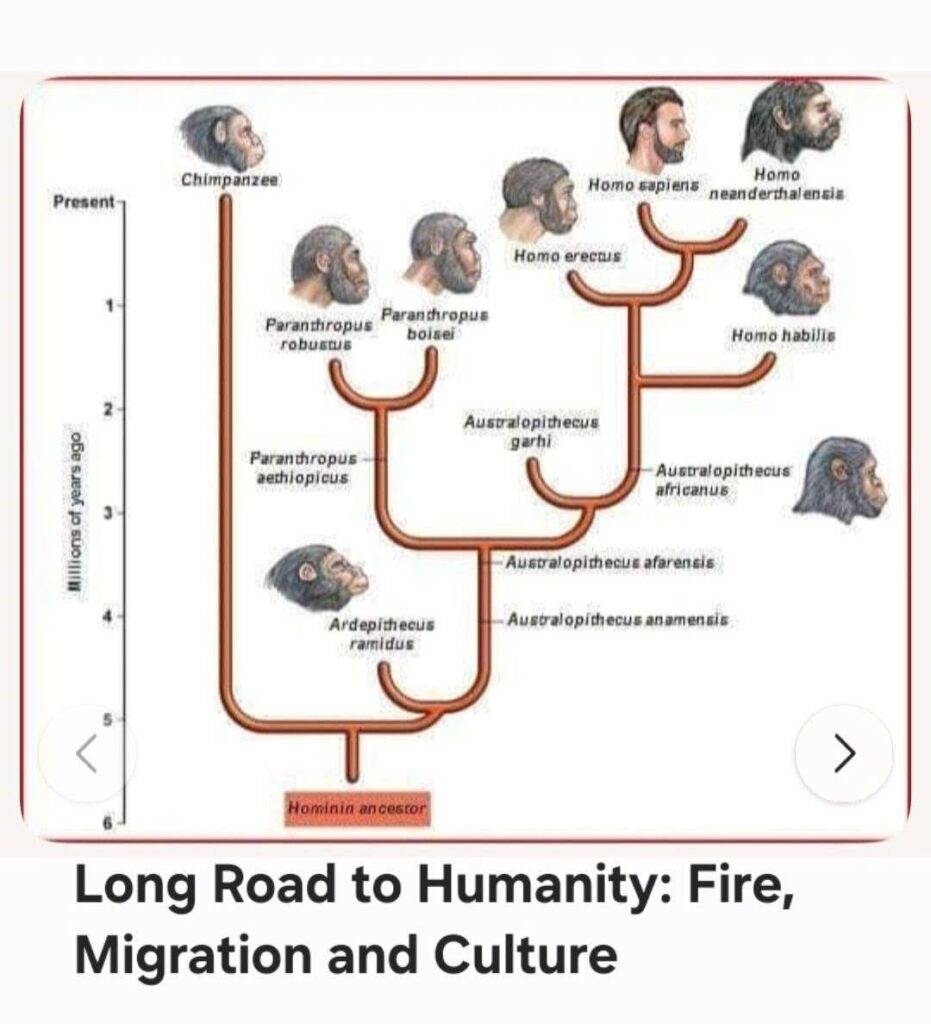
    The story of human evolution is a long and intricate journey, stretching back millions of years and marked by both survival and extinction. It begins with the earliest hominins, such as Sahelanthropus tchadensis, who lived around seven million years ago and may have walked upright, and Ardipithecus ramidus, who combined tree‑dwelling habits with the first signs of bipedalism. These species laid the groundwork for the australopithecines, including Australopithecus afarensis, best known through the fossil “Lucy.” This species showed clear evidence of habitual upright walking, a defining trait that set the stage for the genus Homo. Alongside them lived Paranthropus, a robust line of hominins with massive jaws and teeth adapted for chewing tough vegetation. Though successful for more than a million years, Paranthropus ultimately became an evolutionary cul‑de‑sac, leaving no descendants.

    The emergence of the genus Homo marked a decisive turning point. Around 2.4 million years ago, Homo habilis appeared, earning the nickname “handy man” for its use of primitive stone tools. Soon after came Homo erectus, a species that endured for nearly two million years. Homo erectus was revolutionary: it had modern‑like body proportions, walked fully upright, and became the first hominin to migrate out of Africa, spreading into Asia and Europe. Even more transformative was its mastery of fire. Fire allowed cooking, which made food easier to chew and digest, unlocking more calories and nutrients that fueled brain growth. It offered warmth, protection from predators, and a social focal point around which groups could gather. This innovation was arguably the first great leap in human culture, reshaping both biology and society.

    From Homo erectus evolved Homo heidelbergensis, living between 600,000 and 200,000 years ago. In Africa, this species gave rise to Homo sapiens, while in Europe it became Neanderthals, and in Asia Denisovans. Neanderthals thrived in Ice Age Europe, adapting to cold climates with stocky builds and sophisticated tools. They were skilled hunters and relied heavily on fire, not only for cooking but also for warmth and survival. Denisovans, known mainly from genetic evidence and a handful of fossils in Siberia, were close relatives of Neanderthals and almost certainly used fire in their harsh environments. Both species interbred with Homo sapiens, leaving genetic legacies that persist today. Neanderthal DNA contributes to traits such as immunity and skin pigmentation, while Denisovan DNA provides adaptations like high‑altitude tolerance in populations of Tibet and Melanesia.

    Despite their resilience, Neanderthals and Denisovans eventually disappeared, around 40,000 and 50,000 years ago respectively. Homo heidelbergensis had already vanished earlier, leaving Homo sapiens as the sole surviving branch. Our species emerged in Africa about 300,000 years ago and began migrating out of the continent around 70,000 years ago, long after Homo erectus had pioneered such journeys. Unlike other hominins, Homo sapiens developed advanced language, symbolic thought, art, and complex social structures. These innovations allowed greater adaptability, cooperation, and cultural transmission, giving us a decisive edge in competition for resources. The ability to form large, interconnected groups and share knowledge across generations enabled rapid technological progress, from sophisticated tools to cave paintings and eventually agriculture.

    The survival of Homo sapiens while other hominins vanished was not inevitable. For long stretches of time, multiple human species coexisted, sometimes in the same regions. Yet our adaptability, creativity, and capacity for symbolic communication set us apart. Interbreeding with Neanderthals and Denisovans enriched our genetic diversity, but ultimately only Homo sapiens endured. Today, we carry within us echoes of those extinct relatives, reminders that human evolution was not a straight line but a branching tree with many experiments in survival. The story of Homo erectus taming fire, of Neanderthals thriving in Ice Age Europe, and of Denisovans adapting to high altitudes all highlight the resilience and ingenuity of our ancestors. Their legacies live on in our DNA, our cultures, and our technologies, making human evolution a tale not just of survival but of transformation. 

  • Homo Luzonensis: The Forgotten Humans of the Philippines

    For most of the last century, we told ourselves a comforting story about our origins. It was a ladder, we imagined, with sturdy rungs leading from knuckle-dragging apes to spear-throwing hunters to city-builders to us—the final product, the pinnacle of a million years of steady progress. It was a neat story, clean and linear, and it flattered our sense of being the intended destination of evolution. Then we started digging in island Southeast Asia, and the ladder collapsed into a bush. The discovery of Homo luzonensis in the Philippines is the latest and most striking proof that human evolution was not a single file march toward modernity. It was a tangled thicket of branches, many of which withered while ours flourished, each one a separate experiment in what it means to be human.

    The bones themselves are few. Just thirteen fragments from Callao Cave on Luzon—teeth, finger bones, toe bones, and pieces of a jaw. They belong to at least three individuals, and they date to somewhere between fifty thousand and sixty-seven thousand years ago. That means they were alive at the same time as our own ancestors, the Neanderthals in Europe, the Denisovans in Siberia, and the hobbits of Flores in Indonesia. Four distinct kinds of humans, walking the earth at the same moment, each adapted to their own corner of the world. It is a dizzying thought, and it forces us to abandon the old ladder for good.

    What makes Homo luzonensis so remarkable is not its size—though it was likely small, perhaps under five feet tall—but the jumble of traits it carries. Its teeth are small and simple, resembling those of modern humans. But its finger and toe bones are curved, a primitive feature associated with tree-climbing ancestors that lived millions of years ago. This mosaic of ancient and modern characteristics does not fit neatly into any existing category. It is not Homo erectus, which had larger teeth and straighter limbs. It is not Homo floresiensis, the hobbit, which had its own unique combination of traits. It is something entirely its own, a branch that split off from the main trunk of our family tree and grew in isolation for hundreds of thousands of years, developing adaptations that made sense only on its island home.

    And that island isolation is the key to the whole story. Luzon has never been connected to the Asian mainland by a land bridge. The ancestors of Homo luzonensis must have crossed open ocean to get there, whether by accident on natural rafts or by design on crude watercraft. That alone is astonishing—it pushes back the timeline of human seafaring by hundreds of thousands of years. But once they arrived, they were trapped. The island became their world, their laboratory, their prison. With limited resources and no competition from larger predators, evolution pushed them toward smaller body sizes, conserving energy in a landscape that gave nothing for free. Their curved fingers suggest they may have retained or even enhanced their climbing abilities, perhaps to forage in the forest canopy or escape the dangers of the ground. They were not primitive. They were exquisitely tuned to their environment, every bone shaped by the relentless pressure of survival on a small, isolated island.

    This pattern is not unique to Luzon. We saw it before on Flores, with Homo floresiensis, and we are likely to see it again on other islands across Southeast Asia. The region was a crucible of human evolution, a place where different populations of ancient humans arrived, adapted, and sometimes died out, leaving behind only fragments of bone and stone tools to tell their story. The Philippines, in particular, emerges as a key region for understanding human diversity and dispersal during the Pleistocene. It was not a backwater, not a dead end. It was a crossroads, a stage where multiple species of humans coexisted, competed, and eventually vanished, while our own ancestors pressed on.

    What happened to Homo luzonensis? We do not know for certain. They disappeared around the time modern humans arrived in the region, but we have no evidence of direct conflict or interbreeding. Unlike the Neanderthals and Denisovans, whose DNA still lingers in our genomes, we carry no trace of Homo luzonensis. That suggests we did not mix with them. We simply outlasted them. Perhaps we outcompeted them for food and shelter. Perhaps we brought diseases to which they had no immunity. Perhaps they were already in decline, their small population too fragile to withstand even a minor environmental shift. The bones do not tell us. They only tell us that they were here, and then they were not.

    But their legacy is not silence. Their legacy is the knowledge that our own history is far stranger and more diverse than we ever imagined. We are not the inevitable outcome of evolution. We are one branch among many, and many of those branches withered before we could ever meet them. The bush is not a ladder. It is a tangle, and Homo luzonensis is a knot we are still trying to untie. Each new discovery forces us to rewrite the story, to add another twig to the tree, to acknowledge that human evolution was not a single file march but a chaotic, branching, improvisational process that produced a dazzling array of forms, most of which are now extinct. The Philippines, with its caves and its limestone hills, holds more secrets. There are bones yet to be found, tools yet to be uncovered, stories yet to be told. And each one will remind us that we are not the only humans who ever walked the earth. We are merely the ones who, for now, are still walking. What will our own legacy be, a hundred thousand years from now? Will some future archaeologist unearth our bones and marvel at our adaptations, our follies, our improbable survival? Or will we, too, become just another twig on a bush that forgot us? The bones of Homo luzonensis do not answer that question. They only ask it, quietly, from the darkness of Callao Cave, waiting for us to listen.

  • The First Fields Gave Birth to the First Wars: Farming Reshaped Civilization – and Conflict

    Every war in human history—from the battlefields of ancient Mesopotamia to the trenches of World Wars and the battlefields of Ukraine—may trace its roots to a quiet revolution that began around 12,000 years ago. Ironically, humanity’s greatest invention was not the wheel or writing. It was farming.

    For nearly 300,000 years, Homo sapiens wandered the Earth as hunter-gatherers. They lived in small, mobile bands, following the rhythms of nature in search of food, water, and shelter. There were no cities, no kingdoms, no national borders, no standing armies, and no emperors dreaming of conquest. Human survival depended on cooperation as much as competition. Families hunted together, shared food, cared for one another, and moved on when resources became scarce.

    This was not a paradise free from violence. Anthropologists and evolutionary psychologists agree that humans, like many other social species, evolved competitive and defensive instincts to survive. Disputes over mates or food undoubtedly occurred, and some prehistoric communities fought one another. But these conflicts were generally limited in scale. When tensions rose, one group could often move elsewhere. Mobility was an escape valve that prevented many disputes from becoming prolonged wars.

    Then, around 10,000 BCE, history took a dramatic turn. In the fertile valleys of Mesopotamia, humans began cultivating wheat and barley. Similar agricultural revolutions later emerged independently in China, Mesoamerica, New Guinea, the Andes, and parts of Africa. What seemed like a simple innovation—planting seeds instead of merely gathering them—became one of the most transformative events in human history.

    For the first time, people settled permanently. They cleared forests, cultivated fields, dug irrigation canals, and built villages that gradually grew into towns and cities. Food surpluses allowed populations to expand beyond anything hunter-gatherer societies could sustain. Specialized occupations emerged. Some people became artisans, priests, merchants, administrators, and soldiers instead of food producers.

    But farming also introduced something humanity had never possessed on such a scale: valuable, immovable property. Land was no longer simply a place to pass through. It became wealth itself. Fertile fields, water sources, granaries, orchards, and livestock represented years of labor and enormous economic value. They could be inherited, defended, taxed, stolen, or conquered. Boundaries suddenly mattered. Ownership mattered. Whoever controlled the land controlled survival.

    It is widely believed that this profound lifestyle shift quietly created the perfect conditions for competition over land and resources, territorial disputes, and organized violence on a scale previously unknown. As villages became cities and cities evolved into kingdoms, political power became concentrated. Leaders needed guards to protect harvests, officials to collect taxes, and armies to defend—or expand—their territory. Military technology advanced rapidly. Stone clubs gave way to bronze swords, iron spears, chariots, siege engines, and eventually professional armies. Fortified walls surrounded prosperous cities. Conquest became an economic strategy as much as a political ambition.

    The same fields that fed growing populations also became prizes worth fighting for. Military historians have formally cataloged roughly 10,000 to 12,000 major battles throughout recorded history. When smaller engagements, raids, sieges, naval encounters, and local conflicts are included, estimates range from tens of thousands to well over a million, depending on how an armed clash is defined. The precise number may never be known, but the broader truth is unmistakable: organized warfare became an enduring feature of civilization.

    This does not mean agriculture invented violence. Humans had fought long before the first crops were planted. Evolution had equipped our species with instincts for self-defense, competition, and coalition-building—traits shared with many social animals. But agriculture transformed these instincts into something far larger and more organized. Permanent settlements, accumulated wealth, political authority, and fixed territories gave conflict new purpose, greater scale, and devastating consequences.

    Ironically, the same revolution that gave birth to civilization also laid the foundations for its greatest tragedies. Agriculture made possible writing, mathematics, astronomy, architecture, law, trade, philosophy, medicine, and eventually science. It enabled humanity to build the pyramids, compose great literature, explore the oceans, and reach the Moon. Yet alongside these extraordinary achievements emerged standing armies, imperial conquest, slavery, and wars that claimed millions of lives.

    Civilization has always carried this paradox. The plough and the sword advanced together. The harvest fed both the scholar and the soldier. Every generation inherited the fruits of human ingenuity along with the burdens of human rivalry. Perhaps that is history’s greatest lesson. The seeds that transformed humanity did more than grow crops. They grew cities, nations, empires, and civilizations. They also sowed the enduring struggle over land, wealth, power, and identity—a struggle that continues to shape our world today.

  • From Fur to Fabric: The Long Story of Human Clothing

    For millions of years, human evolution unfolded in Africa under hot, shifting climates, and that matters because our bodies were shaped in environments where shedding heat was often more important than conserving it. Early hominins probably did not look like modern humans at all in this respect. They likely began with a more ape-like coat of body hair and then, over a long stretch of evolution, lost much of it. The change was not a sudden disappearance of fur, and it was probably not caused by clothing. Rather, it seems to have been driven by natural selection for better thermoregulation, endurance activity, and possibly parasite control. Humans did not become hairless because they started wearing hides; they began losing fur first, and clothing came later as a response to that biological shift.

    What did early hominins actually lose? Not every hair, and not all at once. Modern humans still carry millions of fine vellus hairs, and we retain thicker hair in certain regions such as the scalp. So the evolutionary change was not a move from “fully furry” to “fully naked,” but from a dense insulating coat to a much sparser covering. The torso and limbs likely lost the most visible fur, while the scalp retained hair because the head is exposed to direct solar radiation. This left humans with skin that could cool more efficiently through sweating, but also made us far more vulnerable to cold, sunburn, and abrasion. In practical terms, we traded insulation for heat loss.

    That trade-off was crucial. A fur coat is excellent for conserving heat, but not ideal for a large-bodied, highly active animal in hot conditions. As humans became more dependent on sustained walking, running, and daytime activity, a sweat-based cooling system became more advantageous. Sparse body hair allowed sweat to evaporate more effectively, helping early humans avoid overheating. At the same time, scalp hair likely served as a kind of protective parasol, reducing solar heat gain while still allowing heat to escape. So the body as a whole moved toward a design that favored cooling over warmth, even though the head retained a specialized exception.

    Once this happened, new problems emerged. Hairlessness made early humans more exposed to environmental stress, especially in colder climates, where fur would have helped tremendously. That is where clothing entered the story. The earliest archaeological evidence for clothing is indirect, because skins and fibers rarely preserve, but hide-processing tools dated to around 120,000 to 90,000 years ago in Morocco strongly suggest that people were working animal skins in ways consistent with garment production. Lice genetics add a different kind of evidence: body lice could only evolve once clothing created a stable niche for them, and those genetic studies suggest clothing use may have begun far earlier than once thought, possibly around 170,000 years ago or even earlier, though the exact date is debated. Together, these lines of evidence imply that clothing was not the cause of hair loss; it was one of the adaptations that helped humans live with the consequences of it.

    This also helps explain the role of Neanderthals and later Homo sapiens. Neanderthals almost certainly wore clothing too, especially in colder regions, but their dress was probably simpler and more reliant on animal skins, wraps, and capes. Homo sapiens seem to have developed a broader toolkit, including sewing technologies and eyed needles that made fitted garments more likely. The difference was not that one species dressed and the other did not. It was more a matter of complexity, flexibility, and how well clothing could be tailored to harsh climates. Clothing became a cultural solution to a biological problem.

    Behind all of this was not just anatomy, but social structure. Innovation in the Paleolithic world depended on whether useful ideas could spread through communities. Small, isolated groups could invent useful techniques, but those techniques were easy to lose. Larger and more connected social networks allowed knowledge to circulate, survive, and accumulate. That meant clothing, like other technologies, improved when people were embedded in wider webs of exchange. A hide-working trick, a sewing method, or a better way to layer skins mattered only if others could learn it and pass it on. Human innovation was therefore not simply a product of intelligence, but of social connectivity.

    So the larger story is this: humans evolved in Africa as heat-adapted mammals with less fur, not because they first wore clothes, but because evolution favored a body that could dump heat efficiently. Hair loss changed thermoregulation, making us better suited to hot, active life but more exposed in the cold. Clothing then emerged much later as a cultural answer to that new vulnerability, while social networks helped such innovations spread and survive. In the end, the history of clothing is also the history of how a hairless ape learned to solve biological limits through culture. TY

  • Our Lonely Inheritance: Why We Are the Last Humans Standing

    Imagine a world where your neighbours were not just people of different cultures, but people of entirely different species. For most of our existence as a genus, that was precisely the reality. Earth was home to a bustling, diverse family of human-like beings, each with their own faces, bodies, and survival strategies. And then, one by one, they all vanished, leaving only us. The question of why remains the greatest unsolved mystery of our origins.

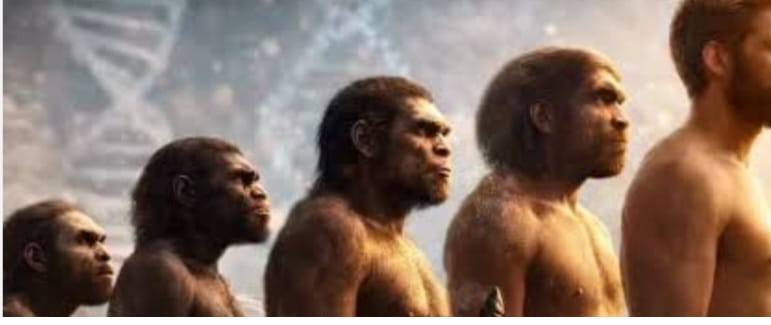
    The human family tree is not a straight line leading triumphantly to modern Homo sapiens. It is a bushy, tangled thicket of experimental branches, most of which went extinct. At least twenty-one different species of early humans once roamed the planet, and for vast stretches of prehistory, several of them lived at the same time, in the same places. We have direct, almost haunting evidence of this coexistence. In Kenya, along the shores of Lake Turkana, scientists discovered 1.5-million-year-old footprints preserved in mud. Two distinct species—Homo erectus, a tall, long-legged ancestor, and Paranthropus boisei, a small-brained, large-toothed vegetarian—had walked across that same muddy ground within hours or days of each other. They shared a landscape, perhaps even glanced at one another across the savanna. From about 300,000 to 50,000 years ago, Neanderthals, Denisovans, and early Homo sapiens all coexisted across Eurasia. Our own ancestors were not alone; they were part of a crowded, competitive world.

    These ancient relatives were remarkably diverse. Homo habilis, the “handy man” of East Africa, stood barely four feet tall with long, ape-like arms, yet he was the first to chip stone into cutting tools. In the same region, Paranthropus boisei had massive jaws and a bony crest atop his skull for chewing tough plants—a living food processor. Then came Homo erectus, the great explorer, who grew to nearly six feet, developed long legs for endurance running, and became the first hominin to leave Africa, spreading all the way to Southeast Asia. In Europe, Homo heidelbergensis built wooden shelters and hunted elephants with wooden spears, while his descendants, the Neanderthals, evolved stocky, barrel-chested bodies perfectly adapted for Ice Age cold. Meanwhile, in Siberia and the Tibetan Plateau, the mysterious Denisovans thrived at high altitudes, passing down a gene for oxygen efficiency that still protects modern Tibetans today. On the remote island of Flores in Indonesia, Homo floresiensis—the “Hobbit”—stood just three and a half feet tall, having evolved island dwarfism, yet somehow hunted dwarf elephants. Each of these species was a unique solution to the problem of survival, tailored to a specific time and place.

    What happened when all these different humans met? They competed, they fought, and they also fell in love. When early Homo sapiens migrated out of Africa around 60,000 years ago, they walked straight into Neanderthal territory in Europe and the Middle East. For thousands of years, they shared the same caves, hunted the same mammoths, and occasionally clashed. But they also mated. If you have European or Asian ancestry, about 1.5 to 2.5 percent of your genome is Neanderthal—a living inheritance from those ancient encounters. In fact, interbreeding happened on at least three separate occasions. The same is true for Denisovans: modern Papuans, Aboriginal Australians, and Filipinos carry up to five percent Denisovan DNA, including that high-altitude gene. Even in Africa, our ancestors mated with unknown “ghost” hominins whose fossils we haven’t even found. These hybrids were not sterile or disadvantaged. Many of those inherited genes boosted immune systems, improved fat metabolism, and helped our ancestors adapt to new environments. We are not pure Homo sapiens; we are walking mosaics, hybrid descendants of several lost lineages. The other species were not simply wiped out—they were, in many ways, absorbed into us.

    Despite this intermingling, all those other human species eventually disappeared, leaving us alone. The final chapter belongs to the Neanderthals, who made their last stand in southern Iberia around 39,000 years ago. The period between 50,000 and 30,000 years ago was a crucible. Climate change was relentless, with wild swings between freezing glacial periods and warmer spells that Neanderthals, as cold-weather specialists, struggled to endure. A massive volcanic eruption in Italy around 40,000 years ago triggered a volcanic winter, dropping temperatures across Europe for years and devastating already stressed populations. Neanderthals had also suffered a severe genetic bottleneck around 75,000 years ago, leaving them dangerously inbred and vulnerable. Meanwhile, Homo sapiens arrived with decisive advantages: larger social networks that traded resources across hundreds of miles, advanced projectile weapons for safe hunting, and a generalist diet that could adapt to almost anything. We also simply outnumbered them—perhaps ten to one. When you pour a glass of wine into the ocean, the wine is still there, but the ocean swallows it. That is likely what happened to the Neanderthals: they were slowly out-bred, out-competed, and absorbed into our swelling population.

    But there is one more thread connecting all these species, one humble, universal human act they all likely shared: cooking. Roasting, to be precise. Long before pottery, early humans discovered that throwing meat or roots into hot embers transformed it—making it softer, safer, and far more delicious. Homo erectus likely pioneered this revolution around 1.8 million years ago, and his smaller teeth and weaker jaws are biological proof. Neanderthals left direct evidence of roasted vegetables in the plaque on their teeth. Denisovans, though we have no fire pits from them, genetically lacked the powerful chewing muscles of raw-food eaters. Homo heidelbergensis built hearths, and the “Hobbits” of Flores had fire and butchered animals for roasting. Only Paranthropus boisei, with his massive jaws, seems to have stuck to raw vegetation. Imagine: 100,000 years ago, a Neanderthal family roasting a bison leg in a French cave, a Homo sapiens group tending a wildebeest haunch in Africa, and a Denisovan turning a wild sheep over embers in Siberia. They never met, yet they all shared the same primal ritual—sitting around a fire, waiting for dinner.

    So why only us? We were not the strongest—Neanderthals were far more muscular. We were not the most specialized—Denisovans had mastered altitude. What we had was flexibility: we could eat anything, live anywhere, and connect with strangers across vast distances. We were the ultimate generalists, and when the climate turned chaotic, our adaptability became our superpower. But luck played a role too. Every person alive today carries within their DNA the ghost of multiple human species. Neanderthals, Denisovans, and unknown African lineages live on in our genes, whispering their ancient stories. We are their legacy, their hybrid children, and their graveyard. The next time you sit around a fire, grilling dinner with friends, remember: you are performing a ritual shared by at least half a dozen human species who are now gone. We are the last ones left—but we are not alone in our past. EK

  • Journey of Human Evolution: From Fire to Culture

    Human evolution is a story of branching paths, survival, and extinction, stretching back millions of years and culminating in the emergence of Homo sapiens as the only surviving human species today. The journey begins with early hominins such as Sahelanthropus tchadensis, who lived around seven million years ago and may have walked upright, and Ardipithecus ramidus, who combined arboreal life with bipedal traits. These species laid the foundation for the australopithecines, including Australopithecus afarensis, famously represented by the fossil “Lucy,” which showed clear evidence of habitual bipedalism. Alongside them, the robust Paranthropus line evolved powerful jaws and teeth adapted for chewing tough vegetation. While successful for over a million years, Paranthropus ultimately became an evolutionary dead end, leaving no descendants.

    The genus Homo marked a turning point. Around 2.4 million years ago, Homo habilis appeared, earning the nickname “handy man” for its use of stone tools. Soon after, Homo erectus emerged, lasting from about 1.9 million years ago until as recently as 110,000 years ago. This species was revolutionary: it had modern‑like body proportions, walked fully upright, and was the first to migrate out of Africa, spreading into Asia and Europe. Homo erectus also pioneered the use of fire, a technology that transformed human life. Fire allowed cooking, which made food easier to digest and more palatable, fueling brain growth. It provided warmth, protection from predators, and a social center around which groups could gather. This innovation was arguably the first great leap in human culture.

    From Homo erectus descended Homo heidelbergensis, living between 600,000 and 200,000 years ago. In Africa, this species gave rise to Homo sapiens, while in Europe it evolved into Neanderthals, and in Asia into Denisovans. Neanderthals thrived in Ice Age Europe, adapting to cold climates with stocky builds and sophisticated tools. They were skilled hunters and used fire extensively, not only for cooking but also for warmth and survival. Denisovans, known mainly from genetic evidence and a few fossils in Siberia, were close relatives of Neanderthals and likewise relied on fire in their harsh environments. Both species interbred with Homo sapiens, leaving genetic legacies that persist today. Neanderthal DNA contributes to traits such as immunity and skin pigmentation, while Denisovan DNA provides adaptations like high‑altitude tolerance in populations of Tibet and Melanesia.

    Despite their success, Neanderthals and Denisovans eventually went extinct, around 40,000 and 50,000 years ago respectively. Homo heidelbergensis had already disappeared earlier, leaving Homo sapiens as the sole surviving branch. Our species emerged in Africa about 300,000 years ago and began migrating out of the continent around 70,000 years ago, long after Homo erectus had already pioneered such journeys. Unlike other hominins, Homo sapiens developed advanced language, symbolic thought, art, and complex social structures. These innovations allowed greater adaptability, cooperation, and cultural transmission, giving us a decisive edge in competition for resources. The ability to form large, interconnected groups and share knowledge across generations enabled rapid technological progress, from sophisticated tools to cave paintings and eventually agriculture.

    The survival of Homo sapiens while other hominins vanished was not inevitable. For hundreds of thousands of years, multiple human species coexisted, sometimes in the same regions. Yet our adaptability, innovation, and capacity for symbolic communication set us apart. Interbreeding with Neanderthals and Denisovans enriched our genetic diversity, but ultimately only Homo sapiens endured. Today, we carry within us echoes of those extinct relatives, reminders that human evolution was not a straight line but a branching tree with many experiments in survival. The story of Homo erectus taming fire, of Neanderthals thriving in Ice Age Europe, and of Denisovans adapting to high altitudes all highlight the resilience and ingenuity of our ancestors. Their legacies live on in our DNA, our cultures, and our technologies, making human evolution a tale not just of survival but of transformation. OT

  • Graveyards of Empires, Cradle of Peoples: Who Really Belongs in South Asia

    There is a peculiar and profoundly important distinction that often gets lost in the popular retelling of South Asian history. We speak of the Aryan “invasion,” the Greek “conquest,” the Turkic “onslaught,” and the British “colonial project” as if they were all chapters in the same story of outsiders arriving. But this is a fundamental misreading of history, one that flattens a complex, beautiful, and deeply human narrative into a simplistic sequence of foreign dominations. The truth is far more remarkable: with the singular exception of the modern European colonial powers, almost every group that entered the subcontinent of South Asia throughout its long history never left. They did not sail back to Greece, ride back to the Central Asian steppes, or march back to Persia. Instead, they married, they settled, they built temples and tombs, they spoke new languages, and they became the very ancestors of the billion people who call this region home today. South Asia is not a museum of ancient arrivals; it is a living, breathing graveyard of empires that gave birth to a continuous and resilient civilization.

    The story of the first Homo sapiens arriving in South Asia some 70,000 to 50,000 years ago sets the stage for this perpetual process of migration and assimilation. These were the deep ancestors, the original hunter-gatherers whose genetic footprint remains strongest in the tribal populations of the south and the Andaman Islands. Then came the great linguistic and demographic shifts. The Dravidian-speaking peoples, who are believed to have entered South Asia in the Proto-Elamite period (c. 3200–2700 BCE) were once spread across the entire subcontinent, with their language perhaps even linked to the enigmatic Indus Valley Civilization. They were an indigenous population whose deep ancestry, the “Ancient Ancestral South Indians,” diverged from other groups tens of thousands of years ago. The arrival of the Indo-Aryans around 1500 BCE was the first major migration event recorded in the collective memory. Modern archaeology and genetics paint a picture of a slow, prolonged migration of steppe pastoralists.

    This pattern repeated itself with astonishing consistency for millennia. When Alexander the Great marched his army to the Indus in 326 BCE, he left behind more than just a legend. He left garrisons of tired, wounded, and opportunistic soldiers—Greeks, Persians, and Macedonians—who chose to stay and marry local women. These small settlements evolved into the Indo-Greek Kingdoms, a remarkable fusion where Hellenic art met Buddhist spirituality to create the sculptural masterpieces of Gandhara. The Greeks did not depart with Alexander; they were absorbed. The same fate befell the Scythians, the fearsome nomadic horsemen who swept down from Central Asia around 150 BCE. They established the Indo-Scythian kingdoms, ruled as provincial governors, and then quietly faded into the local population, leaving behind only traces in the gene pool of northwest of the subcontinent. The Alchon Huns, who shattered the Gupta Empire in the 4th century CE, were remembered for their brutality, yet even they did not retreat. Their descendants stayed, assimilated, and their fierce warrior culture blending with the martial traditions of the region.

    The arrival of Islam introduced yet another layer to this ancient mosaic. The Arabs who conquered Sind in 711 CE established the first Islamic state in the subcontinent, their political rule lasted a few centuries. However, the Arab merchants who settled along the Malabar Coast in Kerala did not leave. They married local women, and their descendants, the Mappila Muslims, are an integral community in South India today. The centuries of Turkic rule, from the Delhi Sultanate in 1206 to the Mughal Empire, represent the most dramatic example of this phenomenon. The Turks and the Turco-Mongols who came with Babur were not simply colonial administrators. They intermarried with locals, adopted Persianized Indian culture, and gave birth to a new language—Urdu—that was born on the battlefields and in the bazaars of North India. By the time of the later Mughals, they were far more Indian than Central Asian. Even the Mongol hordes of the 13th and 14th centuries, who terrorized the Delhi Sultanate with constant raids, contributed to the region’s mixing; their very presence spurred the movement of peoples and forced the sultans to adapt, but the Mongols themselves were repelled without leaving a permanent political dynasty. Yet they too left behind traces in the local populations.

    The great exception to this rule of settlement and integration is the modern European colonial project. The Portuguese, French, and especially the British came with different ethos. They arrived not to settle permanently but to extract wealth, governed by an industrialized racial hierarchy that actively discouraged intermarriage and maintained a strict social distance from the local population. British officers served their term and sailed home. When the British Raj ended in 1947, they left. The French departed from their colonies, and the Portuguese were finally expelled from Goa in 1961. They were the only ones who truly came, ruled, and left. In doing so, they threw the rest of history into sharp relief.

    The history of South Asia is a story of perpetual homecoming. The Indo-Aryans, Greeks, Scythians, Huns, Arabs, Turks, Mongols, etc., all came, fought, ruled, and then became South Asian. This is the fundamental reality that makes the question “Who belongs in South Asia?” not only irrelevant but absurd. Everyone belongs, because everyone who arrived stayed. And those who truly left—the British and the other European colonizers—left behind a political legacy of borders that cannot contain the immense, interwoven and resilient human tapestry they found. EK