
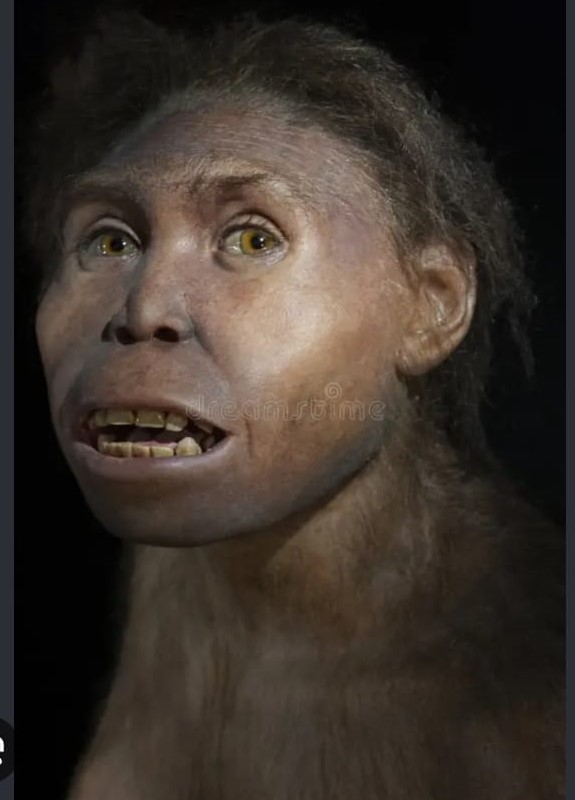
For most of recorded history, humanity imagined itself as the intended climax of creation—an inevitable triumph of progress, the final word in a grand, unfolding plan. We pictured our evolution as a stately procession, a line of upright figures marching confidently from the shadows of the ancient past toward the brilliant light of civilisation. That comforting image is a lie. The truth is far more humbling, far more precarious, and infinitely more astonishing. We are not the heirs to a royal lineage. We are the survivors of a gauntlet that killed off nearly everything that ever walked like us.
Consider the cast of characters that came before. Around six to seven million years ago, deep in the African continent, our lineage split from the one that would become chimpanzees. The earliest hominins emerged not as conquerors, but as fragile experiments. Sahelanthropus tchadensis in Chad, Orrorin tugenensis in Kenya, the various species of Ardipithecus in Ethiopia—these were the first tentative steps away from the trees and onto two legs. They were remarkable for their time, but they were not our grandparents. They were evolutionary dead ends, distant great-aunts and uncles who thrived and then faded into the fossil record, leaving no descendants. The African savannas changed, the climate shifted, and these early pioneers simply vanished. Extinction, it turns out, is the default setting for most species.
Their lineage did not lead directly to us. Instead, the hominin experiment continued through other branches, eventually producing Homo erectus roughly two million years ago. This was the species that changed everything. Homo erectus was the first true globetrotter of our family tree, leaving Africa to populate vast stretches of Europe and Asia. They made sophisticated stone tools, mastered fire, and endured for nearly two million years—far longer than our own species has even existed. They were our direct ancestors. They are our great-many-times-over grandparents.
But here is where the family tree becomes a tangled bush. Those Homo erectus populations that stayed in Africa evolved quietly and continuously, eventually giving rise to Homo heidelbergensis and, finally, to us—Homo sapiens, about 300,000 years ago. Meanwhile, the populations that had ventured into Eurasia became isolated. Cut off by distance and shifting climates, they evolved into separate branches entirely: the Neanderthals in Europe, the Denisovans in Asia, and the mysterious, diminutive “Hobbits” (Homo floresiensis) and Homo luzonensis on isolated Southeast Asian islands. These were not our ancestors. They were our evolutionary cousins—sister lineages that shared grandparents with us but took different paths. They lived alongside our forebears for tens of thousands of years, even interbreeding with them occasionally. And then, one by one, they too went extinct. Their genes linger in small traces within our own DNA, but their species are gone forever.
The most sobering chapter in this story is not the demise of our cousins, however. It is the near extinction of our own direct line. Around 930,000 to 813,000 years ago, during a period of violent climate upheaval known as the Mid-Pleistocene Transition, the population of our Homo erectus ancestors in Africa collapsed. Severe droughts, plunging temperatures, and collapsing ecosystems reduced their numbers from perhaps 100,000 to a mere 1,280 breeding individuals. For roughly 117,000 years, our entire lineage teetered on the absolute brink of annihilation. A single prolonged drought, a single epidemic, a single volcanic winter could have erased us entirely from the history of the planet. Yet, against all odds, that tiny, desperate group held on. They survived. Their population slowly rebounded, and from that narrow thread of life emerged every single human being alive today.
This is the stark reality of our existence. We are not the culmination of an inevitable march toward greatness. We are the descendants of refugees who scraped through a planetary crisis by sheer luck and tenacity. The early hominins of Chad and Kenya are gone. The Neanderthals and Denisovans are gone. The Hobbits and the Luzonensis are gone. Even Homo erectus itself—the species that survived that horrific bottleneck—eventually disappeared everywhere except in that one African lineage that led to us. We alone remain, not because we were destined to, but because we were fortunate.
Every time you look in the mirror, you are gazing at a miracle of survival. You carry the genetic legacy of those 1,280 individuals who refused to let the flame die out. You are walking proof that extinction is not inevitable, that resilience matters more than strength, and that the human story is not one of entitlement, but of improbable endurance. We are not the chosen ones. We are the lucky ones. And that should make us humble, grateful, and fiercely determined to protect this fragile, fleeting experiment called humanity. EK
Leave a Reply