
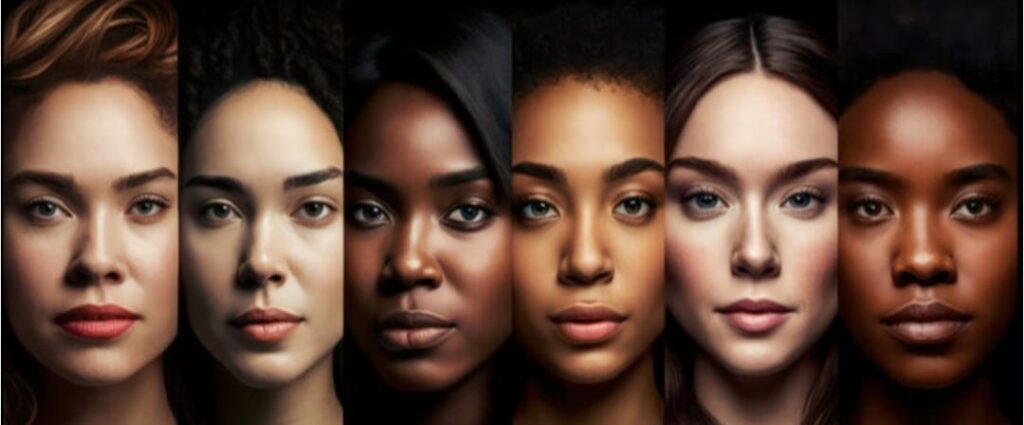
Humanity’s story is often told as a tale of races—distinct categories of people separated by biology and destiny. But this narrative, deeply embedded in culture and history, contradicts what modern genetics and evolutionary science actually tell us. To understand human diversity, we must first understand a crucial distinction: the difference between species and races. This distinction is not merely academic; it shapes how we understand ourselves and each other.
Twenty-one hominin species once walked the Earth. From Homo habilis to Homo erectus, from Neanderthals to Denisovans, these were genuinely different species—biologically distinct populations that had diverged over millions of years. They could not interbreed successfully, or if they did, their offspring were sterile. These were not variations of the same human; they were fundamentally different kinds of humans. Over time, all but one disappeared. We survived. We are Homo sapiens, and we are alone among our kind.
Yet within our single species, we see remarkable diversity. Skin colors range from deep brown to pale white. Hair textures vary from straight to coily. Body shapes differ dramatically across populations. These visible differences led to creation of races. But here lies the paradox that modern science has exposed: these visible differences mask a profound genetic similarity that unites all of us.
Any two modern humans are 99.9% genetically identical. This is not a poetic exaggeration; it is a precise scientific measurement. When geneticists compare humans at the points where our DNA can vary, they find that we differ at only 0.1% of these sites. The genetic variation within a single racial group is many a time greater than the variation between racial groups. In other words, a random African and a random European may be more genetically similar to each other than two Africans are to each other. The concept of race, as a biological category, simply does not hold up under genetic scrutiny.
But here is where the story becomes more interesting. Some modern humans carry genes from other hominin species. Eurasian populations carry one to four percent Neanderthal DNA. East Asian and Oceanian populations carry three to five percent Denisovan DNA. How is this possible if these species could not interbreed successfully? The answer reveals the nuance that evolution teaches us: speciation is not a sharp line but a spectrum. Neanderthals and Homo sapiens diverged only half a million years ago—recent enough in evolutionary terms that they remained similar enough to produce fertile offspring. This interbreeding happened, and the genetic legacy persists in our bodies today.
The Neanderthal genes we carry are not random remnants; some are beneficial. They contribute to our immune systems, helping us fight infections in European and Asian environments. Denisovan genes helped Tibetan populations adapt to high altitude, and helped Oceanian populations navigate tropical islands. These are genuine adaptations, but they are not racial traits. They are population-level responses to specific environments, accumulated over thousands of years.
What actually creates human diversity, then, is not race but geography and time. Populations separated by oceans and mountains adapted to their local environments over tens of thousands of years. Darker skin evolved in populations near the equator, where intense ultraviolet radiation threatened survival. Lighter skin evolved in northern regions, where weak sunlight made vitamin D production difficult. Taller, leaner bodies evolved in hot climates for heat dissipation; shorter, stockier bodies in cold climates for heat retention. These are not markers of superiority or inferiority; they are engineering solutions to environmental challenges.
The visible differences we associate with race are superficial—literally skin-deep. They represent continuous variation, not discrete categories. There is no genetic boundary where “Black” ends and “Brown” begins, no biological line separating “Asian” from “European.” These categories were invented by humans for social and political purposes.
Understanding this distinction—between the genuine biological differences that separated hominin species and the superficial variations within our single human species—is essential for our time. It allows us to celebrate human diversity without creating false hierarchies. It explains why different populations have different food traditions, different adaptations to altitude and climate, different cultural practices—not because they are different kinds of humans, but because they are the same kind of human adapted to different places.
We are one species. We are 99.9% identical. And yet we are profoundly, beautifully diverse. This is not a contradiction. This is the truth of human biology, and it is far more remarkable than any myth of race.
Leave a Reply