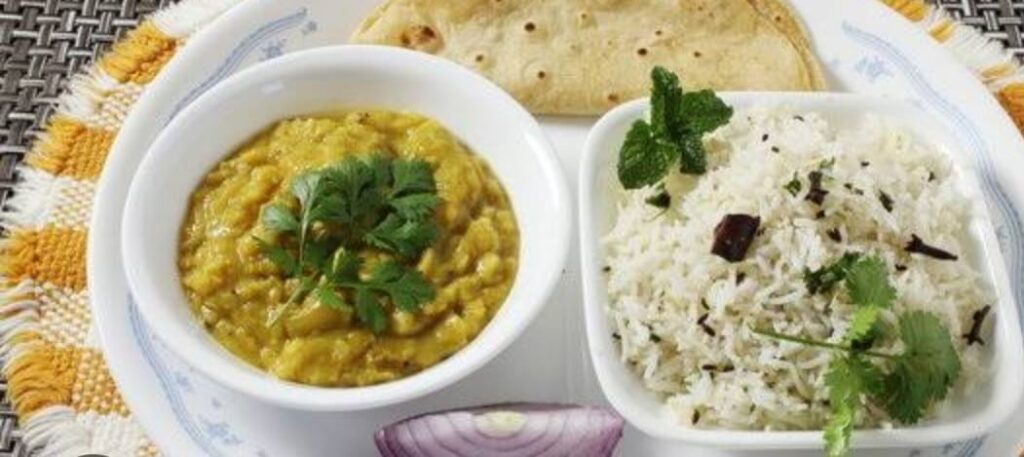
Dal roti and dal chawal remain among the most practical and enduring meals in India. Affordable, filling, and deeply familiar, these combinations of lentils with whole-wheat flatbread or rice have sustained families across regions and generations. They are subsistence foods in the best sense — not glamorous, yet reliable and adaptable to whatever the kitchen can offer.
The nutritional logic behind the pairing is sound. Lentils are rich in lysine but relatively low in methionine. Rice and wheat supply methionine while being lower in lysine. Eaten together, they form a complete protein. This is not a theoretical claim that fails in the kitchen; it works in practice. The body receives all the essential amino acids it needs from the combination. The real constraint is quantity, not quality. A modest serving of everyday dal with one or two rotis or a bowl of rice delivers complete protein in the same way a small piece of fish does: the amino-acid profile is complete even if the absolute amount is modest.
How much protein actually reaches the plate depends heavily on preparation. In most Indian households, toor dal is cooked relatively thin and watery, whether served as everyday dal or as South Indian sambar. A typical bowl of this lighter consistency often contains limited dry lentil matter and may provide only eight grams of protein. Paired with roti or rice, the meal commonly yields twelve grams of complete protein — respectable for a simple, low-cost plate, yet far from extravagant. Thicker preparations tell a different story. Some Punjabi dhaba-style kaali dal uses a denser ratio around one to five, while restaurant dal makhani often approaches one to six and incorporates cream or butter. These richer versions pack a little more lentils per volume and therefore more protein. The difference is not ideology; it is water and cooking style.
The same principle appears across cultures. African kitchens pair beans with maize or rice. Latin American tables combine beans with corn tortillas or rice. West Asian traditions offer lentils with rice in mujaddara or chickpeas with bread. East Asian diets frequently join soy products with rice. Different continents arrived at complementary legume-and-grain meals independently because the combination works.
Our ancestors never measured lysine or methionine. They discovered these pairings through taste, satiety, seasonal availability, and long observation of what kept people strong. The Punjabi saying “Khaiye Dal, Jehadi Nibhe Naal” captures the spirit neatly: eat the dal that suits you, that your body accepts, and that fits your means. Taste buds and cultural memory guided people toward foods that delivered both pleasure and lasting energy. Modern nutrition science later explained the chemistry; it did not invent the practice.
There is also a quiet advantage in the modest protein yield of traditional watery dal meals. Increasing the quantity of dal, roti, or rice to raise protein also increases calories. The calorie cost acts as a natural brake. People are less likely to over-consume protein when every extra gram comes with extra energy. This built-in limit helps avoid the digestive discomfort, higher fluid requirements, and potential kidney strain that can accompany very high protein intakes. Everyday dal roti therefore offers completeness without excess.
None of this means the meal is optimal for every person in every circumstance. Those with higher protein needs — growing adolescents, athletes, or people recovering from illness — may require larger portions, denser dals, or additional sources such as dairy, eggs, meat, fish, etc. For most people eating ordinary home-style servings, however, the combination remains a sensible foundation. It is complete, affordable, culturally grounded, and self-limiting in a way that modern isolated protein sources often are not.
In an age of protein bars, powders, and endless dietary advice, the quiet durability of dal roti and dal chawal is worth noticing. These meals do not promise maximum protein density. They promise something more useful: a complete protein that ordinary people can prepare and afford every day, guided by taste and tradition rather than laboratory measurements. The chemistry is real. The portions are realistic. And the wisdom that produced them remains as practical now as it was generations ago. OK
Leave a Reply