
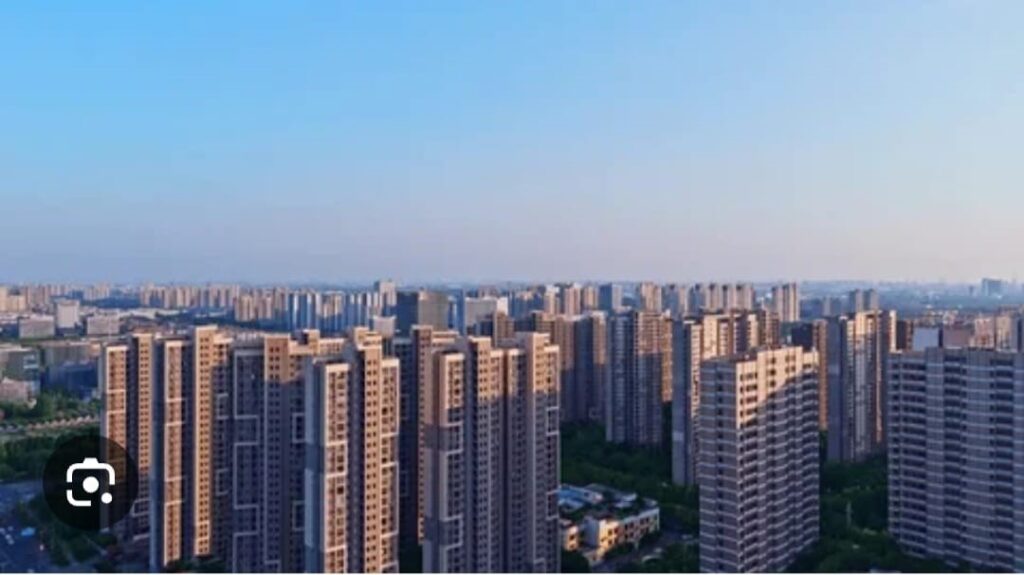
The skyline of urban India has never looked more ambitious, with glass-fronted towers and luxury estates redefining the horizons of cities like Mumbai, Gurgaon and Hyderabad. These structures are the physical manifestation of a staggering surge in private wealth that has reshaped the nation’s economic identity. According to recent data shared in the Lok Sabha, the number of individuals reporting an annual income of ₹100 crore or more—the elite “100-Crore Club”—has quadrupled in just five years, reaching a record 576 in the 2025-26 assessment year. This explosive growth in the INR billionaire class, alongside a sixty-three percent increase in ultra-high-net-worth individuals, has propelled luxury housing to unprecedented heights. For the first time, homes priced above one crore rupees account for more than half of the total residential sales value in the country. To a casual observer, the Indian property market appears to be in a golden age, fueled by a seemingly bottomless well of domestic and global capital.
However, beneath this glittering surface lies a profound paradox. While the sales value of luxury properties is breaking records, the actual volume of inventory being absorbed has begun to stumble. Across the top seven metropolitan areas, the unsold stock of luxury housing surged by twenty-four percent annually by early 2025, with over one lakh units remaining vacant. In once-booming markets like Hyderabad and Mumbai, aggressive launches have outpaced the market’s depth. The “stumbling” inventory suggests that the initial post-pandemic buying frenzy has given way to selective maturity. Even the ultra-wealthy are becoming value-conscious, showing resistance to the double-digit annual price hikes of recent years. Many projects labeled as “luxury” are increasingly viewed as standardized products that fail to offer genuine exclusivity or “trophy asset” status that the new billionaire class demands.
This saturation at the top is only one half of the story. The other half is a starkly different reality facing India’s lower and middle classes. While headline GDP growth in INR remains robust, the “ground-level” economy is struggling with a severe financial squeeze. Real wages, adjusted for inflation, have remained virtually stagnant for nearly a decade, with rural and informal sector workers seeing almost no increase in their purchasing power. At the same time, household debt has climbed to record levels, now estimated at over forty percent of GDP. This pincer movement of stagnant incomes and rising debt has effectively killed the affordable housing segment. The share of affordable homes in total sales has plummeted from thirty-eight percent in 2019 to a mere eighteen percent in 2024. Developers, squeezed by thirty to forty percent increases in construction costs, have largely abandoned the segment in favor of high-margin luxury projects. The result is a “missing middle” in the housing market, where those who drive the nation’s services and industry find themselves priced out of homeownership and trapped in a cycle of house rents.
Adding a new layer of complexity to this fractured landscape is a significant shift in the sentiment of the global Indian diaspora. For decades, Non-Resident Indians (NRIs) were the bedrock of the luxury market, viewing ancestral soil as a safe and high-yield investment. However, the recent Remittor Annual NRI Wealth Report 2026 reveals a startling trend: 72% of NRI property owners are now planning to exit their Indian investments, 46% looking to sell immediately and 26% planning an exit within six months). This mass exit is driven by lower yields due to depreciating Rupee and a strategic shift toward global markets like Dubai, Indiana and Manchester where rental yields and tax structures are perceived as more favorable. The departure of the NRI buyer, who often held multiple properties as investment vehicles, further threatens the absorption of the massive unsold luxury inventory.
The Indian real estate market thus stands at a critical crossroads, characterized by a “K-shaped” recovery that has detached the fortunes of the elite from the financial reality of the masses. The wealth engine that produced 576 billionaires is a powerful force, but it cannot sustain a healthy housing ecosystem in isolation. The stumbling luxury inventory and the vanishing affordable pipeline are symptoms of a market that has over-leveraged on the top tier while neglecting the foundational demand of the middle class. As the global Indian begins to cash out and the domestic middle class remains financially strained, the need for a structural recalibration has never been more urgent. A sustainable future for Indian real estate will require more than just record-breaking billionaires; it will require a market that builds for the many, ensuring that the dream of a home remains accessible to the families who are the true engine of India’s growth. US
Leave a Reply