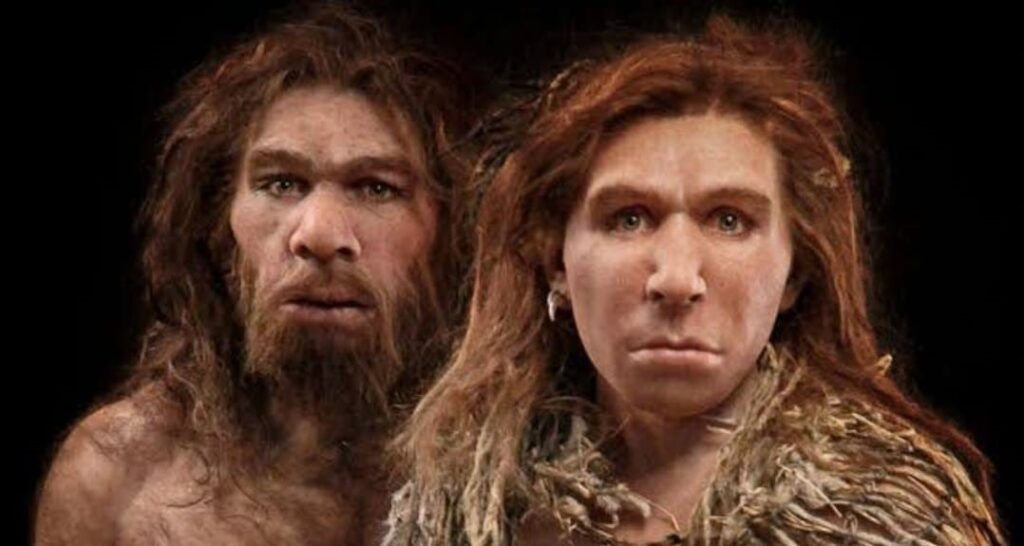
For most of human history, the line between species was not as rigid as we often imagine. Homo erectus, Neanderthals, Denisovans, and Homo sapiens were all close enough genetically to mate and produce children. This fact alone challenges the neat categories we like to impose on evolution. It suggests that our past was not a straight ladder of progress but a tangled web of encounters, unions, and shared survival. When modern humans left Africa and met Neanderthals in Europe or Denisovans in Asia, they did not merely compete; they connected, exchanged genes, and carried fragments of each other forward. Even Homo erectus, the long‑enduring ancestor who thrived for nearly two million years, likely contributed indirectly through transitional species that bridged into later lineages. The story of humanity is not one of isolation but of mingling.
Yet despite this ability to interbreed, scientists classify these groups as different species rather than racial groups of one species. The distinction matters. Modern human “races” are superficial variations within Homo sapiens, arising in the last tens of thousands of years. Neanderthals and Denisovans, by contrast, diverged from our lineage hundreds of thousands of years earlier, accumulating profound genetic and anatomical differences. Neanderthals were stockier, with larger brow ridges and adaptations to Ice Age Europe. Denisovans carried distinct genetic markers and thrived in Asia. Homo erectus had smaller brains, different tool traditions, and a body built for endurance. These were not mere variations of skin tone or hair texture; they were deep evolutionary divergences shaped by geography, climate, and time. To call them “races” would erase the scale of separation that existed. They were distinct populations with unique evolutionary trajectories, even if those trajectories occasionally overlapped in intimate ways.
This paradox — different species that could still interbreed — reveals the porous nature of species boundaries. Evolution is not a tidy process. It is messy, fluid, and full of hybridization. The human family tree is less a straight trunk than a braided river, with channels that split, merge, and sometimes rejoin. The fact that Neanderthals, Denisovans, and Homo sapiens could produce fertile offspring shows that speciation is not a binary but a spectrum. It also explains why modern humans are a mosaic, carrying echoes of these encounters in our very DNA.
The impact of this interbreeding is still with us. Non‑African populations today carry about one to four percent Neanderthal DNA. These fragments enriched our immune systems, providing HLA alleles that improved resistance to pathogens. They influenced skin and hair, helping adaptation to colder climates. But not all legacies were positive: some Neanderthal variants are linked to depression, nicotine addiction, and autoimmune disorders. Denisovan DNA, meanwhile, is most prominent in Oceania, where populations carry up to six percent. One Denisovan gene variant in EPAS1 helps Tibetans survive at high altitudes by regulating oxygen use. Other Denisovan contributions aided fat metabolism in Arctic populations and bolstered immune responses. These are not trivial details; they are survival tools inherited from encounters tens of thousands of years ago.
What emerges is a picture of adaptive introgression. Beneficial archaic genes were retained, while harmful ones were gradually eliminated. This explains why certain regions of the human genome, such as the X chromosome, show little archaic ancestry — those genes likely reduced fertility and were weeded out. The result is a patchwork genome, where fragments of Neanderthal and Denisovan DNA remain embedded in Homo sapiens, shaping our biology in ways we are only beginning to understand.
Reflecting on this legacy forces us to rethink what it means to be human. We are not the product of a single lineage but of multiple lineages intertwined. Our survival was not achieved alone but through connection, borrowing, and blending. The fire Homo erectus tamed, the resilience Neanderthals embodied, the high‑altitude adaptation Denisovans carried — all of these live on in us. Humanity is not pure; it is hybrid. And that hybridity is our strength.
In today’s world, where divisions are often emphasized, the story of interbreeding among hominins offers a profound lesson. Boundaries may exist, but they are not absolute. Cooperation, exchange, and mingling have always been part of our survival strategy. The genes we carry are reminders that our ancestors did not just fight; they also embraced. And in those embraces, they secured the future of humanity.
Leave a Reply