
Category: General

  • Sir Issac Newton’s Shocking 2060 Prophecy That Meet’s Musk’s Future

    Isaac Newton and Elon Musk could hardly appear more different. Newton was the seventeenth-century mathematician who gave humanity the laws of motion and universal gravitation. Musk is the twenty-first-century entrepreneur betting on electric cars, artificial intelligence, humanoid robots and space travel. Yet, separated by nearly four centuries, both have imagined a profound transformation of human civilization—and both have attached that transformation to a future in which the existing order gives way to something radically different.

    Newton’s famous “2060 prophecy” is often presented as an apocalypse. That is not quite what he meant. Newton was deeply engaged in biblical prophecy, particularly the Book of Daniel and the Apocalypse. He believed that prophetic periods described in “days” could represent years. Taking AD 800 as the beginning of a 1,260-year period, he arrived at 2060. But he explicitly cautioned against treating the date as an exact prediction. His calculation was a private theological exercise, not a scientific forecast that Earth would be destroyed in 2060.

    More importantly, Newton did not envision 2060 simply as the end. His interpretation contained an extraordinary element of renewal. The collapse of the old religious order would, in his understanding, be followed by the establishment of a new divine order—a thousand-year Kingdom of God. In Newton’s imagination, therefore, catastrophe was not the destination. It was the threshold of transformation.

    Now consider Elon Musk.

    Musk’s vision has no biblical prophecy, no Book of Revelation and no divine timetable. His prophet is technology. Artificial intelligence, he argues, will become enormously capable, while humanoid robots will perform an ever-growing share of physical labour. The result, he believes, could be an “age of abundance” in which the production of goods and services vastly exceeds today’s capacity. In 2026, Musk went beyond the familiar idea of universal basic income and spoke instead of “universal high income.”

    The distinction is revealing. Universal basic income assumes that people may need a modest financial floor because technology has displaced their jobs. Musk’s universal high income imagines something much more radical: technology could make abundance so great that people would no longer be constrained by today’s relationship between employment, income and consumption.

    He has even suggested that money itself might eventually become irrelevant. If intelligent machines and robots can produce virtually everything humans require, the traditional economic problem of scarcity begins to disappear.

    Newton and Musk therefore offer two versions of the same extraordinary human fantasy: the belief that history has a threshold beyond which ordinary human life will no longer be ordinary.

    For Newton, the transformation was spiritual. For Musk, it is technological. Newton saw prophecy as the mechanism; Musk sees artificial intelligence and robotics. Newton imagined a divine kingdom after the breakdown of an old order. Musk imagines an abundant society after machines break the link between human labour and material production.

    But there is a deeper similarity. Both visions confront the same question: What happens to human beings when the system that has structured their lives disappears?

    For Newton, the old political and religious order would give way to something fundamentally new. For Musk, the old economic order—where people work because they need income to obtain scarce goods—could become obsolete.

    And this is where Musk’s utopia becomes more complicated than it first appears. Abundance does not automatically produce happiness. If machines perform the work that gives people their income, status and daily structure, humanity will have to answer a question that economics has largely postponed: What is human life for when survival no longer requires work?

    Musk himself has acknowledged the problem of purpose. Other technology leaders have similarly imagined a future in which conventional employment becomes less central, while warning that distributing the enormous wealth created by AI and robotics will be a major social and political challenge.

    There is also a crucial difference between Newton’s and Musk’s visions. Newton’s prophecy was an interpretation of an existing sacred text. Musk’s prediction depends on technologies that have not yet achieved the capabilities he anticipates. Today’s AI revolution is real, but the economic transformation remains uncertain. Massive investment is pouring into AI infrastructure, while economists continue to debate how quickly productivity gains will materialise and whether today’s expectations have outrun the evidence.

    That uncertainty, however, does not make the comparison less fascinating. It makes it more so.

    Newton looked into the future and saw the end of one historical order and the emergence of another. Musk looks into the future and sees machines so productive that the economic foundations of the present could dissolve.

    One calculated with biblical numbers. The other calculates with computing power, robotics and productivity.

    Newton’s 2060 was not really about the end of the world. Musk’s age of abundance is not really about robots. Both are ultimately about the same question: can humanity cross a threshold beyond which the rules governing human civilization are fundamentally changed?

    Perhaps that is why the two visions resonate across four centuries. Humans have always imagined a better world beyond the limitations of the present—sometimes through God, sometimes through science, sometimes through technology.

    Newton called it the coming Kingdom.

    Musk calls it the age of abundance.

    The vocabulary has changed. The human longing for transformation has not. PT
  • From Political Metaphor to Scientific Marvel: An lg Nobel Prize for Cockroach Milk Makes You Laugh and Think

    Cockroaches rarely enjoy good press. Across the world, they symbolize filth, survival, and political controversy. In India, they occasionally crawl into public discourse as metaphors in partisan battles. Yet this year, cockroaches achieved a rather unexpected distinction: they became the subject of an Ig Nobel Prize winning scientific study. The insect that usually inspires disgust has now inspired scientific admiration.

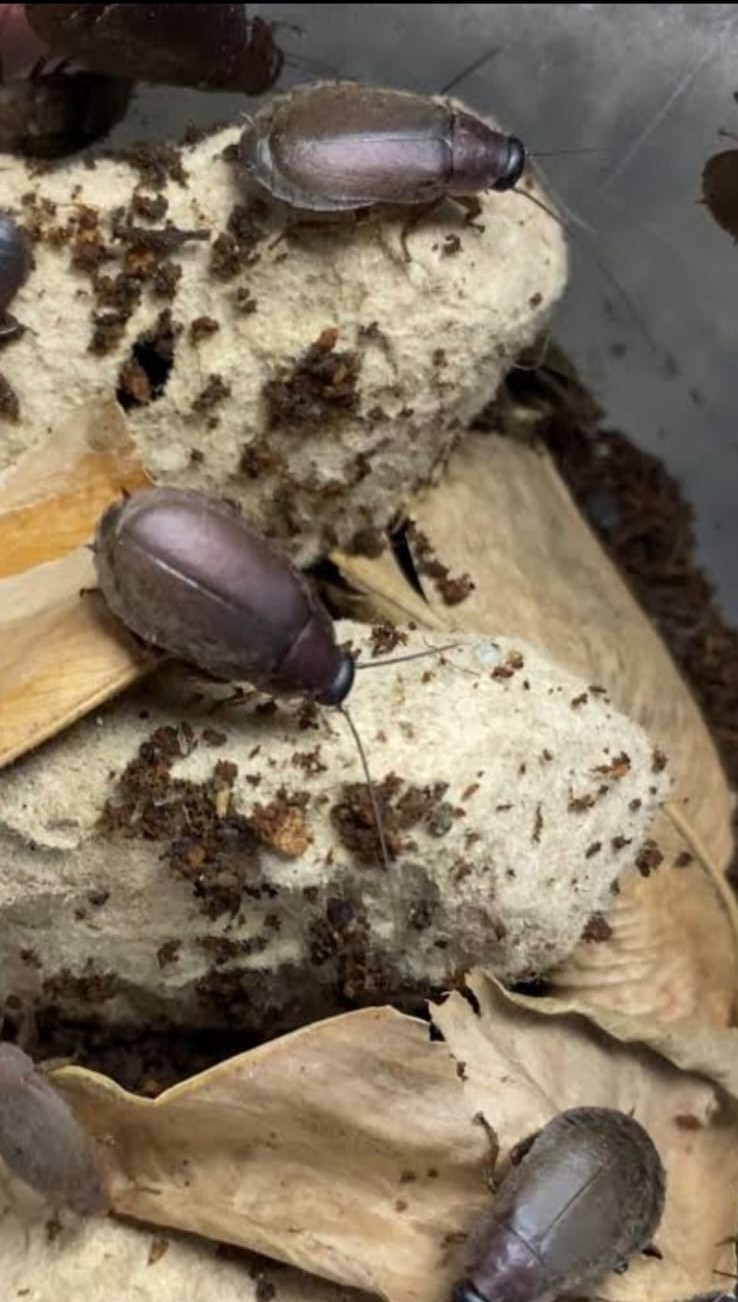
    The Ig Nobel Prize in Chemistry recognized research on the Pacific beetle cockroach, Diploptera punctata, one of the few known cockroach species that gives birth to live young. The award honored researchers who discovered that protein crystals derived from the insect’s milk-like secretion contain more than three times the energy of an equivalent mass of cow’s milk.

    The phrase “cockroach milk” understandably provokes laughter. That, after all, is the very spirit of the Ig Nobel Prizes, which celebrate research that first makes people laugh and then makes them think. Yet beneath the amusement lies a genuinely fascinating biological story.

    Unlike most insects, D. punctata nurtures its developing embryos inside a brood sac, an organ often compared to a uterus. The mother secretes a nutrient-rich milk-like liquid that is consumed by the embryos. Once inside the embryos’ midgut, the liquid is transformed into microscopic protein crystals. These crystals are not mere protein deposits. They contain proteins, carbohydrates, and lipids, making them compact nutritional packages. Researchers found that the crystals vary in composition and function as highly efficient nutrient stores for the developing offspring.

    The real lesson here is not that humanity should replace dairy farming with cockroach farming. Commercial production remains impractical and the research was never intended as a dietary recommendation. Instead, the study reveals how evolution can solve biological problems in astonishing ways. Nature has engineered a microscopic food storage system that delivers a concentrated supply of nutrients in an extraordinarily small volume. [bio.purdue.edu], [economicti…atimes.com]

    There is also a broader message about scientific curiosity. Many breakthrough discoveries emerge from questions that initially seem odd, trivial, or even ridiculous. Why would anyone study cockroach milk? The answer is that science advances not only by pursuing the obvious but also by investigating the unexpected. Curiosity often thrives at the margins of conventional wisdom.

    It is fitting that while the year’s Ig Nobel ceremony carried the theme of fungi, one of its most memorable honours went to a cockroach. The contrast captures the essence of science itself: surprises are often more valuable than certainties.

    So perhaps the humble cockroach deserves a measure of respect. Having already unsettled households and occasionally stirred political debates, it has now managed something even rarer. It has earned a place in the annals of scientific curiosity, proving that even the most unlikely creatures can illuminate the ingenuity of nature.

  • From NASA Notes to Capitol Hill: The Briefing That Broke a US President

    In the lore of modern UFO disclosure, few stories cut as deep as the claim that President Jimmy Carter—devout Baptist, former naval officer, and the only U.S. president to file a UFO report—was reduced to tears after a secret briefing on extraterrestrials. The tale has circulated for years in UFO research circles, but it surged back into public view in 2026 when Republican Congressman Tim Burchett repeated it on the Joe Rogan Experience: “When they told Jimmy Carter the truth about UFOs & aliens… he cried.

    According to this narrative, the briefing took place early in Carter’s presidency, around June 14, 1977, and left him visibly shaken for weeks. UFO historian Richard Dolan, drawing on accounts from a former White House staffer and his own anonymous national‑security source, says Carter was seen alone at his desk, head in his hands, “nearly sobbing,” after the session. Whether one views this as history or myth, it speaks to a deeper question: what could possibly so unsettle a president known for his moral seriousness and steady demeanor?

    When Faith Met the Files: Carter, Aliens, and Religion

    The most explosive version of the story goes beyond “we have UFOs” and into territory that would strike at the core of Carter’s worldview. Former NASA Ames researcher Ed Harris has written that Carter was told aliens created humans and that major religions, including Christianity, were programs designed by extraterrestrials to keep humanity from destroying itself while “they ran their experiments on us.”

    For a man whose faith shaped his identity and politics, this would not be abstract intelligence. It would be an existential blow: the suggestion that the sacred narratives underpinning his life—and those of billions—were engineered as behavioral controls by non‑human actors. In this telling, Carter’s breakdown is not just about secret technology or crash retrievals; it is about the possible unmasking of religion itself as an alien project.

    How the Story Spread

    The Carter briefing legend did not emerge from declassified archives but from a patchwork of second‑hand accounts and online posts. Harris’s Quora‑style write‑ups, Reddit threads, and UFO forums kept the story alive for years, often tying it to the infamous “Project Aquarius” and MJ‑12 style documents that describe long‑term extraterrestrial manipulation of human history.

    In 2026, the narrative leapt from niche communities to mainstream attention when Burchett invoked it on Rogan’s show, asserting that the Carter Library records could corroborate the meeting’s existence, if not its content. Dolan’s interviews added another layer, relaying testimony from physicist Eric Davis, who said former White House staff director Alonzo McDonald had concluded the briefing did happen. The result is a story that now straddles UFO research, political theater, and popular culture.

    What We Know, What We Don’t, and Why It Matters

    On the public record, several points are clear. Carter did report a 1969 UFO sighting near Leary, Georgia, and filed a report with the International UFO Bureau before becoming president. Multiple sources, including Dolan and Harris, say he later received a classified UFO briefing around June 1977 and was left deeply disturbed.

    What remains unproven is the content of that briefing and the emotional breakdown as described. There is no declassified transcript, no on‑the‑record confirmation from Carter or his immediate staff, and no official memo detailing claims about aliens creating humanity or engineering religion. The most sensational elements rest on Harris’s second‑hand reporting and anonymous sources, not on documents open to independent verification.

    Why does this matter? Because the Carter story functions as a proxy for larger questions about secrecy, faith, and power. If a president can be briefed on evidence that undermines core religious narratives, what does that mean for a society built on those narratives? And if such briefings are real but hidden, how do we reconcile democratic accountability with compartments of knowledge so sensitive they can shatter a leader’s worldview? The Carter tale may never be fully verified, but it forces us to confront the possibility that some truths are not just classified—they are civilization‑shaking.

  • Pregnancy by Gust of Wind: The Curious Case in Indonesia’s West Java

    A strange story emerged from Cidaun, Cianjur, in West Java in February 2021. A 25-year-old woman, Siti Zainah, reportedly said that she had been lying on her stomach after afternoon prayer when she suddenly felt a gust of wind enter through her vagina. Soon afterwards, she experienced abdominal pain and swelling. She was taken to a health centre and, to her astonishment, was found to be in labour. Within roughly an hour, she delivered a baby girl weighing 2.9 kilograms.

    The story immediately sounded impossible. And biologically, it was. A gust of air cannot cause conception, let alone produce a full-term baby within an hour. Yet dismissing Siti’s account simply as a fabrication misses something much more interesting about human beings: we interpret mysterious experiences through the stories that our culture has already placed in our minds.

    There is a perfectly ordinary medical concept behind the extraordinary episode: cryptic pregnancy, sometimes called a hidden or unrecognised pregnancy. The condition occurs when a woman remains unaware of her pregnancy for a substantial period, sometimes until labour. Indonesian health officials specifically suggested cryptic pregnancy when commenting on Siti’s case, explaining that pregnancy symptoms can be so subtle that a woman does not recognise them.

    And eventually, the biological mystery became considerably clearer. Reports said that Siti’s former husband acknowledged paternity. The couple had divorced approximately four months before the birth, and officials reported that Siti had apparently been pregnant without realising it. A pregnancy examination around the time of the divorce had reportedly failed to establish that she was pregnant.

    So there was no miraculous one-hour conception. The baby had developed normally over months. What happened suddenly was Siti’s awareness of the pregnancy, not the pregnancy itself.

    But why the wind?

    Here mythology enters the story—not necessarily because Siti invented a convenient tale, but because myths are often already “in the air.” People grow up surrounded by stories about invisible forces, spirits, supernatural intervention and inexplicable events. When something happens that seems impossible, the human mind does not begin with a blank sheet of paper. It reaches for explanations already available within its culture.

    Contemporary accounts of the Cianjur episode reported that members of Siti’s family initially considered santet, a form of supernatural harm or sorcery, and sought religious or traditional intervention before the medical explanation became clear.

    This is where the story becomes more than an odd medical anecdote. Siti was a young divorced woman in a socially conservative environment. An unexpected pregnancy could generate uncomfortable questions: When did it happen? With whom? How could a recently divorced woman explain it? We should not claim that she consciously fabricated the wind story to escape those questions; there is no reliable evidence establishing such a motive. But it is reasonable to observe that a supernatural explanation can provide culturally available language for an event that is otherwise difficult to explain socially.

    Myth, in this sense, is not necessarily a deliberate lie. It can be a framework through which people make sense of reality.

    This happens everywhere. Before medicine explained epilepsy, people attributed seizures to spirits. Before meteorology explained unusual weather, communities interpreted storms through gods and supernatural forces. Before psychology explained many unusual experiences, societies gave them religious or magical meanings. The experience may be real; what changes is the explanation attached to it.

    Siti’s baby was real. Her pregnancy was real. Her confusion may have been real too. What was not real was the biological possibility of a gust of wind causing conception.

    The enduring lesson is therefore not that the woman in West Java claimed to become pregnant by wind. It is that when biology becomes mysterious, culture supplies a vocabulary.

    Sometimes that vocabulary is science. Sometimes it is religion. Sometimes it is folklore. And sometimes, remarkably, the explanation is already in the air. PT

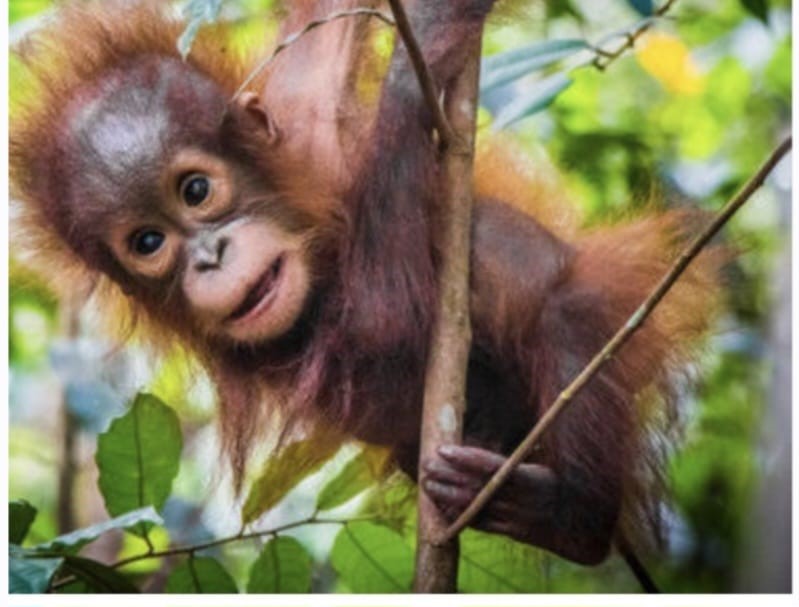
  • People of the Forest on the Brink: Rescue, Rehabilitation and the Flight for Survival

    Orangutans, the “people of the forest,” are among the most intelligent and charismatic of the great apes. Yet their very existence is hanging by a thread. Across Indonesia and Malaysia, these arboreal giants are being squeezed out of their rainforest homes by deforestation, palm oil plantations, and the relentless march of human development. The story of orangutan conservation is not just about saving a species—it is about confronting the choices humanity makes in the name of progress, and whether we are willing to share the planet with beings whose survival depends on the forests we so casually destroy.

    The challenges are immense. Palm oil, a cheap and versatile ingredient found in everything from biscuits to shampoo, has become the single greatest driver of orangutan habitat loss. Vast swathes of rainforest have been cleared to make way for monoculture plantations, leaving orangutans with nowhere to forage, nest, or roam. In Borneo alone, more than half of orangutan habitat has been lost in just two decades. The fires that often accompany this deforestation are equally devastating. In Kalimantan, wildfires in 2026 burned through 60 percent of orangutan habitat, leaving thousands of apes starving and disoriented. These are not isolated incidents—they are systemic, recurring assaults on the very ecosystems orangutans depend upon.

    The illegal wildlife trade adds another layer of cruelty. Baby orangutans are prized in the exotic pet market, fetching tens of thousands of dollars. To obtain them, poachers kill the mothers, leaving infants traumatized and vulnerable. The recent rescue of five baby orangutans in Odisha, India, highlights the global reach of this trade. Found abandoned in a plantation, these infants were calm and comfortable around humans—clear evidence they had been smuggled and raised in captivity. Their presence in India, far from their native forests, underscores the scale of trafficking networks that treat endangered species as commodities.

    Against this bleak backdrop, rehabilitation centers have become sanctuaries of hope. Sepilok in Sabah, Malaysia, established in 1964, was the world’s first orangutan rehabilitation facility. Its structured programs—quarantine, nursery care, forest school, and semi-wild release—have returned hundreds of orangutans to the wild, with an impressive success rate. Semenggoh in Sarawak offers a semi-wild model, where orangutans roam freely in forest reserves but still receive supplemental feeding. In Indonesia, centers like those run by Yayasan Inisiasi Alam provide emergency care for orangutans displaced by wildfires and deforestation. These institutions are not just rescue facilities; they are laboratories of resilience, teaching orphaned apes how to climb, forage, and build nests, skills they would normally learn from their mothers over six to eight years.

    The rehabilitation process is painstakingly slow. Orangutans are among the slowest-reproducing mammals, with females giving birth only once every six to eight years. This means that every lost individual is a blow to the species’ survival. Rehabilitation must replicate the maternal bond, with caregivers acting as surrogate mothers, guiding infants through “forest school” where they learn to identify fruits, swing through the canopy, and avoid predators. Only when they demonstrate independence are they moved to pre-release islands, semi-wild environments where their survival instincts are tested. Finally, they are released into protected forests, fitted with GPS collars and monitored by field teams. Success is measured not just in survival, but in reproduction—when rehabilitated orangutans give birth in the wild, it signals that the cycle of life has been restored.

    Yet rehabilitation alone cannot solve the crisis. Without intact forests, there is nowhere to release these apes. Conservation must therefore extend beyond rescue centers to the broader landscape. Habitat corridors that connect fragmented forests are essential to maintaining genetic diversity. Stronger enforcement against trafficking and poaching is critical. Equally important is community collaboration. The people living at the edge of forests are often caught between poverty and conservation. Supporting them with sustainable livelihoods—such as eco-tourism, agroforestry, or certified palm oil—can reduce reliance on destructive practices and foster coexistence.

    The plight of orangutans forces us to confront uncomfortable truths. Our consumer choices, from the snacks we eat to the cosmetics we use, are directly linked to the destruction of rainforests. The rescued infants in Odisha are not just victims of smuggling; they are symbols of a global failure to protect one of our closest relatives in the animal kingdom. But they are also reminders that it is not too late. With concerted effort, orangutans can be rehabilitated, forests can be restored, and coexistence can be achieved. The question is whether we have the will to act.

    Orangutans are more than conservation statistics. They are sentient beings with rich emotional lives, capable of laughter, grief, and ingenuity. To lose them would be to lose a mirror of ourselves, a living testament to the diversity of life on Earth. Saving them is not charity—it is a moral obligation, a recognition that our fate is tied to theirs. If the forests fall silent, it will not just be the orangutans who vanish. It will be a piece of humanity itself. OT

  • Half a Billion Years of Heat and Ice: Earth Has Been Far Hotter But Never This Fast

    Earth’s climate has never stayed constant. Over the last 485 million years, our planet has moved repeatedly between much colder “icehouse” conditions and much warmer “greenhouse” states. A landmark 2024 study in Science now gives us the clearest picture yet of just how wide those swings have been, and what has driven them. The message is double-edged: yes, Earth has endured far hotter worlds than ours, but the speed at which we are pushing the climate today is unlike anything in that vast record.

    The reconstruction, called PhanDA (for Phanerozoic Data Assimilation), combines geological temperature evidence with hundreds of climate-model simulations to produce a continuous estimate of Earth’s global mean surface temperature across almost the entire Phanerozoic Eon. Instead of leaning on a single type of proxy or a single model run, the researchers statistically integrated different paleoclimate records—on the order of 150,000 sea-surface temperature estimates—with model outputs spanning a range of carbon dioxide levels and ancient continental configurations. The result is a spatially complete, time-continuous temperature history that captures both the broad arcs and the sharp spikes of Earth’s thermal past.

    What PhanDA reveals is striking. Over the last 485 million years, global average temperature has ranged from roughly 11°C to 36°C (about 52°F to 97°F), a wider span than many earlier reconstructions suggested. The coldest values correspond to recent glacial periods within our current icehouse, while the hottest peaks align with notorious greenhouse intervals such as the mid-Cretaceous and the Paleocene–Eocene Thermal Maximum. For most of this time, Earth was warmer than today, often lacking large polar ice sheets altogether. In that sense, our modern climate—cool enough to sustain extensive ice on both poles—is actually on the colder side of Earth’s long-term norm.

    One of the study’s clearest findings is the tight connection between atmospheric CO₂ and these temperature swings. The researchers identify carbon dioxide as the dominant control on variations in global climate throughout much of the Phanerozoic. When CO₂ was high, the planet trended toward sweltering greenhouse states; when it was low, ice sheets expanded and global temperatures fell. From this relationship they infer an “apparent” Earth-system sensitivity of about 8°C per doubling of CO₂. That figure is much larger than the roughly 3°C per doubling often cited for near-term, fast-feedback responses, because it includes slow feedbacks—changes in ice sheets, vegetation, and surface reflectivity—that unfold over centuries to millions of years. It helps explain why relatively modest shifts in CO₂ over geological time can correspond to dramatic reorganizations of Earth’s climate system.

    But Earth’s ancient climate should not be used to suggest today’s warming is harmless. The crucial difference is how quickly the change occurs. Many natural climate shifts in Earth’s deep history unfolded over thousands to millions of years, giving ecosystems and species time to migrate, adapt, or evolve. Today’s human-driven warming is occurring on a much shorter timescale, increasing the difficulty for ecosystems and species to keep pace. During the PETM, one of the most intense past hyperthermal events, global temperatures rose by roughly 5–8°C over several thousand years. In contrast, human activities have already warmed the planet by about 1.2–1.3°C in just over a century, with annual CO₂ emissions now roughly nine to ten times higher than during such natural carbon-release episodes. Co-author Jessica Tierney has put it plainly: we have never seen carbon dioxide and temperature rise as fast as they are rising now.

    That speed matters. Organisms, ecosystems, and human societies evolved under the relatively stable conditions of the Holocene, the last 11,700 years. The Phanerozoic record shows that Earth as a system can tolerate far higher temperatures than we experience today, but it also shows that the transitions between climate states usually played out on timescales that allowed life to track changing conditions. Rapid warming compresses those windows, increasing the risk of widespread stress, collapse, and extinction. The deep-time record is not a comfort; it is a warning that the same CO₂ that has governed Earth’s climate for hundreds of millions of years is now being pushed upward at an unprecedented rate.

    Seen in this light, the PhanDA reconstruction does not undermine concern about modern climate change; it sharpens it. It confirms that CO₂ is the master lever of Earth’s long-term climate, that the planet can and has been much hotter than now, and that the current trajectory is steering us toward greenhouse conditions not seen in millions of years—but doing so with a speed that has no analogue in the last 485 million years, The lesson is not that Earth will be fine no matter what we do. It is that the window for orderly adaptation is narrow, and we are closing it fast. TY

  • Weird Bird Shoebill Commands Awe: Beauty in the Brutal Efficiency of Swamp Predator

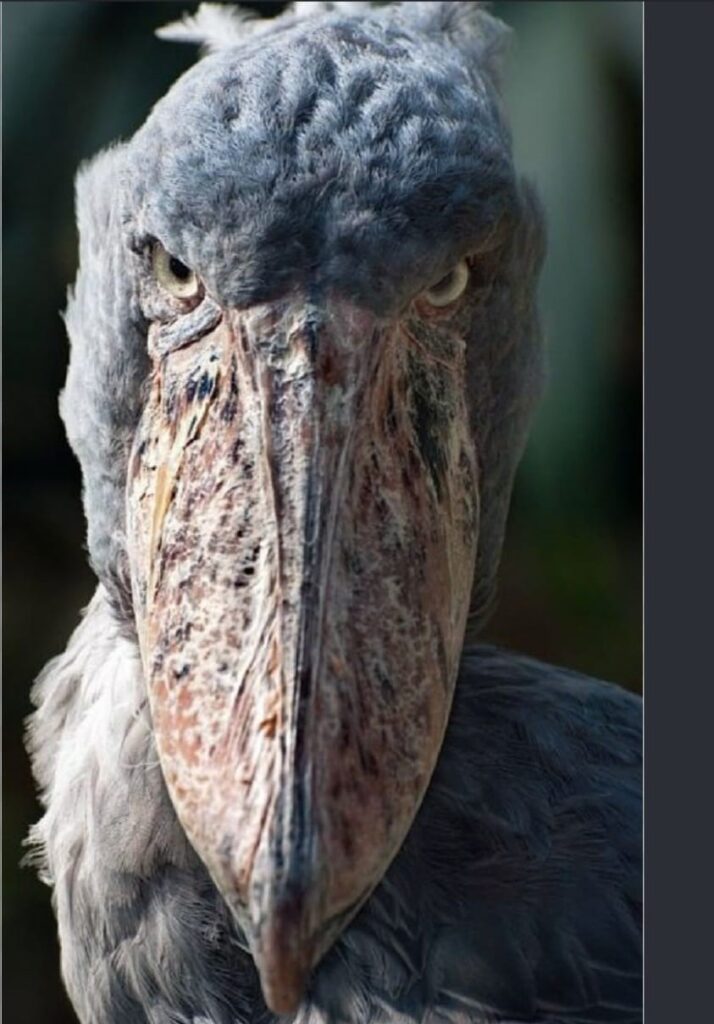
    In the papyrus swamps and floodplains of tropical East Africa lives a bird that looks as though it stepped out of deep time. The shoebill, Balaeniceps rex, stands over 1.2 meters tall—sometimes reaching nearly 1.4 meters—with an upright, almost human posture that already sets it apart from other wading birds. Its most arresting feature is the enormous shoe-shaped bill, nearly 24 centimeters long, broad and deep, ending in a sharp hook. Combined with piercing yellow eyes and a gray, prehistoric silhouette, the effect is instantly intimidating. Yet this formidable appearance is largely a matter of optics. Shoebills are solitary creatures that rarely pose any threat to humans. They prefer to keep their distance, and most encounters end with the bird simply standing motionless or slowly moving away.

    That stillness is the heart of the shoebill’s character and its survival strategy. For long stretches—sometimes hours—the bird remains completely immobile, body upright, bill angled downward, eyes fixed on water. The sensation of being watched is intense and unsettling; observers often feel the bird is deliberately staring. In reality, this freeze is both a hunting technique and an energy-saving adaptation. By remaining nearly motionless, the shoebill conserves precious energy in a demanding wetland environment while waiting for prey to come within range.

    Its diet centers on the creatures that share those oxygen-poor waters: lungfish and catfish that must surface to breathe, along with frogs, water snakes, and even small crocodiles. When a suitable target appears—usually within half a meter to a meter and a half—the transformation is dramatic. The previously statue-like bird launches a sudden, violent forward lunge known as the collapse-and-strike. Specialized neck muscles drive the heavy bill forward with startling speed; the bird throws its full body weight into the motion, often spreading its wings for balance, and may topple or fold forward onto the prey. The entire sequence can take less than a tenth of a second. The reinforced bill, with its sharp cutting edges and hooked tip, engulfs the catch along with water and vegetation. The bird then sways its head side to side to discard debris while keeping a firm grip, sometimes using the bill’s edges to crush or decapitate larger items before swallowing them head-first.

    This method is remarkably efficient. Success rates for adult birds often hover around 60 percent, and a single substantial catch can sustain the bird for many hours. The shoebill does not chase; it waits. It does not waste motion; it invests everything in one decisive strike. The same intense focus that makes the bird appear to be staring at human observers is simply the concentrated attention of a patient predator scanning for the subtle surface disturbances of its preferred prey.

    There is something almost philosophical in this approach. In a world that prizes constant activity and visible effort, the shoebill demonstrates the power of restraint. Its intimidating form is not a weapon against us but a specialized tool refined over evolutionary time for a narrow ecological niche. Solitary by nature, it forages alone, often maintaining distances of 20 meters or more from other shoebills even in richer habitats. Hippos may unintentionally assist by stirring the water and forcing fish upward, but the bird itself remains a quiet, self-contained presence in the swamp.

    To encounter a shoebill is to feel a brief dislocation of time. The upright stance, the massive bill, the unblinking stare—all of it feels older than the modern world. Yet the bird is not a relic. It is a living master of efficiency, a creature that has perfected the art of doing almost nothing until the precise moment when everything must be done at once. In an age of noise and haste, the shoebill offers a quiet reminder: sometimes the most formidable power lies in perfect stillness, and the most effective action begins with the courage to wait.

  • Aphid: Born Pregnant – Farmed by Ants

    Aphids rank among the most misunderstood creatures in the insect world, dismissed as garden nuisances when in fact almost everything about their biology reads like a small marvel of evolutionary engineering.

    Start with reproduction, because it’s the strangest part, and it isn’t one story but two. For most of the growing season, aphid populations are entirely female, reproducing parthenogenetically and viviparously — giving live birth to genetically identical daughters without any mating at all. This shift to live birth enables something called telescoping generations: a pregnant female may already be carrying a daughter embryo, and that daughter, before she’s even born, may already be forming ovaries containing the beginnings of a granddaughter. Three generations nested inside one another, existing simultaneously in a single body. But as autumn shortens the days, most species switch strategies entirely, producing a sexual generation of actual males and egg-laying females. These mate, and the resulting females lay fertilized eggs rather than bearing live young, because eggs can survive frost in a way no live nymph could. So aphids are viviparous for most of the year and oviparous for one crucial generation each autumn — asexual summer-long cloning giving way to a single sexual, cold-resistant finale.

    That autumn generation also reveals something else: aphids are lopsidedly female, even when males exist at all. Roughly 90% of aphid species show female-skewed sex ratios in their sexual generation, and the skew can be dramatic — one well-studied species produces around six daughters for every son. This traces back to inbreeding: aphid sexual mating often happens among close relatives, sometimes literal siblings from the same mother, so a single male can fertilize several females. Mothers investing heavily in daughters and sparingly in sons make sound evolutionary sense.

    This explosive, female-driven reproductive capacity is only half the story, because aphids don’t operate in isolation. Many species have struck up one of nature’s more elegant mutualisms with ants. Species like the black garden ant tend aphid colonies the way a farmer tends livestock — stroking them to encourage honeydew release while aggressively fending off ladybugs, lacewing larvae, and parasitic wasps. Some ants go further, biting off aphids’ wings to prevent dispersal, relocating them to fresher growth, or carrying aphid eggs into their nests over winter and returning the hatchlings to host plants in spring — precisely because eggs are the one life stage that survives storage through cold months. By the fitness-based standard biologists use, this holds up as genuine mutualism: tended aphids show measurably higher survival and reproduction than untended ones. It resembles dairying more than slaughter, since honeydew is harvested without killing the aphid, though the comparison isn’t perfectly clean, as ants do sometimes eat surplus aphids outright.

    Not every aphid keeps the same company or the same taste in plants. Host specificity tracks closely with chemistry and life cycle. The cabbage aphid specializes almost exclusively in brassicas, having evolved enzymes to sequester the glucosinolates those plants use as defense and redeploy them as its own. The woolly apple aphid alternates host across its life cycle, using elm for its sexual generation and apple or hawthorn for the asexual generations, while colonizing bark and roots rather than tender growth. The green peach aphid, by contrast, is a notorious generalist feeding on over 400 plant species across 50-plus families — exactly why it’s such an effective disease vector, since a specialist can only spread a virus within one plant family, while a generalist carries it across unrelated ones entirely.

    This complicates any simple verdict on whether aphids help or harm a garden. Aphid colonies do sustain populations of beneficial predators, and growers sometimes tolerate them on sacrificial plants for that reason. But the reassurance that aphids “rarely harm healthy plants” overstates things: their feeding causes real stunting once populations build, their honeydew fosters light-blocking sooty mold, and the most economically damaging aphid-virus transmissions often occur at population densities too low to cause visible damage at all.

    What ties all of this together is that single reproductive trick of carrying the future nested within the present — a quiet, overlooked insect generating three generations of itself at once, then reversing its entire strategy each autumn to survive the season that follows. DE

  • Capybaras: The Friendliest Creature on Earth

    There is something almost absurd about how beloved the capybara has become. It is, after all, a giant rodent — the largest living one on Earth, weighing anywhere from 35 to 66 kilograms in a typical adult, with some exceptional individuals recorded at 79 kilograms or more, and stretching up to 1.3 meters in length. It has a barrel-shaped body, coarse and sparse fur that dries quickly after a swim, a blunt muzzle, small ears, and eyes set high on its head so it can stay alert while mostly submerged in water. Its feet are slightly webbed, its hind legs a touch longer than its forelegs, features that make it a surprisingly fast and capable swimmer despite its ungainly appearance on land. And yet, of all the world’s rodents, it is this one — not the sleek otter, not the clever raccoon — that the internet has crowned the friendliest creature alive.

    The reputation is not entirely undeserved, but it is also not quite what it seems. Capybaras are native to South America, ranging from Venezuela and Colombia down through Brazil, Argentina, Uruguay, Paraguay, Bolivia, Ecuador, Peru, and the Guianas, almost always near water — rivers, marshes, and flooded grasslands like Brazil’s Pantanal or Venezuela’s Llanos. In the wild, they live in groups of ten to twenty, sometimes far more, and this deeply social nature is the real foundation of their famous tolerance. Evolution built them to coexist, not to charm. What looks like friendliness to us is, underneath, a nervous system that simply does not panic easily. Capybaras have an unusually low startle response and minimal fear-driven reactivity, and because predatory behavior in animals like big cats is often triggered by fleeing prey, a creature that refuses to flee rarely gets chased in the first place.

    This explains the videos that make capybaras internet-famous: a capybara lounging beside a jaguar, sharing space with birds, monkeys, or even alligators. Almost all of these encounters happen in captivity — zoos, sanctuaries, rescues — not in the wild, where a jaguar will hunt a capybara without hesitation, since it is in fact one of the jaguar’s preferred prey. Captive predators are well-fed and often raised alongside these rodents from a young age, removing both the hunger and the habit that would otherwise turn tolerance into predation. The capybara’s calm is real, but the safety it enables is manufactured by human care, not by some special charisma the species holds over predators.

    The same complicated truth applies to its relationship with people. Capybaras have been hunted across South America for centuries, prized for meat and hide, and in places like Venezuela there is even a legal, regulated harvest. Yet in areas without hunting pressure, the same low-reactivity temperament that keeps them calm around jaguars keeps them calm around humans too, leading to habituated populations that wander through parks, golf courses, and neighborhoods in Brazil, Argentina, and Uruguay without fear. The viral clips of capybaras soaking in Japanese hot springs or lounging at animal cafes come from exactly these safe, controlled contexts. It is not that capybaras have forged some unusual bond with humanity; it is that their calm shows through wherever we are not actively a threat, and vanishes wherever we are.

    Their biology carries other quirks worth knowing. They are hindgut fermenters, meaning the part of their digestive system that ferments fibrous plant matter sits after the point where most nutrients are absorbed — so, like rabbits, they practice autocoprophagy, re-ingesting their own soft, nutrient-rich droppings each morning to recover proteins and vitamins their gut bacteria produced but that would otherwise go to waste. It is an efficient, if unglamorous, evolutionary workaround for surviving on tough vegetation. Males also carry a distinctive scent gland on the snout, called the morrillo, used for territorial marking and a handy way to tell the sexes apart.

    Their popularity has carried them well beyond South America. Zoos across North America, Europe, and Australia keep them, often in mixed-species or wetland exhibits, and Japan in particular has turned the capybara into a cultural icon, with hot-spring enclosures where they soak alongside floating yuzu fruit in winter. Curiously, though, capybaras seem far less established in Indian zoos. A search through the National Zoological Park in New Delhi and other major Indian zoological institutions turned up no clear evidence of resident capybaras, though neighboring Sri Lanka has recently brought pairs into its Dehiwala and Pinnawala zoos through an animal exchange program. India’s stricter import and quarantine regulations for exotic species, overseen by the Central Zoo Authority, may partly explain why this particular rodent has not yet found the same foothold there that it has in zoos elsewhere in the world.

    What makes the capybara worth writing about is not that it is uniquely gentle or uniquely wise in the ways of interspecies diplomacy. It is that its calm is almost entirely circumstantial — a matter of low cortisol and a herd mentality evolved for surviving among crocodiles and jaguars in open wetlands — and yet that same accident of temperament has made it a genuine ambassador for animal coexistence wherever humans give it the chance. The capybara does not perform friendliness. It simply fails to perform fear, and in a world quick to project meaning onto animals, that absence has been enough to make it beloved. DE

  • Refinery Rescue: How Built-in Additives Save Engines from Ethanol Damage

    The petrol pump hides a silent, chemical paradox that is quietly waging war on our vehicle fuel systems. While ethanol blending has become an industry standard, its molecular architecture introduces a hidden vulnerability to the very machines it powers. Ethanol has oxygen and is hygroscopic too, meaning its chemical matrix contains bound oxygen molecules alongside an inherent, aggressive capacity to dissolve and hold atmospheric moisture. When pumped into a standard steel fuel tank, this oxygenated environment acts as an oxidising agent, directly targeting bare steel fuel lines, unplated carbon steel tanks, and delicate fuel injector internals. The degradation happens at a microscopic level through a process known as oxygen depolarisation. Over time, this interaction turns the passive iron oxide layer on the metal brittle, causing micro-fractures that allow ethanol to penetrate deep into the raw steel. The result is a structural flaw known as ethanol stress corrosion cracking, compounded by the fact that reactive oxygen slowly breaks down the fuel itself into corrosive acetic and formic acids that aggressively pit mild steel. The other drawback of ethanol is that because of an oxygen atom in its formula, energy content in absolute ethanol is significantly lower at 1000 kcl per liter at 30*C against 1,582 kcl per liter of petrol.

    While consumer anxiety often drives motorists toward aftermarket chemical additives, the frontline defense is actually deployed long before the fuel ever reaches a vehicle’s tank. Central refinery terminals managed by major Oil Marketing Companies pre-blend industrial-grade proprietary additives directly into the fuel supply chain to meet stringent national safety mandates. These built-in, terminal-level additives are explicitly engineered to create a microscopic, defensive film over metal surfaces, effectively isolating steel components from ambient moisture and neutralizing baseline corrosive risks. This industrial fortification is amplified significantly in premium ninety-five-octane fuels, such as Indian Oil’s XP95 or BPCL’s Speed. Despite a common market misconception that these premium grades contain a lower ethanol percentage, independent testing confirms they are blended right up to the standard twenty percent national threshold. However, the true value of the ten percent price premium lies in an upgraded, heavy-duty package of specialized multi-functional additives and advanced detergents. These components actively prevent the sticky gum and varnish deposits that standing ethanol-moisture mixes form, while ensuring high octane stability that prevents engine knocking even after periods of inactivity.

    Navigating the risks of ethanol-blended fuel ultimately comes down to understanding the distinct line between regular, unpredictable operation and genuine long-term storage. For a motorist with an open, flexible schedule, the fear of leaving a tank partially empty for a week or two is largely unwarranted. Modern passenger cars are equipped with highly pressurized, sealed evaporative emissions systems that actively block outside humidity from entering the fuel system. A short thirty or forty-kilometre drive every few weeks provides more than enough physical motion to slosh the fuel, continuously recoating the interior tank walls with the refinery-infused corrosion inhibitors. In this fluid driving scenario, maintaining a set-and-forget habit of simply parking the vehicle with a mostly full tank is mathematically sufficient to choke out excessive air and condensation, rendering aftermarket stabilizers completely unnecessary. Manual intervention with consumer storage stabilizers remains a specialized tool reserved exclusively for true vehicle hibernation exceeding sixty to ninety days, where stagnant fuel outlasts the design life of standard refinery additives. By shifting focus away from obsessive top-ups and trusting the advanced terminal chemistry of premium fuels, drivers can easily neutralize the oxygen trap, keeping their engines pristine through every unexpected pause in the journey. LE