
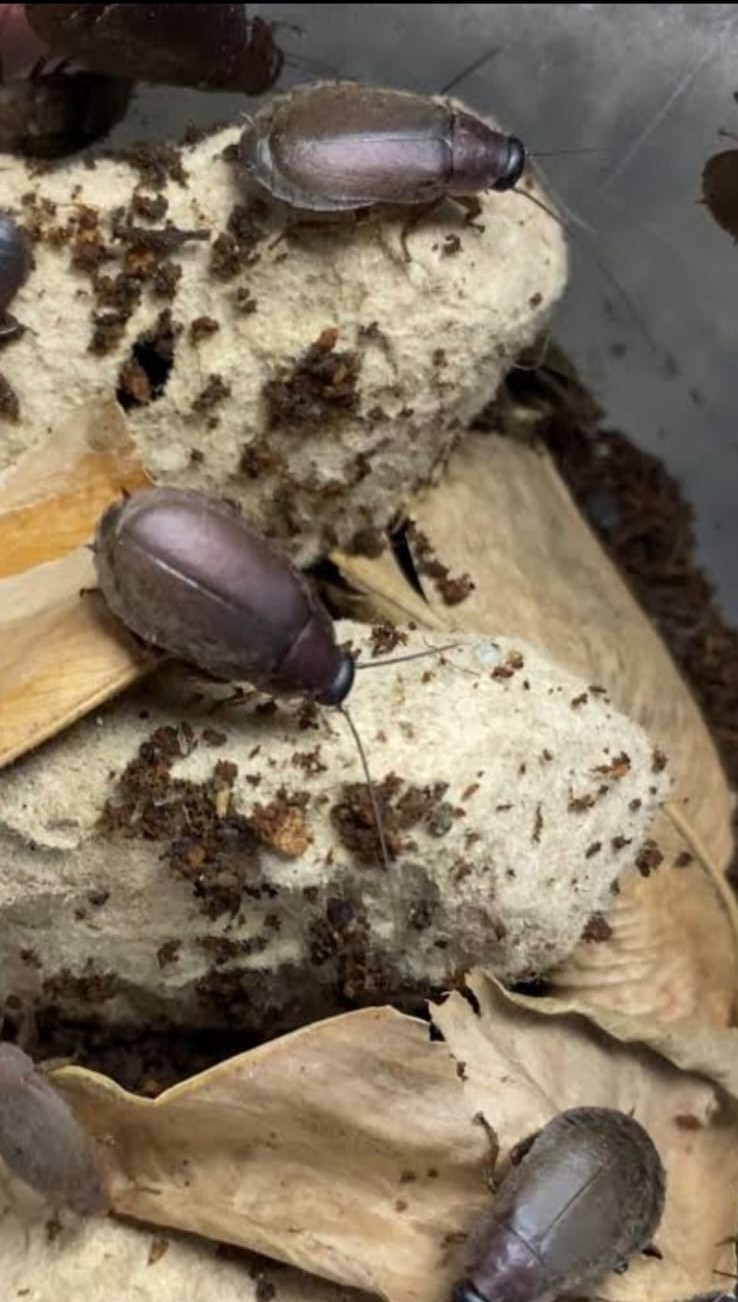
Cockroaches rarely enjoy good press. Across the world, they symbolize filth, survival, and political controversy. In India, they occasionally crawl into public discourse as metaphors in partisan battles. Yet this year, cockroaches achieved a rather unexpected distinction: they became the subject of an Ig Nobel Prize winning scientific study. The insect that usually inspires disgust has now inspired scientific admiration.
The Ig Nobel Prize in Chemistry recognized research on the Pacific beetle cockroach, Diploptera punctata, one of the few known cockroach species that gives birth to live young. The award honored researchers who discovered that protein crystals derived from the insect’s milk-like secretion contain more than three times the energy of an equivalent mass of cow’s milk.
The phrase “cockroach milk” understandably provokes laughter. That, after all, is the very spirit of the Ig Nobel Prizes, which celebrate research that first makes people laugh and then makes them think. Yet beneath the amusement lies a genuinely fascinating biological story.
Unlike most insects, D. punctata nurtures its developing embryos inside a brood sac, an organ often compared to a uterus. The mother secretes a nutrient-rich milk-like liquid that is consumed by the embryos. Once inside the embryos’ midgut, the liquid is transformed into microscopic protein crystals. These crystals are not mere protein deposits. They contain proteins, carbohydrates, and lipids, making them compact nutritional packages. Researchers found that the crystals vary in composition and function as highly efficient nutrient stores for the developing offspring.
The real lesson here is not that humanity should replace dairy farming with cockroach farming. Commercial production remains impractical and the research was never intended as a dietary recommendation. Instead, the study reveals how evolution can solve biological problems in astonishing ways. Nature has engineered a microscopic food storage system that delivers a concentrated supply of nutrients in an extraordinarily small volume. [bio.purdue.edu], [economicti…atimes.com]
There is also a broader message about scientific curiosity. Many breakthrough discoveries emerge from questions that initially seem odd, trivial, or even ridiculous. Why would anyone study cockroach milk? The answer is that science advances not only by pursuing the obvious but also by investigating the unexpected. Curiosity often thrives at the margins of conventional wisdom.
It is fitting that while the year’s Ig Nobel ceremony carried the theme of fungi, one of its most memorable honours went to a cockroach. The contrast captures the essence of science itself: surprises are often more valuable than certainties.
So perhaps the humble cockroach deserves a measure of respect. Having already unsettled households and occasionally stirred political debates, it has now managed something even rarer. It has earned a place in the annals of scientific curiosity, proving that even the most unlikely creatures can illuminate the ingenuity of nature.
Leave a Reply