
We often look into the mirror and wonder what truly makes us human. Is it our capacity for language, our complex tools, or our ability to create abstract art? While these are profound milestones, a more primal and defining distinction lies right on our dinner plates. We are, quite fundamentally, the only species on Earth that cooks its food. No other animal dominates fire, and no other creature refuses to eat its meals raw in the wild. This singular art of the hearth is not merely a cultural preference or a culinary tradition; it is the biological and psychological pivot upon which the entire history of humanity turned. Yet, a common misconception lingers that modern Homo sapiens were the brilliant inventors who first struck flint to stone and tamed the flame. In truth, we did not invent the fire that forged us. We merely inherited it, receiving an ancient technology passed down through an evolutionary lineage of ancestors who had already been fundamentally remade by its warmth.
To understand the depth of this profound inheritance, we have to look back at the vast, tangled family tree of humanity. Anthropologists point out that at least twenty-one distinct human species have walked this planet over millions of years. Many of these early ancestors, such as the famous Australopithecus, were distinctly upright but remained profoundly ape-like in their core biology. They possessed massive jaws, powerful chewing muscles, and elongated digestive tracts designed for a grueling, round-the-clock task: processing tough, raw, and fibrous vegetation. A modern chimpanzee in the wild spends up to seven hours every single day doing nothing but vigorously chewing food just to extract enough daily calories to survive. Our earliest human relatives lived under the same exhausting biological tax. They were human by genus, but they were entirely trapped in the primal constraints of a raw food economy, leaving little time or energy for anything else.
The true evolutionary revolution ignited roughly 1.8 million years ago with the emergence of Homo erectus. This was the species that broke the biological mold, becoming the world’s first true fire opportunists. They did not yet know how to strike a spark from nothing, but they possessed the cognitive audacity to capture embers from natural wildfires sparked by lightning strikes or volcanic activity. They brought these precious flames into the safety of caves, feeding them meticulously with wood and dry animal dung, protecting them as their most sacred possession. It was during this ancestral epoch that the art of cooking truly began. By exposing meat, roots, and tubers to heat, these early humans effectively outsourced the heavy labor of digestion to the campfire. Cooking gelatinizes starches and denatures proteins, cracking open dense calorie stores that are otherwise completely inaccessible to a raw primate digestive system.
The biological payoff of this technological shift was immediate, radical, and permanent. Because cooked food is incredibly easy for the body to break down, Homo erectus no longer needed the massive guts and heavy jaw structures of their ancestors. Over generations, their digestive tracts shrank significantly, and their chewing muscles weakened. The massive surplus of metabolic energy saved by this internal downsizing was redirected toward the body’s most energy-hungry organ: the brain. The celebrated cooking hypothesis suggests that our massive, complex brains could never have evolved on a raw diet, as there simply are not enough hours in a single day to chew the required calories. Fire, quite literally, fueled the structural growth of the human mind.
By the time Homo sapiens finally emerged in Africa around 300,000 years ago, we were born into a world where fire was already an ancient, standard survival asset. We did not tame the flame; the flame had already been tamed by our ancestors and sculpted our modern anatomy. This ancestral gift did far more than alter our physical bodies; it radically rewired our minds and social structures. Before the mastery of fire, the setting sun brought absolute vulnerability, forcing hominins to retreat to the safety of trees to avoid nocturnal predators. Fire brought humans permanently down to the ground, conquering the darkness and providing a powerful shield against the wild. Gathering around a shared hearth extended the active day, creating a unique, illuminated space where early humans had to sit face-to-face, wait patiently for food to cook, and cooperate. It is within the flickering shadows of these ancient campfires that language, storytelling, mythology, and human culture were truly born. We became deeply social, cooperative creatures because the chemistry of the hearth supported it.
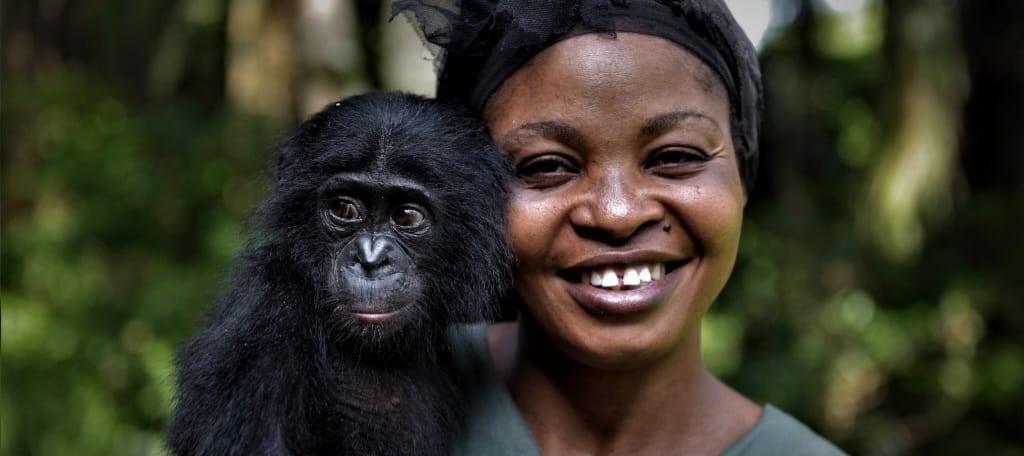
When we look at chimpanzees and bonobos today, our nearest living relatives, we see creatures with the latent cognitive capacity to understand cooking—they consistently prefer cooked food in experiments and understand that a device can transform raw food—but they remain bound to the raw world because they cannot control or manipulate fire. Humanity’s true distinction is that our ancestors crossed that fiery threshold for us. We are not defined by our individual ability to create fire from scratch, an innovation that came much later in our history. We are defined by the fact that our very biological existence is built upon a cultural dependency on cooked meals. We are the species that fire made, living out an extraordinary evolutionary destiny sparked by ancestors who dared to bring the wildfire home. LE
Leave a Reply