
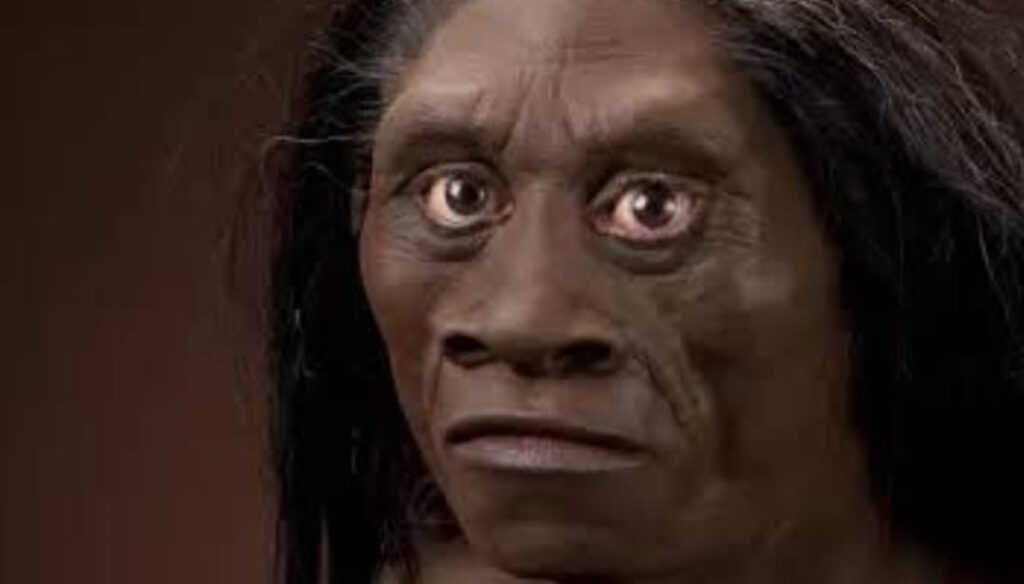
Category: Anthropology

  • Hobbit Humans or Homo Floresiensis: The Dwarfs of Flores Refused to Vanish for a Million Years

    We like to think we know the story of humanity. We imagine a straight line of progress—from knuckle-dragging brutes to spear-throwing hunters to city-builders to us, the final product, the crown of creation. It is a comfortable story, simple and flattering. But science has a habit of throwing rocks through comfortable windows. In 2003, archaeologists in a cave on the Indonesian island of Flores threw a boulder the size of a grapefruit. They unearthed the bones of an adult woman who stood just three and a half feet tall, with a brain the size of a chimpanzee’s. She was not a child. She was not a deformed modern human. She was something else entirely—a separate branch of our family tree that had survived for nearly a million years on a single, tiny island, starting with no more than twenty castaways. And then, fifty thousand years ago, she and her kind vanished, right around the time our own ancestors showed up.

    Let that sink in. Twenty people. That is fewer than the staff of a small restaurant. Stranded on an island with giant lizards, dwarf elephants, and seasonal droughts that turned rivers to dust. By every law of biology and probability, they should have died out within a few centuries. Inbreeding should have weakened them. A single volcanic eruption or prolonged famine should have finished them. But they did not die. They adapted. Generation after generation, the smaller individuals survived because they needed less food. Their brains shrank because big brains are expensive to fuel, and a small brain that is clever enough is better than a large brain that starves. They sharpened stones into blades, hunted the island’s miniature elephants, and learned to avoid the Komodo dragons that could disembowel a full-grown man. They did not just survive. They thrived, in their own quiet, stubborn way, for nearly one million years. They are named Homo floresiensis.

    Think about that number for a moment. Our own species, Homo sapiens, has existed for about three hundred thousand years. The little people of Flores were already ancient when we were still learning to make fire. They watched the stars shift in the sky. They lived through ice ages that reshaped continents. They buried their dead in the limestone caves of Liang Bua long before the first pyramid was built, before the first word was written, before the first city rose from the dust. They were not primitive. They were not failed experiments. They were exquisitely tuned to their world, every bone and sinew shaped by the unrelenting pressure of an island that gave nothing for free.

    And then we arrived. Modern humans, with our projectile spears, our sewn clothing, our networks of trade and mutual aid. We paddled our outriggers across the deep straits and stepped onto Flores with all the confidence of a species that had never known true defeat. Did we fight the little people? Did we interbreed with them? Unlike the Neanderthals and Denisovans, whose DNA still lingers in our genomes, we carry no trace of Flores in our blood. That suggests we did not mix. We merely replaced them. Not through genocide, not through war, but through the slow, grinding mechanics of competition. We were faster, more numerous, more adaptable. We took the best caves, the best hunting grounds, the best water sources. The little people retreated into the shrinking margins of their island, and then, one generation later, they were gone.

    The last one died in Liang Bua cave. She did not know she was the last. She simply lay down, closed her eyes, and the island fell silent. But her bones did not stay silent forever. When scientists unearthed them in 2003, they rewrote everything we thought we knew about human evolution. They proved that our lineage is not a straight ladder leading triumphantly to us. It is a tangled bush, with branches that withered just as others flourished. The hobbits of Flores are a humbling reminder that we are neither the first nor the inevitable. We are merely the latest.

    And here is the final twist. The local people of Flores have told stories for centuries about the Ebu Gogo—small, hairy creatures that mimicked human speech and stole food from village kitchens. For generations, scholars dismissed these tales as folklore, as myth. But now we know. Those stories were memory. They were handed down, mother to daughter, for fifty thousand years, preserving the echo of a meeting between two kinds of humans. The little people did not vanish into legend. They vanished into the earth, and the earth remembered.

    We owe them more than curiosity. We owe them respect. They survived, against every odd, for nearly a million years. They did not build empires or write poetry. But they did something just as remarkable. They refused to disappear, generation after generation, until the very end. They were not hobbits from a storybook. They were real, breathing, hunting, loving humans. And their bones, still waiting in the limestone, ask us a single question: what will our own million-year legacy be, if we are lucky enough to leave one at all? EK

  • Paranthropus: Our Misunderstood Cousins

    For decades, the story of human evolution was a simple morality tale. On one side stood our direct ancestors, the genus Homo—clever, adaptable, and destined for greatness. On the other stood Paranthropus, the so-called “robust australopithecines,” portrayed as evolutionary dead-ends: lumbering specialists with oversized jaws and molars who were ultimately outcompeted by their smarter cousins. It was a neat narrative, with us as the heroes and them as the cautionary example of evolutionary failure. But as with so many neat stories, the truth is far messier, far more interesting, and far more humbling. The latest science is forcing us to tear up that old script and admit that Paranthropus was not a failed experiment, but a remarkably successful, widespread, and resourceful genus that walked the Earth alongside our ancestors for over a million years—and may have even contributed to the very technological innovations we once claimed as uniquely our own.

    Let us start with the sheer scale of their success. According to a pivotal 2023 study published in the journal Science, titled “Expanded geographic distribution and dietary strategies of the earliest Oldowan hominins and Paranthropus,” this genus first appeared in Africa around 2.7 million years ago and survived until roughly 1.2 million years ago. That is a staggering run of 1.5 million years. To put this into perspective, our own species, Homo sapiens, has only been around for about 300,000 years. In terms of evolutionary longevity, Paranthropus has us beat by a factor of five. During that immense span, they were not confined to a single valley or ecological niche. At least three distinct species occupied different corners of the continent: Paranthropus aethiopicus in East Africa, often considered the ancestral form; Paranthropus boisei, also in East Africa, the most massive-jawed of the group; and Paranthropus robustus in southern Africa, the youngest of the lineage. From the savannas of eastern Africa to the woodlands of the south, they adapted, thrived, and spread.

    The old narrative held that these creatures were doomed by their own anatomy. Their massive jaws and huge molars were interpreted as a hyper-specialized adaptation to eating tough, fibrous vegetation. When the African climate became drier and more seasonal, the argument went, the specific plants they relied upon became scarce, and they simply starved. Meanwhile, our ancestors, with their smaller teeth and bigger brains, turned to tools, meat, and cooking to survive. But the new evidence from Nyayanga, Kenya, has completely complicated that picture. The fossils found at this site, dating back 2.6 to 3 million years, link Paranthropus directly to some of the earliest Oldowan stone tools ever discovered. At Nyayanga, researchers found over 330 stone tools alongside butchered animal bones, including those of hippopotamuses. And embedded in the same archaeological layers, in direct association with these tools, were the fossils of Paranthropus.

    This is the game-changing discovery. For the first time, we have concrete evidence that Paranthropus was not passively chewing roots while Homo innovated. They were actively participating in the same technological and dietary revolutions. Whether they were making the tools themselves or simply using them, the evidence is undeniable: Paranthropus was processing meat, accessing marrow, and exploiting a wide variety of food resources. This suggests they were not narrow specialists but clever opportunists capable of adapting to changing circumstances.

    So why did they ultimately vanish? The most compelling answer today is not that they were stupid or inflexible. It is that they were ultimately outpaced by the Homo lineage’s distinct evolutionary strategy. While Paranthropus invested enormous biological energy into their powerful jaws and digestive systems to process food, Homo invested in larger brains and culture. This cultural evolution culminated in the controlled use of fire and the art of cooking. Cooking acted as external pre-digestion, breaking down tough cellulose, detoxifying poisonous plants, and making previously unpalatable foods soft and safe. This allowed Homo to shrink its guts and reallocate that energy to growing even bigger brains, creating a virtuous cycle of intelligence and innovation. Paranthropus, for all its success, did not make that leap. When the climate finally changed in a way that even their versatile toolkit could not compensate for, they could not adapt quickly enough. But that does not make them failures. It makes them a parallel experiment in hominin survival—one that flourished for 1.5 million years and only lost the race when the finish line was moved by fire and culture.

    So let us finally bury the old caricature. Paranthropus was not a footnote; it was a widespread, long-lived, and technologically savvy genus that walked alongside our ancestors for ages. We are not their superior successors; we are the ones who happened to take a different evolutionary path. And as we look back at their fossilized bones and the tools they left behind, we should see not a failed experiment, but a parallel journey—one that reminds us that evolution is not a ladder, but a sprawling, branching tree, and we are just one of its many leaves.

    EK